Facing much office work, users sometimes need call for a system restore when they install the wrong combination of apps or have a computer swapped out. If you forget to back up your useful files before the system restoration, this guide will tell you how to recover data after System Restore.

Yes, it is often possible to recover data after a system restore, but the success rate depends on several factors:
A system restore mainly targets system files, registry settings, and installed programs. However, in rare cases, especially if something goes wrong - personal files may be affected or appear missing.
When you don't have any backup of the data on your PC, professional software like Coolmuster Data Recovery provides a more deep-seated solution. This tool scans the architecture of your hard drive to find file fragments that the operating system can no longer see.
Key features of this PC data recovery software:
Download Coolmuster Data Recovery.
To recover your data from your PC after restoring the system with this software:
01Install the data recovery software on a partition different from the one you are trying to recover (e.g., if you lost files on Drive C, install the software on Drive D or an external USB).
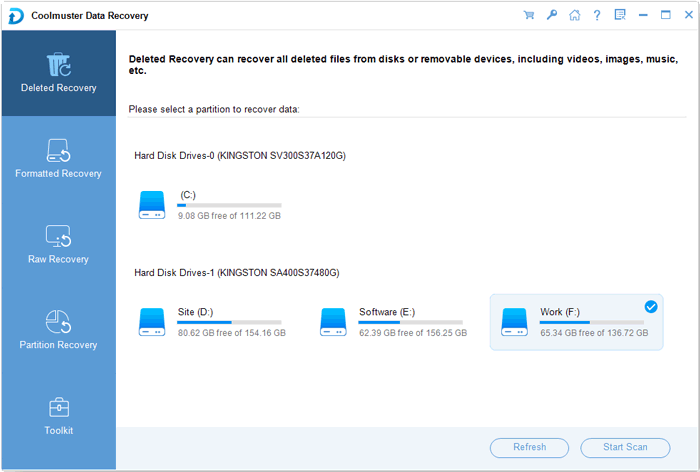
02Once connected, choose "Deleted Recovery" or "Formatted Recovery", and select the drive where your files were located and click "Start Scan" to let the software perform a scan.
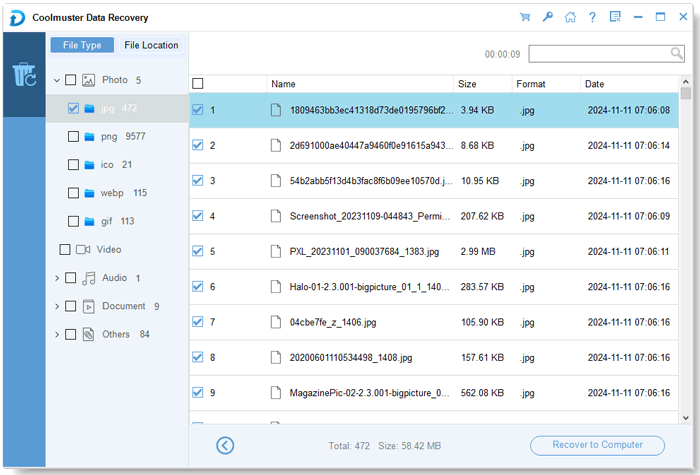
03Browse the results, select the files you need, and save them to your device by clicking "Recover to Computer".
If you had the foresight to enable File History before the system restore, you can roll back your folders to a specific point in time. Then get your files back without any hassle.
To recover files after System Restore via File History:
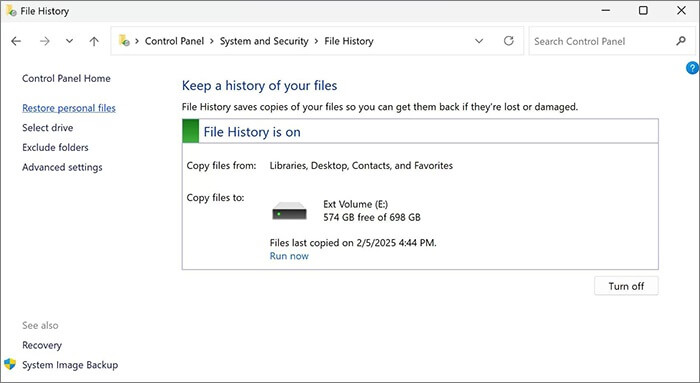
Step 1: Open the "Control Panel" and navigate to "System and Security" > "File History".
Step 2: On the left-hand sidebar, click Restore personal files. You will see a timeline of your backed-up folders. Use the arrows at the bottom to find the date before you performed the System Restore.
Step 3: Select the files or folders you want and click the green "Restore" button to return them to their original location.
For those who used the legacy Backup and Restore (Windows 7) tool—which is still available in Windows 10 and 11 - recovery is straightforward even after a full factory reset.
To restore data with the Backup and Restore feature after a factory reset:
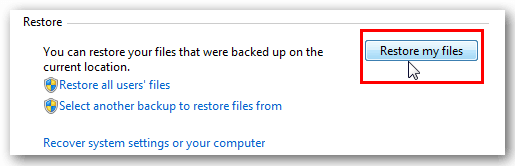
Step 1: Connect your external backup drive to your PC. Then go to "Control Panel" > "System and Security" > "Backup and Restore (Windows 7)" > "Restore my files".
Step 2: Click on "Browse for files" or "Browse for folders". Then select the items from your backup.
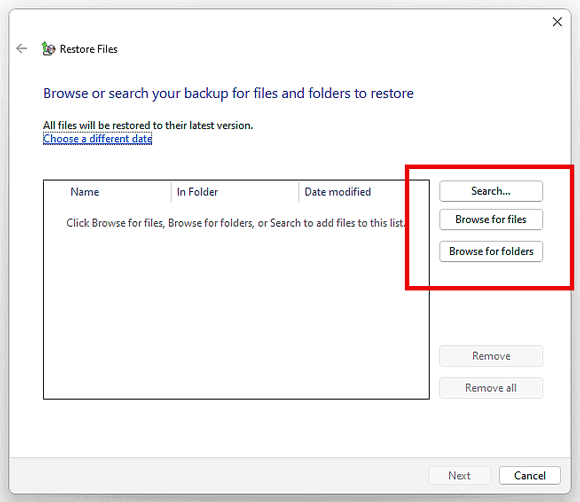
Step 3: Follow the prompts to restore them to the original location or a new folder.
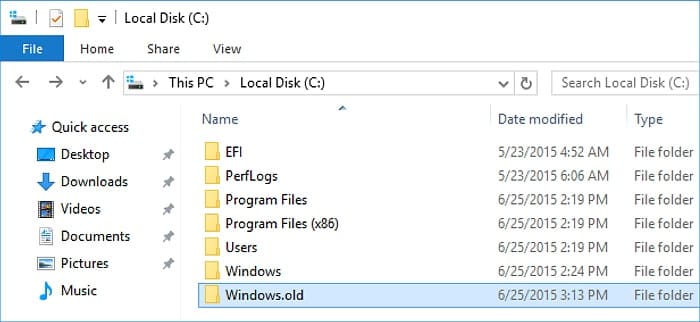
If you reinstalled Windows without formatting your drive, your old files might be sitting in a folder called Windows.old. Windows creates this as a safety net.
To restore your files after reinstalling Windows with the Windows.old folder:
Step 1: Open File Explorer and go to your C: Drive. Then look for a folder named "Windows.old".
Step 2: Inside, navigate to "Users" > "[YourUsername]", and check the folders (Desktop, Documents, etc.) for your missing files.
Step 3: Manually copy these files out of Windows.old immediately, as Windows will automatically delete this folder 10 to 28 days after an update or reinstall.
It is often possible to recover data after a system restore, factory reset, or Windows reinstallation, but success depends on preparation and timing. Built-in tools like File History and Backup and Restore offer the most reliable recovery options, while the Coolmuster Data Recovery software can help when no backup exists.
To minimize future risks, it is strongly recommended to maintain regular backups and enable recovery features in advance. Data loss may be unpredictable, but with the right strategies, it doesn't have to be permanent.
Related Articles:
How to Restore Data After Factory Reset with/Without Backup
The Ultimate Guide on How to Hard Reset Android Phone
How to Force Delete a File on Windows and Mac: Complete Guide
[Step-by-Step Guide] How to Restore iPhone Without Losing Data?




 Free Download for PC
  Free Download for Mac


