Videos in MP4 format are widely used for personal memories, professional projects, and online content. However, MP4 files are not immune to corruption, accidental deletion, or data loss. If you encounter such issues, it can be distressing - but there are effective ways to repair corrupted files or recover lost videos. This article explores 6 practical methods for MP4 file recovery and answers common questions about video recovery.

Corruption in MP4 files can occur due to sudden power outages, software crashes, incomplete downloads, or improper editing. Fortunately, several tools can repair damaged MP4 files.
Untrunc is a powerful command-line tool designed specifically for MP4, M4V, and MOV files. It works by comparing a corrupted video against a "reference" file - a healthy video recorded with the same settings and camera.
To repair an MP4 file with Untrunc:
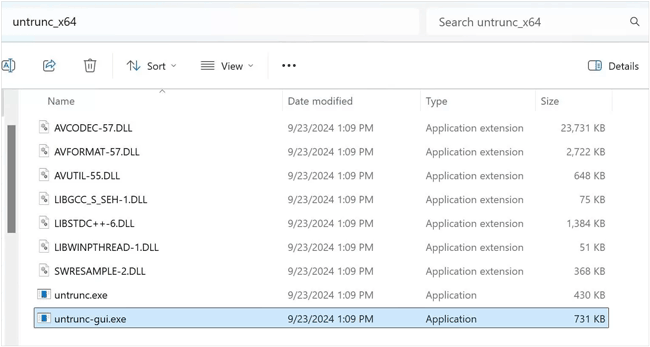
Step 1: Download the latest release from a trusted GitHub fork (such as the widely used anthwlock/untrunc or ponchio/untrunc releases). Extract the ZIP file to a folder on your PC, and run the untrunc-gui.exe application.
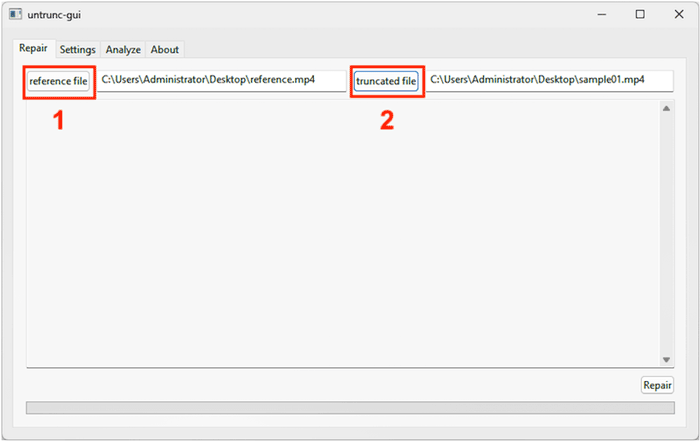
Step 2: Click "Select broken file" (or "truncated file") and choose your corrupted MP4. Then click "Select healthy file" (or "reference file") and choose your working video clip.
Step 3: Click "Execute" or "Repair" and wait for the process to complete. A new, fixed video file will be created alongside your broken one.
FFmpeg is a command-line powerhouse. If your file's audio and video data are intact but the "container" is glitchy, this method strips the bad container and wraps the streams into a perfect new one without quality loss.
Here's the guide:
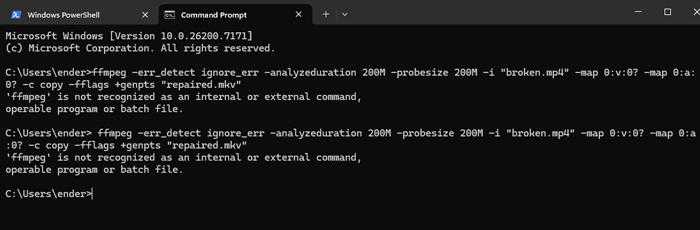
Step 1: Download FFmpeg and add it to your system's Environment Variables, or place the ffmpeg.exe file in the same folder as your broken video.
Step 2: Open "Command Prompt" and navigate to the folder where your broken video (corrupted.mp4) is stored.
Step 3: To perform a Stream Copy (re-muxing), type this command: ffmpeg -i corrupted.mp4 -c copy repaired_video.mp4.
Step 4: If the error is deeper in the video stream, you may need to force a re-encode to fix broken frames. Use this command instead: ffmpeg -i corrupted.mp4 -vcodec libx264 -acodec aac fixed_video.mp4.
Step 5: Finally, check the output folder for your newly generated file.
VLC Media Player is a popular media player with limited repair capabilities for video files, primarily the AVI format. If your MP4 is first converted to AVI, VLC can attempt repair.
Here are the steps:
Step 1: In the top menu, click "Media" > "Convert / Save..." (or press Ctrl + R). Then click the "Add..." button and select your corrupted MP4 file, then click "Convert / Save" at the bottom.
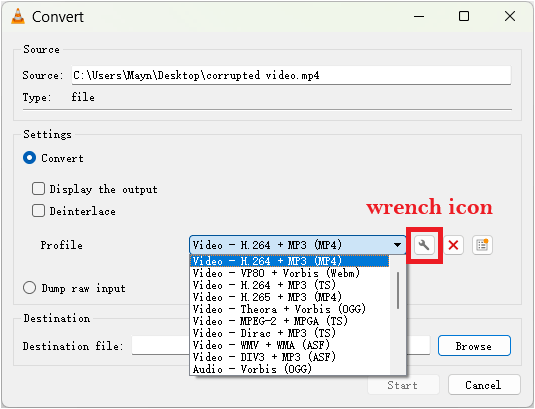
Step 2: In the "Profile" dropdown menu under "Settings", select "Video - H.264 + MP3 (MP4)".
Step 3: Click the wrench icon (Edit selected profile) next to the dropdown, ensure the encapsulation is set to "MP4/MOV", and click "Save".
Step 4: In the "Destination" section, click "Browse", choose where to save the file, and give it a new name (e.g., vlc_repair.mp4).
Step 5: Click "Start". VLC will process the file (you will see the progress bar move across the timeline). Once finished, try playing the new file.
If your MP4 files are accidentally deleted or lost due to formatting, virus attacks, or storage issues, specialized recovery tools can help restore them.
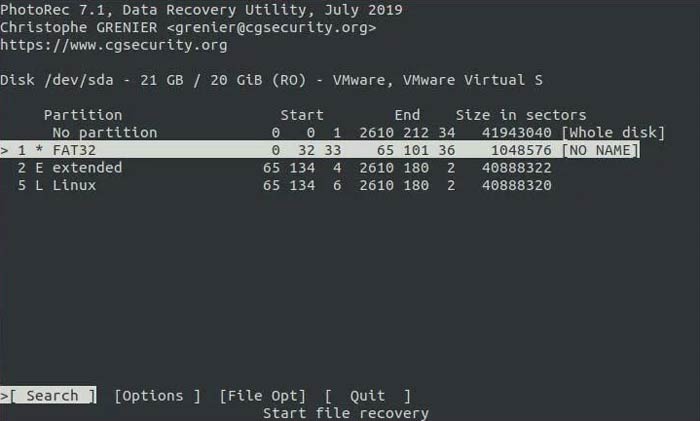
PhotoRec uses a text-based wizard. It looks at raw data blocks ("file signatures") rather than the file system. This tool is effective for deep recovery. However, its text-based interface may be confusing for beginners.
To recover deleted or lost MP4 files with PhotoRec:
Step 1: Download the TestDisk/PhotoRec zip file, extract it, and run photorec_win.exe as an administrator.
Step 2: Use your arrow keys to highlight the drive/SD card where your videos were deleted, and press "Enter".
Step 3: Select the partition (usually the largest one or labeled FAT32/NTFS) and press "Enter" .
Step 4: Before scanning, press "File Opt" at the bottom. Press "s" to unselect all formats, then find and check mov (PhotoRec groups MP4 and MOV under the same signature). Press "b" to save.
Step 5: Choose "[Other]" for Windows (NTFS). Then choose "[Free]" to scan only deleted space, or "[Whole]" if the card was formatted.
Step 6: Navigate to a folder on your computer's local "C:" or "D:" drive to save the files. Press "c" when you are in the correct directory to start the recovery.
When dealing with a lost or missing MP4 video file, specialized consumer utility tools like Coolmuster Data Recovery offer a balanced middle ground between text-heavy, open-source command line tools like PhotoRec and expensive, enterprise-level digital forensics software.
Key features of Coolmuster Data Recovery:
Download Coolmuster Data Recovery.
Here's how:
01Launch Coolmuster Data Recovery on your PC after installing it. Then select a recovery mode from the main dashboard. For accidentally deleted MP4s, choose "Deleted Recovery".
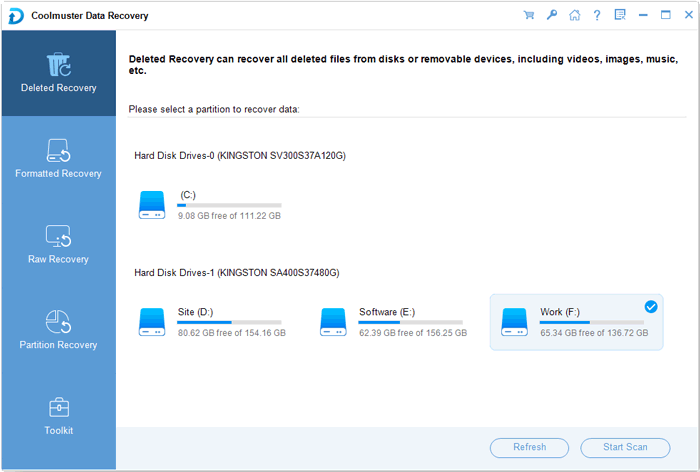
02Select the hard drive or the external memory card from the list on the screen, and click "Start Scan".
03Once the scan is complete, look at the left sidebar. Navigate through the folders or click on "File Type" and filter by "Video" > "mp4".
04Check the boxes next to the MP4 files you wish to restore. You can look at the file size to estimate if it matches your missing video. Then hit "Recover to Computer" at the bottom right, and select a folder on your internal hard drive to save the restored videos.
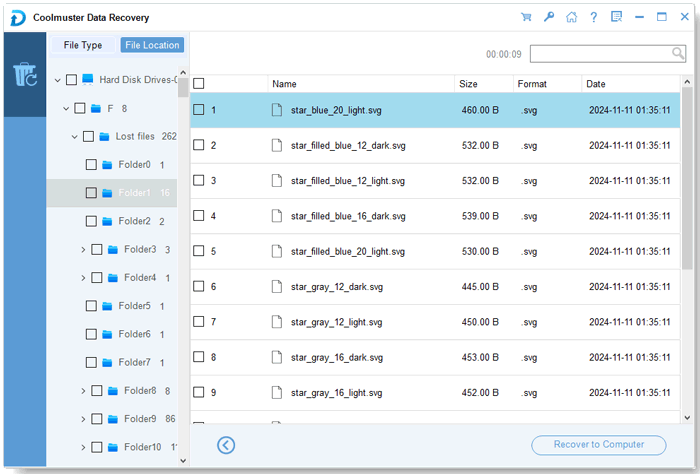
Here's the video guide (about 2 minutes):
Recuva is highly effective for quick scans on Windows-formatted file systems. Its free version is also easy to use, but it's less effective on severely corrupted or overwritten files.
To recover lost MP4 videos with Recuva:
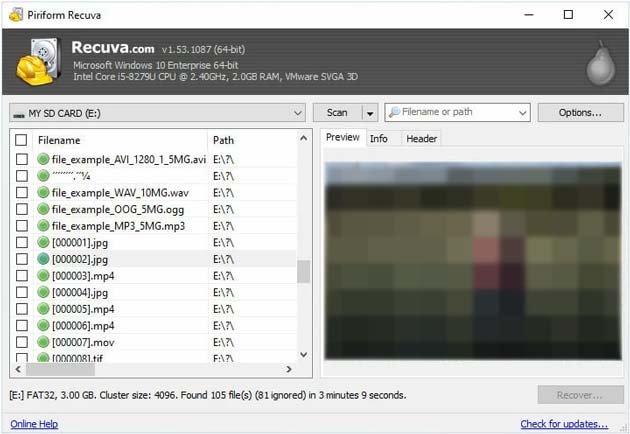
Step 1: Open Recuva. The Recuva Wizard will launch automatically. Click "Next".
Step 2: Select "Video" to filter out photos and documents, and click "Next". Then hit "In a specific location" > "Browse", and select the exact folder or SD card drive where the file used to be. Tap "Next".
Step 3: Recuva will show a list of files with color-coded dots:
Step 4: Select the checkboxes next to your MP4 videos, click "Recover...", choose a safe destination folder on a separate drive, and click "OK".
Q1: What if my MP4 file is corrupted and I have deleted it by mistake?
This is a "double-fault" scenario. You must first use recovery software (like PhotoRec or Coolmuster Data Recovery) to bring the file back to your drive. Once recovered, if it still won't play, you then apply repair tools like Untrunc. Recovery brings the bits back; repair makes those bits readable.
Q2: What causes MP4 files to corrupt?
Common causes include:
Q3: Can AI fix corrupted video files?
Yes, modern AI tools are beginning to excel at "Generative Repair". While traditional tools try to fix the existing code, AI can actually reconstruct missing frames or enhance blurry, pixelated sections caused by data loss. However, these services are often cloud-based and may require a subscription.
MP4 file corruption and accidental deletion are common challenges, but they are not insurmountable. By using tools like Untrunc, FFmpeg, VLC, and recovery software such as PhotoRec, Coolmuster Data Recovery, and Recuva, you can often repair damaged videos or recover lost ones.
No matter which method you choose, always remember the golden rule of data recovery: stop using the source drive immediately and always restore your files to a completely separate storage device.
Related Articles:
Best Laptop Data Recovery Software for You: 12 Recovery Tools
8 Best Video Recovery Apps for Android in 2026 [Comparative]







 Free Download for PC
  Free Download for Mac


