Data loss on FAT (File Allocation Table, such as FAT16 and FAT32) or NTFS (New Technoloy File System) file systems, is a common mistake when we are using a computer or other storage devices to store our files. When important files disappear unexpectedly, you need to know how to recover deleted FAT/NTFS files. Luckily, recovery is possible if you act quickly and use the right tools.
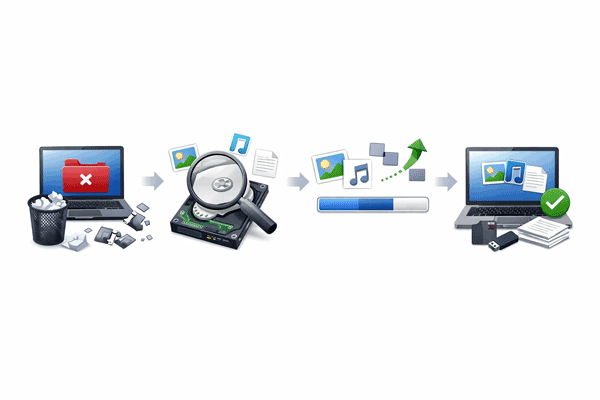
If you want a user-friendly recovery tool, Coolmuster Data Recovery will be an ideal option. It is capable of FAT and NTFS file recovery, supporting the recovery of images, videos, audio files, emails, and more. Furthermore, it can recover data from a memory card, external/local hard drives, USB flash drives, etc.
Key features of this data recovery software:
Download Coolmuster Data Recovery.
To recover deleted FAT/NTFS files with this file recovery program:
01Download and install Coolmuster Data Recovery on your computer, and then launch it.
02Plug the NTFS/FAT-formatted device into your computer, and choose a recovery mode. Then select the storage device, and click "Start Scan".
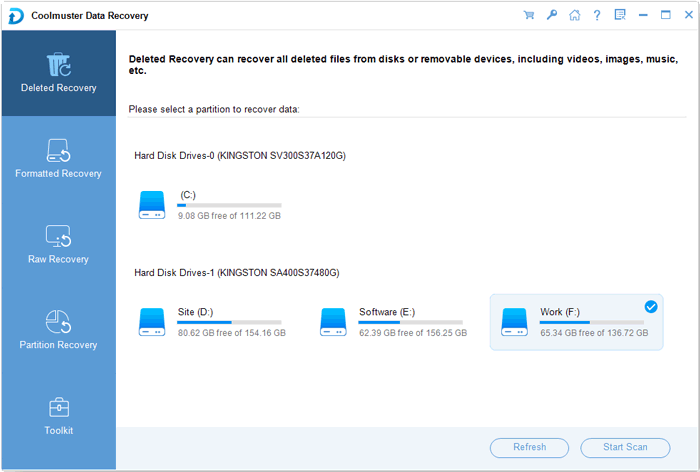
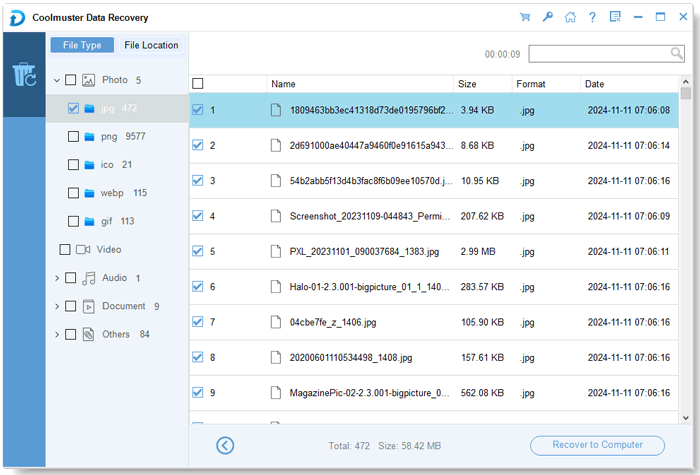
03Once the scan is complete, browse the folders, tick the files you need, and click "Recover to Computer" to save them to a different drive to avoid overwriting.
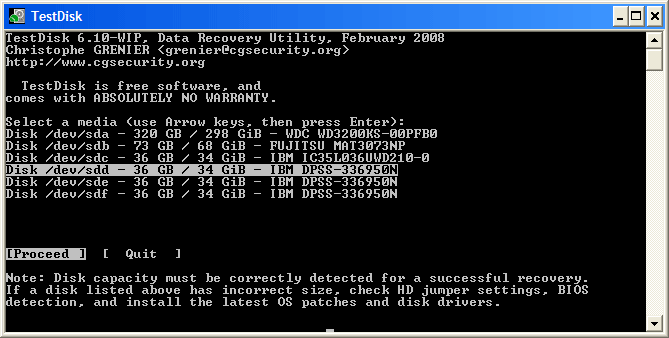
TestDisk is a powerful, open-source command-line tool. It is particularly effective at fixing partition tables and undeleting FAT/NTFS sectors.
To recover FAT/NTFS data with TestDisk:
Step 1: Run the executable file of TestDisk and select "Create" to start a new log file.
Step 2: Highlight the disk containing the FAT/NTFS partition and select your partition table type (usually "Intel" or "EFI GPT").
Step 3: Navigate to "Advanced", select your FAT/NTFS partition, and choose the "Undelete" option at the bottom.
Step 4: Red-colored filenames indicate deleted items. Select them and press "C" to copy them to a secure location on your PC.
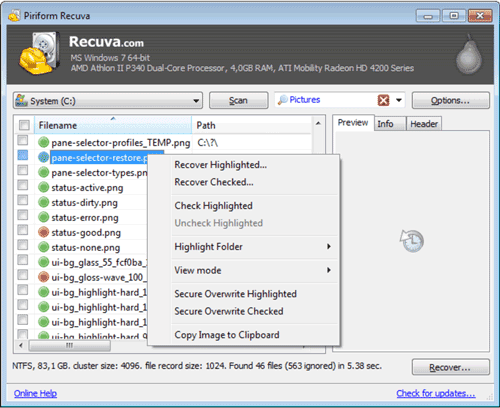
Recuva is widely known for its simplicity and effectiveness on Windows systems. It is excellent for quick scans of FAT32 SD cards and NTFS drives.
To retrieve FAT/NTFS files with Recuva:
Step 1: Install and run the Recuva software on your computer, and then use the recovery wizard to select the file type and location.
Step 2: Start scanning your FAT/NTFS drive. If a quick scan fails, enable "Deep Scan". This is specifically useful for FAT/NTFS systems where the file headers might be partially damaged.
Step 3: Review the scan results with file condition indicators. Finally, select the files you want and click "Recover".
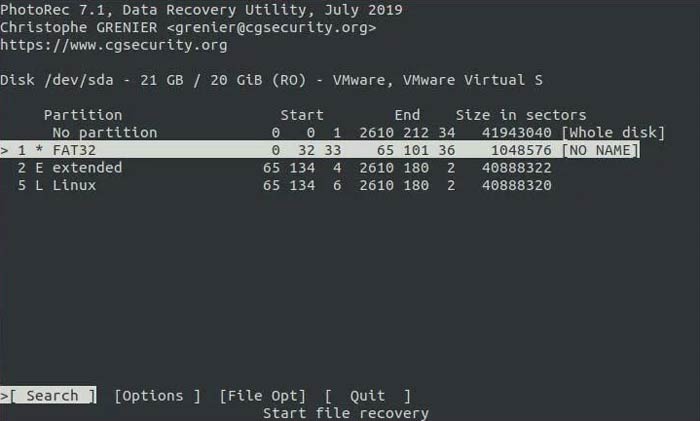
PhotoRec is the "sister" program to TestDisk. While TestDisk focuses on partitions, PhotoRec focuses strictly on the data (files) themselves by ignoring the file system and going after the underlying data blocks.
To restore FAT/NTFS files with PhotoRec:
Step 1: Open PhotoRec and choose the disk. Then select your FAT/NTFS partition.
Step 2: If you only need specific formats (like .JPG), use "File Opt" to filter the search.
Step 3: Choose "Free" to scan only the deleted space or "Whole" if the partition is corrupted. Then select a folder to store the carved files and start the process.
Q1: What happens when a file is deleted from a FAT/NTFS file system?
When you delete a file in a FAT/NTFS system, the operating system doesn't immediately "erase" the data bits. Instead, it marks the file's entry in the File Allocation Table as "available" and replaces the first character of the filename with a special hex code ($E5). The data remains on the clusters until new data is written over them.
Q2: Can I directly restore deleted FAT/NTFS files by using Command Prompt?
Generally, no. While the "attrib" command can reveal "hidden" files that you might think are deleted, it cannot recreate the pointers for a file that has been officially removed from the FAT/NTFS table. You usually need dedicated recovery software to "carve" the data back out.
Q3: Is FAT32 used anymore?
Yes, extensively. While NTFS and APFS are standard for internal drives, FAT32 remains the universal standard for "cross-platform" compatibility. It is the default format for most SD cards (under 32GB), many USB flash drives, and EFI system partitions in modern computers.
When you delete files from a FAT or NTFS file system, stop using the drive immediately, and use the methods above to recover the files, which is high time because new data hasn't overwritten the deleted ones. To make the recovery easier, Coolmuster Data Recovery provides a practical recovery algorithm and user-friendly interface, so you can recover your files with simple clicks.
Related Articles:
How to Recover Deleted Photos from SanDisk Pen Drive [4 Best Ways for Beginners]
Best Laptop Data Recovery Software for You: 12 Recovery Tools
iMyFone D-Back for Windows Review: Features, Pricing, Pros & Cons






 Free Download for PC
  Free Download for Mac


