Streaming your iPhone to a Windows PC is a great way to enjoy a bigger screen for videos, games, presentations, or even screen recording. However, unlike Apple devices, Windows does not natively support iPhone screen mirroring through AirPlay, which can make the process a bit confusing for beginners.
The good news is that there are several easy and effective ways to connect your iPhone to a PC, whether through wireless tools, USB connections, or third-party software. In this guide, we will walk you through the best methods to stream your iPhone to a Windows computer step by step.
Yes, you can stream your iPhone to a Windows PC - but not directly.
Unlike Apple devices such as a Mac or Apple TV, Windows PCs do not support AirPlay by default (How to Use AirPlay on Windows?). AirPlay is Apple's built-in wireless streaming feature, and it works seamlessly within the Apple ecosystem. However, when it comes to Windows, you'll need some extra help to make the connection possible.
So, how can you do it? There are several practical solutions available:
Each method has its own pros and cons, depending on your needs, such as screen quality, connection stability, and ease of use. In the following sections, we'll explore these methods in detail to help you choose the best one.
If you want a simple and stable way to stream your iPhone to a Windows PC, using screen mirror software like iPhone Screen Mirror is the best choice. Unlike AirPlay, which is limited to Apple devices, this tool allow your PC to act as a receiver so you can mirror your iPhone screen directly. Most importantly, it offer better compatibility, smoother performance, and extra features like recording or screenshots. Whether you are watching videos, playing games, or giving a presentation, this method is reliable and beginner-friendly.
Key Features of iPhone Screen Mirror:
How to Mirror Your iPhone Screen to Windows PC with iPhone Screen Mirror:
01 Launch the screen mirror software on your computer and choose "iOS" mode.
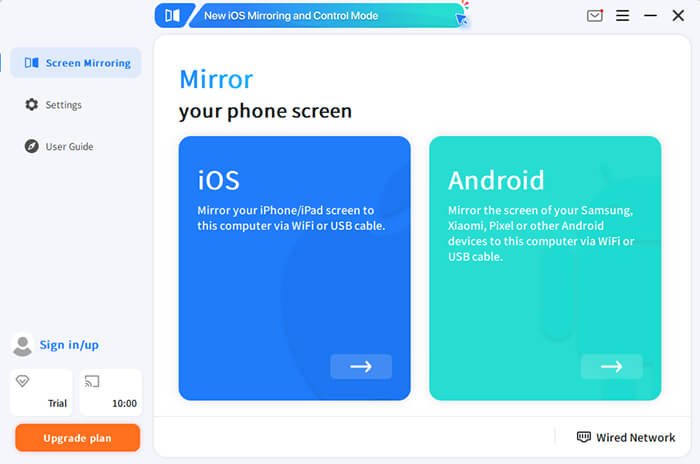
02 Connect your iPhone or iPad to the computer using a USB cable or Wi-Fi. For the first connection, it is recommended to use a USB cable for a more stable setup. If prompted, tap "Trust This Computer" on your device.
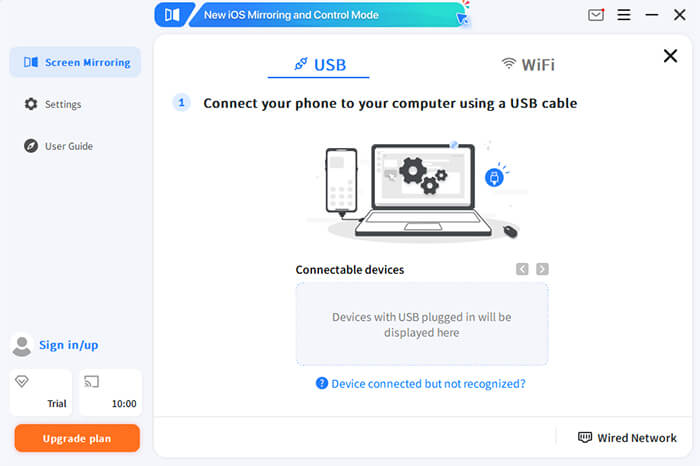
03 Choose your iPhone or iPad from the list of available devices. If this is your first time connecting, just follow the on-screen instructions to finish the setup.
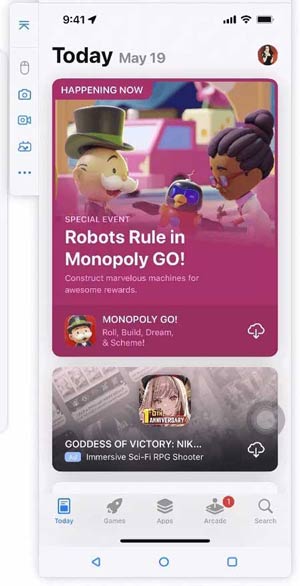
04 After the connection is successful, your device screen will be displayed on the computer in real time. You can then record the screen, take screenshots, play games, make presentations, or share your screen during meetings and online classes.
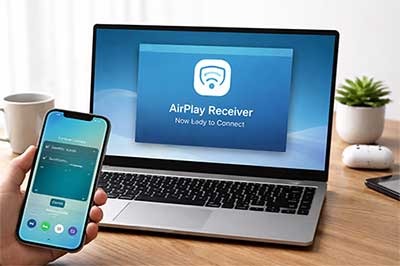
If you prefer a wireless way to stream your iPhone, using an AirPlay receiver on Windows is a good option. It allows your PC to act like an Apple device, so you can mirror iPhone screen to the computer through the built-in Screen Mirroring feature. This method is easy to use and doesn't require a USB cable, but it depends on your Wi-Fi connection.
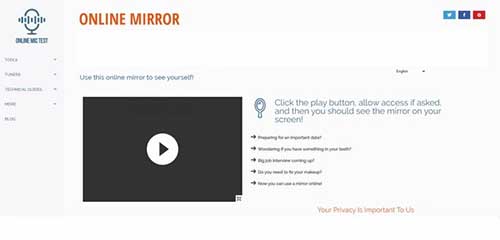
For quick and temporary screen mirroring, you can use browser-based tools. This method doesn't require installing any software on your PC, making it convenient for one-time use or when you are on a public or shared computer. However, it may have some delay and limited features compared with dedicated mirroring software. Follow the guide below to mirror iPhone to PC without software:
Q1: Can I mirror iPhone sound to my PC?
Yes, iPhone Screen Mirror and AirPlay receivers can stream audio along with the screen. Some browser tools may not support sound, so check the tool's features beforehand.
Q2: Are all iPhones compatible with these methods?
Most iPhones running iOS 7 or later are compatible. The latest iPhone models, including iPhone 16 and 17, are fully supported by major screen mirror software.
Q3: Can I use mirrored iPhone screen for meetings?
Yes, you can share your mirrored iPhone screen in Zoom, Microsoft Teams, Skype, or Webex, making it convenient for presentations, online classes, or collaboration.
Streaming your iPhone to a Windows PC is easier than ever with multiple methods available. Whether you choose a dedicated screen mirror software, an AirPlay receiver, a USB connection, or a browser-based tool, each option has its advantages depending on your needs. For smooth performance and low latency, USB or professional mirroring software is recommended. Wireless methods are convenient for casual use or quick presentations. Pick the method that fits your situation and start mirroring your iPhone with ease.
Related Articles:
Top 4 Ways to Screen Mirror iPhone to Samsung TV
Mirror iPhone to iPad: Stream from iPhone to iPad in 7 Ways




 Free Download for PC
  Free Download for Mac


