TL;DR:
Transferring a SIM card to a new iPhone is easier than you think, but knowing the right steps can help you avoid compatibility issues and data loss. This guide covers everything you need to know:
Most people have encountered problems when transferring SIM cards to their new iPhones. Since a SIM is a very important item that allows us to get the network connectivity on the device, you should transfer it to your new iPhone when you decide to switch. The process is very simple, and you might as well move your contacts with the SIM card. To learn how to transfer SIM card to new iPhone, read this article till the end.
Before moving your SIM card to a new iPhone, check a few important things to avoid compatibility issues or activation problems. Here are the key points to know:
Before switching SIM cards, make sure your iPhone is unlocked. A carrier-locked iPhone only works with the original network provider, which means it may reject SIM cards from other carriers. To check the carrier lock status:
Step 1: Open "Settings" on the iPhone and click "General". After that, choose "About".
Step 2. Scroll down the About page until you reach the "Network Provider Lock" and check for the device's carrier network lock status.
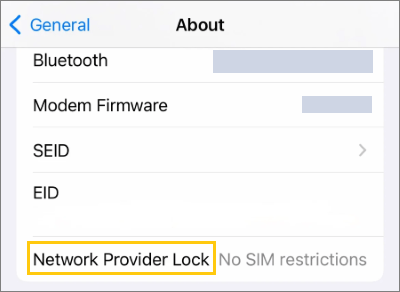
Step 3: Check the status. If it shows "No SIM restrictions", your iPhone is unlocked.
If your iPhone is locked, contact your carrier to request an unlock before using a different SIM card.
You can use a SIM card of any size and insert it into your device. But make sure it matches your device's model. Adapters are also available to help insert the nano SIMs into micro SIM cards or the normal SIM slots.
The different types of SIM cards available are micro SIMs, Nano SIMs, and eSIMs.
iOS devices are only compatible with nano SIMs. Therefore, if you are looking for a SIM card other than a Nano, you will not use it on your new iPhone. You should check the type of your SIM card before buying.
Although changing a SIM card does not delete iPhone data, creating a backup before switching devices is recommended. A backup helps protect your contacts, photos, messages, apps, and settings in case of unexpected issues.
You can back up your iPhone through:
Transferring a physical SIM card to a new iPhone is a simple process. Before starting, turn off both devices and prepare a SIM ejector tool (or a small pin) to remove the SIM tray. Follow these steps to move your SIM card:
Step 1. Turn off your old iPhone first. Locate the SIM tray on the side of the device, then insert the SIM ejector tool into the small hole to open the tray. Remove the SIM card and gently wipe it with a clean, dry cloth if needed.
Step 2. Find the SIM tray on your new iPhone and use the ejector tool to open it. Place the SIM card into the tray correctly, making sure the notched corner matches the tray shape.
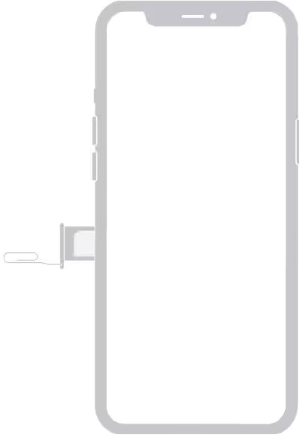
Step 3. Insert the SIM tray back into the iPhone and wait for the device to detect the SIM card. Once activated, the carrier name and signal bars should appear at the top of the screen.
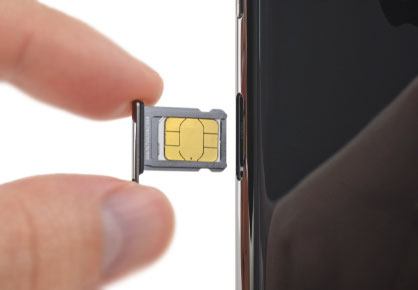
As said earlier, while switching the SIM card to a new iPhone, the SIM card should be compatible with the new device. If the SIM card is not recognized, restart your iPhone, check whether the SIM is compatible, or contact your carrier for activation support.
Note: Most iPhones with physical SIM support use Nano SIM cards. If your old SIM card is not compatible with your new iPhone, it is safer to request a replacement SIM from your carrier instead of cutting the card manually.
Many newer iPhone models support eSIM instead of a physical SIM card, especially iPhone models sold in the US. If your new iPhone does not have a SIM tray, you can transfer your existing cellular plan from your old iPhone to the new one using Apple's eSIM Transfer feature.
Method 1. Transfer eSIM During iPhone Setup
If you are setting up your new iPhone for the first time, follow these steps:
Step 1. Place your old and new iPhone close together and follow the on-screen instructions to start setting up your new device. When you see the "Set Up eSIM" screen, choose "Transfer from Another iPhone".
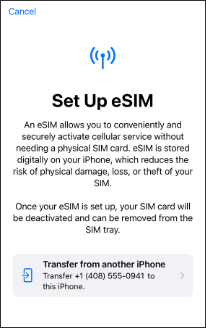
Step 2. A notification will appear on your old iPhone. Tap "Transfer SIM". If prompted, enter the verification code shown on your new iPhone.
Step 3. Double-click the side button on your old iPhone to confirm the transfer. Wait until the eSIM activation is complete, then continue setting up your new iPhone.
Method 2. Transfer eSIM After Setting Up Your New iPhone
If you have already finished setting up your new iPhone, you can transfer your eSIM through Settings:
Step 1. Open "Settings" on your new iPhone and go to "Cellular" > "Add eSIM".
Step 2. Select "Transfer From Nearby iPhone" or choose your existing cellular plan.
Step 3. Follow the instructions on both iPhones and confirm the transfer on your old device.
Step 4. Wait for the cellular plan to activate on your new iPhone.
Step 5. If prompted, tap "Finish Setting Up Your Carrier's Cellular Plan" and follow the carrier instructions to complete the activation.
Note: If eSIM transfer is unavailable, you may need to contact your carrier for assistance. Some carriers require a QR code, carrier app, or online activation process to move your phone number to a new iPhone.
Transferring a SIM card to a new iPhone does not guarantee that all your contacts will be transferred. In such a case, Coolmuster Mobile Transfer is here for you. This is the best software that can easily move contacts between devices operating on different platforms.
It is simple and faster to share your contacts across devices. It is the best solution for phone-to-phone transfers. Even if your old phone is Android, you can transfer various types of files from it to the iPhone without effort.
Key features of Mobile Transfer:
Here are the steps to move contacts to your new iPhone:
01Install the program on the computer. Run it, and you'll see its primary interface.
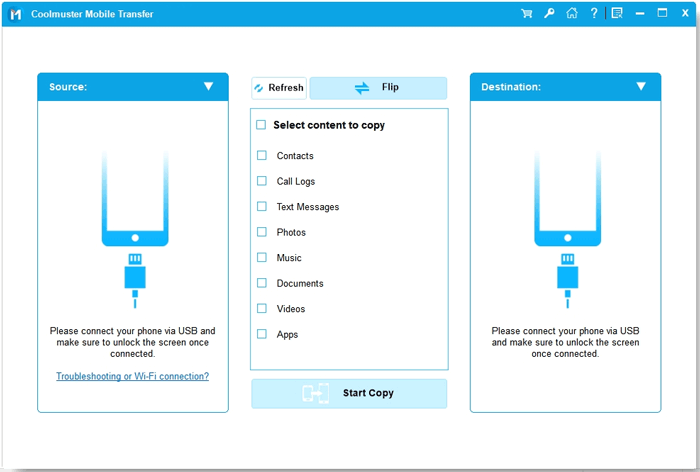
02Link the devices to the computer with USB cables. Hit "Trust" on iPhone and enable USB debugging on Android. From there, both your devices will be detected by the tool and show up on the screen. Make sure the new iPhone is in the "Destination" position. If not, click on "Flip" to switch the devices.
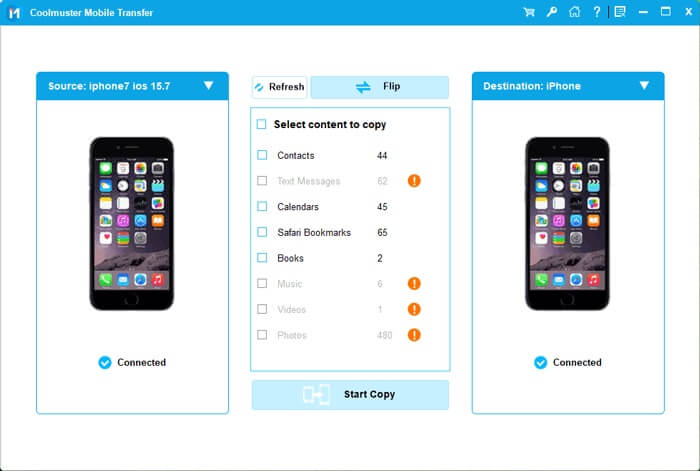
03Choose the "Contacts" option from the list of files on the screen and hit the "Start Copy" tab to start transferring your contact files to the new iPhone device. Wait for the transfer process to finish; it might take some minutes to finish, depending on the size.
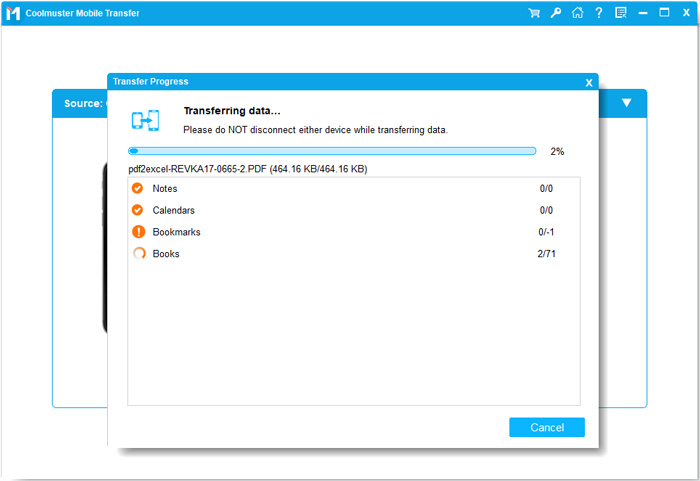
Video Tutorial:
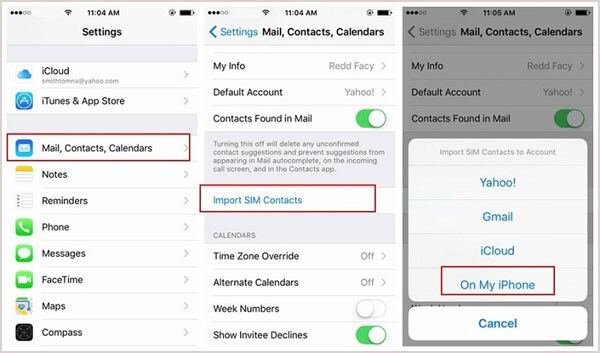
An alternative method to transfer a contact list to a new iPhone is through the use of your SIM card. Depending on the type and capacity of the card, your SIM card can accommodate up to 250 contacts. This convenient approach allows you to effortlessly migrate your essential contacts from one iPhone to another, saving you time and effort.
Here's how to do it:
Step 1. Remove your SIM card from your old iPhone and insert it to the new one.
Step 2. Head to "Settings" > "Mail, Contacts, Calendars", and tap "Import SIM Contacts".
Step 3. Choose "On My iPhone" from the pop-up window list.
Q1. Can I Just Move My SIM Card to a New iPhone?
Yes, you can usually move your physical SIM card from your old iPhone to a new one as long as both devices support the same SIM type and your new iPhone is unlocked. After inserting the SIM card, wait for the device to recognize the network and activate the cellular service.
For iPhones that use eSIM, you need to transfer your cellular plan digitally through the eSIM transfer feature or contact your carrier for activation.
Q2. Does Switching SIM Cards Transfer Everything to a New iPhone?
No. A SIM card transfer only moves your cellular connection and phone number. It does not transfer photos, videos, apps, messages, or most personal data.
To move your data to a new iPhone, you need to use methods such as iCloud backup, Quick Start, Finder/iTunes backup, or a professional phone transfer tool like Coolmuster Mobile Transfer.
Q3. Why Is My SIM Card Not Working on My New iPhone?
If your SIM card is not working after moving it to a new iPhone, try these solutions:
If the SIM card is damaged or incompatible, you may need to request a replacement from your carrier.
Q4. Can I Transfer My Phone Number to a New iPhone Without a SIM Card?
Yes. You can transfer your phone number without a physical SIM card by using an eSIM. Most newer iPhones support eSIM transfer, allowing you to move your cellular plan from your old iPhone to the new one during setup or through the Cellular settings.
If your carrier does not support eSIM transfer, you may need to contact them to activate your number on the new device.
Q5. Will I Lose My Contacts When I Change My SIM Card?
It depends on where your contacts are stored. If your contacts are saved on your SIM card, you can import them to your new iPhone using the "Import SIM Contacts" option. However, most modern iPhones store contacts in iCloud or device memory, so changing a SIM card usually does not affect them.
To avoid losing contacts, make sure your contacts are synced with iCloud or backed up before switching devices.
That's all for putting the old SIM card in the new iPhone. The process isn't a complex one as long as you know the size of your old SIM card. If it is a standard SIM card, cut it to a nano size to fit in your new iPhone.
The best way to move contacts to your new iPhone is to use Coolmuster Mobile Transfer. You are assured that all your contacts will safely move to the new iPhone without a hitch. The process is smooth, secure, fast, and reliable.
Related Articles:
How to Change SIM Card on iPhone Easily? [Step-by-Step]
The Ultimate Guide to Transfer Your SIM Card from Android to iPhone
How to Transfer Phone Number to a New iPhone? Take Down the 4 Easy Ways






 Free Download for PC
  Free Download for Mac


