WiFi Calling can be a handy feature when your iPhone struggles with weak cellular signals, especially indoors or in remote areas. While it's built into most modern iPhones, many users don't know how to turn it on or use it properly. If you've ever experienced dropped calls or poor call quality, this feature might be the solution. In this guide, we'll show you how to enable and use WiFi Calling on your iPhone, along with a few simple tips to fix common issues.
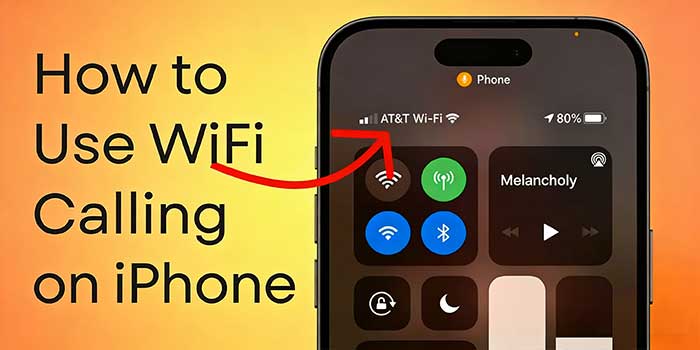
WiFi Calling is a feature that allows your iPhone to make and receive phone calls over a WiFi network instead of relying on a cellular signal. This is especially useful when you're in places with weak or no signal, such as inside buildings, basements, or remote areas.
Instead of connecting to your carrier's cellular towers, your iPhone routes calls through a stable WiFi connection. From a user's perspective, everything works the same as a regular call - you can dial numbers, receive calls, and even access voicemail as usual (Voicemail Not Working on iPhone?).
WiFi Calling is built into most modern iPhones and works automatically once enabled. When your cellular signal is poor, your device will switch to WiFi Calling to maintain better call quality and connection stability.
However, it's important to note that this feature depends on your carrier's support and a reliable WiFi network. Without these, WiFi Calling may not function properly.
Before enabling WiFi Calling, make sure your iPhone meets the following requirements:
Once all these conditions are met, you can proceed to turn on WiFi Calling on your iPhone.
Turning on WiFi Calling on your iPhone is quick and easy. Just follow the steps below to enable this feature:
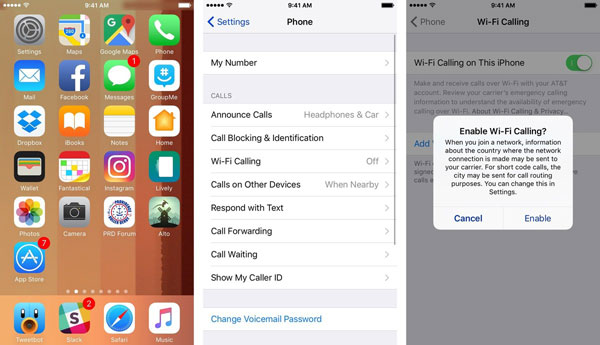
Once enabled, your iPhone will automatically use WiFi Calling when the cellular signal is weak. (Top 9 Wi-Fi Transfer Apps)
After enabling the feature, using WiFi Calling is just like making a normal phone call:
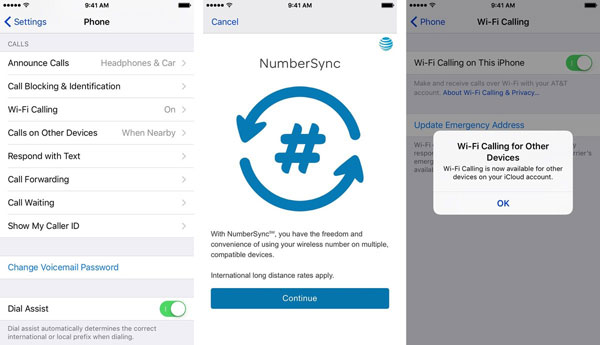
With WiFi Calling enabled, you don't need to manually switch anything - your iPhone handles it automatically.
WiFi Calling on iPhone is often free, but it depends on your carrier and the type of call you make.
In most cases, calls made over WiFi to numbers within your country are treated the same as regular calls and are included in your existing plan. This means you usually won't be charged extra for using WiFi Calling domestically.
However, international calls may still incur charges based on your carrier's rates, even if the call is made over WiFi. It's important to check your carrier's policy to understand any potential fees.
Also, while WiFi Calling itself doesn't use your cellular minutes in some cases, it does rely on an internet connection. If you're using a limited WiFi network or hotspot, data usage may apply.
To avoid unexpected charges, it's always a good idea to confirm the details with your carrier before using WiFi Calling frequently.
Want to know how to transfer data from iPhone to iPhone without Wi-Fi? You can find how to do it in the guide. We offer three effective ways.
[Solved] How to Transfer Data from iPhone to iPhone Without Wi-Fi?
If WiFi Calling is not working on your iPhone, try the following solutions one by one:
Make sure your iPhone is connected to a stable and strong WiFi network, as poor connectivity can affect call quality or prevent the feature from working.
Go to "Settings" > "Phone" > "Wi-Fi Calling", turn it off, wait a few seconds, then turn it back on to refresh the feature.
Restart your device to clear temporary glitches that may interfere with WiFi Calling.
Turn on "Airplane Mode", then manually enable WiFi and try making a call to force your iPhone to use WiFi Calling.
Go to "Settings" > "General" > "Software Update" and install the latest iOS version to fix bugs and improve compatibility.
Navigate to "Settings" > "General" > "Transfer or Reset iPhone" > "Reset" > "Reset Network Settings" to clear network-related issues.
Confirm that your carrier supports WiFi Calling and that the feature is enabled on your account.
Remove your SIM card, reinsert it properly, and restart your iPhone to refresh the network connection.
If the issue continues, reach out to your carrier to check for account or network problems.
If WiFi Calling still isn't working, the issue may be caused by deeper system glitches. In this case, using a professional iOS System Recovery tool can help. Tools like iOS System Recovery are designed to fix various iOS problems, such as network errors, system crashes, iPhone dead screen, or features not working properly, without causing data loss. It's a reliable option when basic troubleshooting steps fail.
01 Download and install the program on your computer. Launch it and choose "iOS System Recovery."
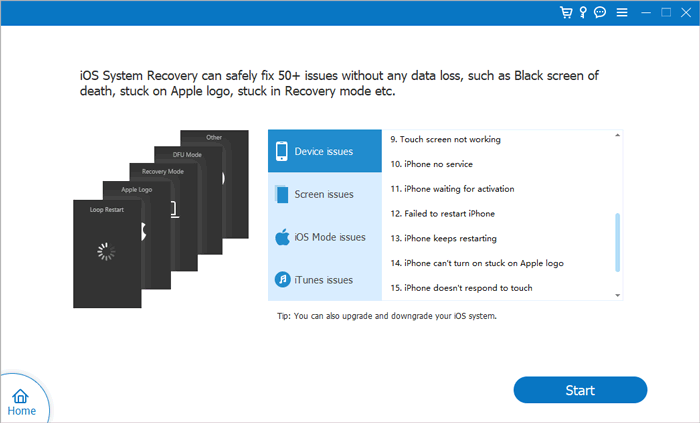
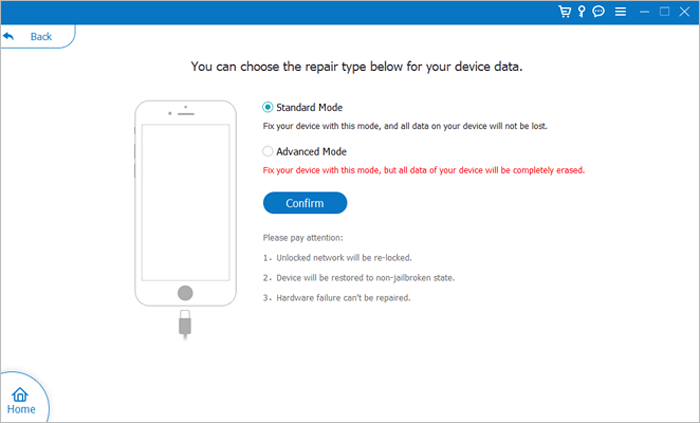
02 Connect your iPhone/iPad via USB. Select "Standard Mode" and click "Confirm" to download the firmware.
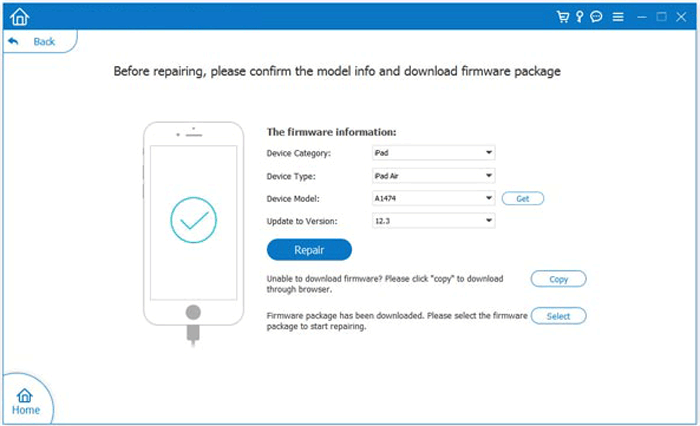
03 After downloading, click "Repair" to start fixing. Your device will restart automatically and you will find the WiFi calling is working now.
In conclusion, WiFi Calling on iPhone is a simple yet powerful feature that can greatly improve call quality in weak signal areas. By following the steps above, you can easily enable and use it, and fix common issues when it's not working. If problems persist, more advanced solutions can help restore normal functionality.
Related Articles:
7 Ways to Transfer Photos from Android to iPhone Wirelessly
Wi-Fi File Transfer for PCs: The Modern Solution to Share




 Free Download for PC
  Free Download for Mac


