Screen mirroring lets you display your iPhone screen on a larger TV in real time, making it easier to enjoy videos, photos, games, and presentations with better visibility and shared viewing. It is especially useful for family entertainment, meetings, or classroom demonstrations where a bigger screen enhances the overall experience. Currently, Apple supports wireless mirroring of your iPhone or iPad to a TV via AirPlay, and some TVs and devices also offer other screen mirroring methods or wired connections.
In this guide, you will learn the main ways to mirror your iPhone to a TV, along with step-by-step instructions, common issues, and practical tips to ensure a smooth and stable connection.
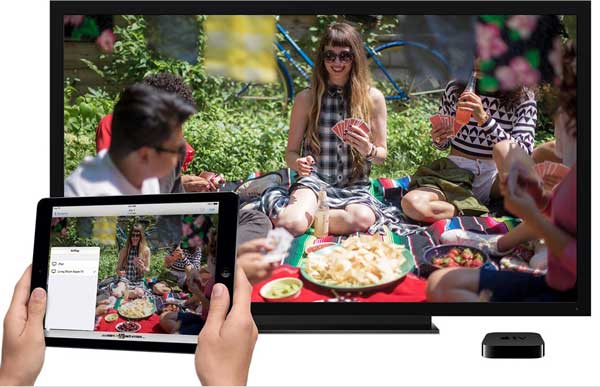
Before using AirPlay to mirror your iPhone screen to a TV, make sure the following conditions are met:
Steps to Mirror iPhone Screen to TV Using AirPlay:
Step 1: Connect your iPhone and TV to the same Wi-Fi network to ensure they can recognize each other.
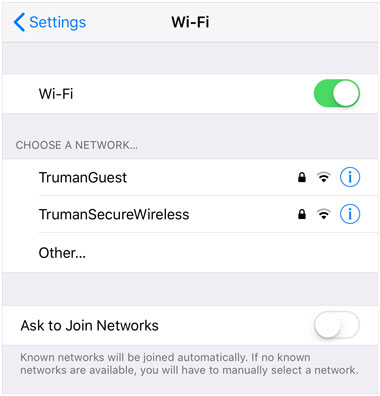
Step 2: Turn on your TV and enable AirPlay in the settings if it is not already activated.
Step 3: Open Control Center on your iPhone by swiping down from the top-right corner (Face ID models) or swiping up from the bottom (Touch ID models).
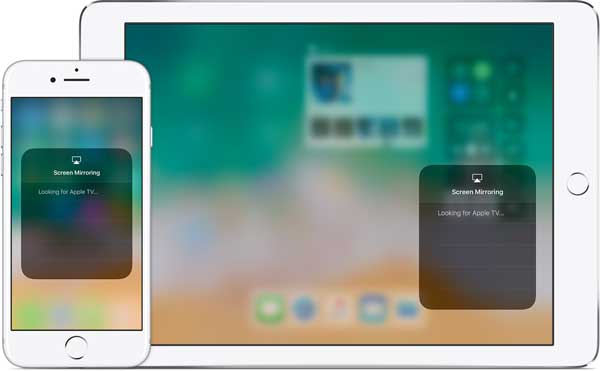
Step 4: Tap the "Screen Mirroring" option to view a list of available devices nearby.
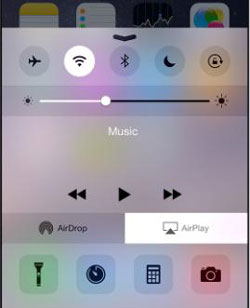
Step 5: Select your TV from the list of devices to initiate the connection.
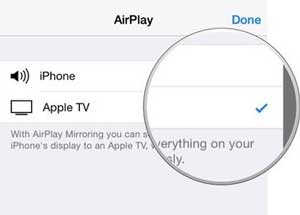
Step 6: Enter the passcode shown on your TV screen into your iPhone if prompted to complete the pairing process.
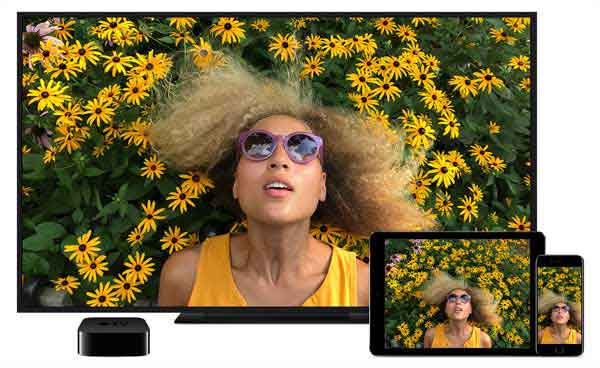
Once connected, your iPhone screen will be mirrored to the TV in real time. (5 Ways to Make Screen Mirroring Full Screen on TV/PC/Mac)
If your TV does not support AirPlay or you prefer alternative methods, there are several practical ways to mirror your iPhone screen to a TV without using AirPlay. These methods include wired connections and third-party casting tools, which can work with a wider range of devices and setups.
This is one of the most reliable wired solutions, especially when Wi-Fi is unstable or unavailable.
Some smart TVs support screen mirroring through dedicated apps or built-in casting features, even without AirPlay.
Many smart TVs (such as Android TV or similar platforms) include their own mirroring protocols.
Wondering how to turn iOS device into AirPlay receiver? Please come and read this article to learn five apps to turn your iPhone or iPad into an AirPlay receiver/speaker easily.
1. Why can't I find "AirPlay" or "AirPlay Mirroring" feature on Control Center?
Please check if your iPhone/iPad supports "AirPlay" or "AirPlay Mirroring" feature. The supported iDevices include iPhone 17/16/15/14/13/12/11/X/8 Plus/8/7/6, iPad 11/10/9/8/Pro/Air/4/mini/2, iPod touch 8/7/6/5/4/3/2, and please update your iDevice to the latest iOS version. (AirPlay Icon Not Showing Up on iPhone?)
2. I can connect to my Apple TV with AirPlay Mirroring before, but now I can't see "AirPlay" option and I can see a message telling "Looking for Apple TV". What's going on?
If so, please check and make sure both of your Apple TV and your iOS device are in the same Wi-Fi network. Or you can try to restart the two devices and router.
3. Can I stream contents from iPhone to Apple TV using different Wi-Fi network?
Yes. When your iPhone/iPad is connecting to a different Wi-Fi network from your Apple TV, Apple TV will pop up a code on screen. And you need to enter the code on your iOS device so that you can mirror the contents from iOS device to Apple TV successfully.
Besides mirroring your iPhone to a TV, you can also project your iPhone screen to a Windows PC or Mac using a dedicated screen mirroring tool - iPhone Screen Mirror. Compared to TV mirroring, using a computer often provides more flexibility, additional features, and a more stable environment, especially when you need to capture or manage your screen content. With such a reliable screen mirror tool, you can easily connect your iPhone to your computer and enjoy real-time mirroring with minimal setup.
Key Features of iPhone Screen Mirror:
How to Mirror Your iPhone Screen to Windows PC or Mac with iPhone Screen Mirror:
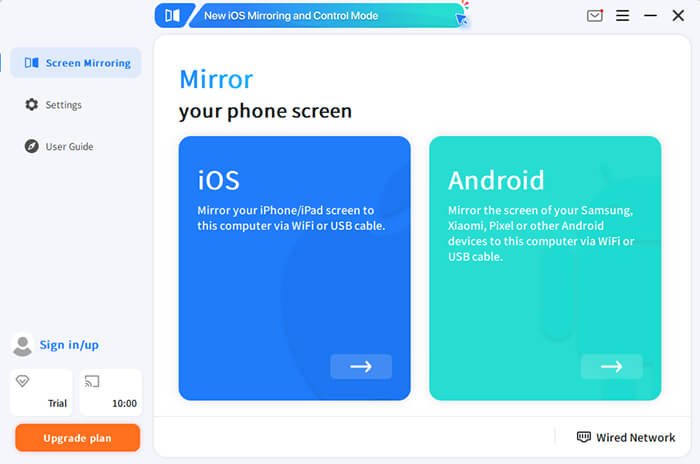
01 Launch the screen mirror software on your computer and select the "iOS" mode to begin the mirroring process.
02 Connect your iPhone or iPad to the computer using a USB cable or Wi-Fi. For the first-time connection, using a USB cable is recommended for a more stable setup. If prompted, tap "Trust This Computer" on your iPhone or iPad.
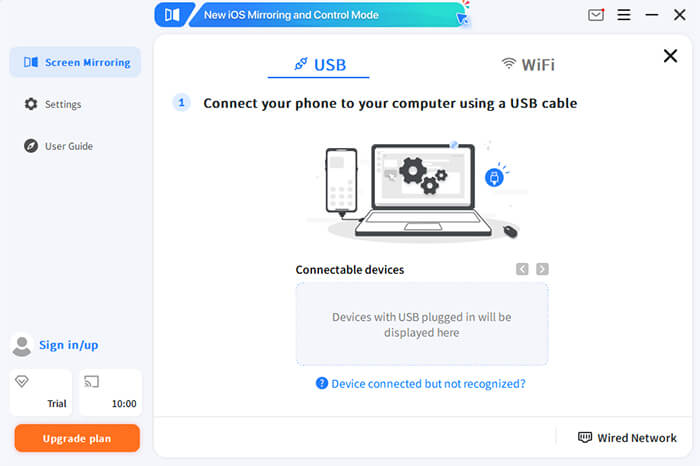
03 Choose your iPhone or iPad from the list of available devices on the software interface, and follow the on-screen instructions if this is your first connection to complete the setup.
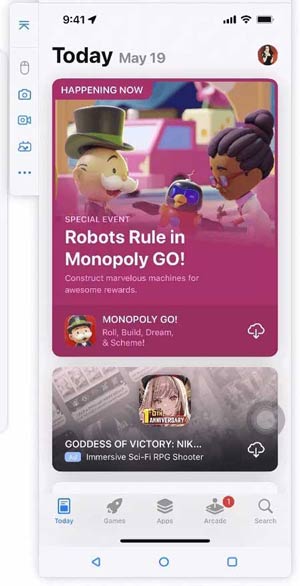
04 Once the connection is successful, your iPhone screen will appear on your computer in real time, allowing you to record the screen, take screenshots, play games, make presentations, or share your screen during meetings and online classes.
Mirroring your iPhone screen to a TV can be done easily using AirPlay, wired connections, or third-party casting tools, depending on your device compatibility and preferences. AirPlay remains the most convenient wireless option for supported TVs, while HDMI adapters provide a stable alternative without relying on Wi-Fi. If AirPlay is unavailable, other casting methods can still get the job done.
For users who need more flexibility, screen mirroring tools like iPhone Screen Mirror on Windows and Mac offer additional features for work, presentations, and content sharing. Choosing the right method ensures a smooth and efficient mirroring experience.
Related Articles:
Mirror iPhone to iPad: Stream from iPhone to iPad in 7 Ways
Mirror iPhone to Mac | View iPhone Screen on Mac [3 Ways]




 Free Download for PC
  Free Download for Mac


