As every iPhone, iPad, or iPod touch user knows, entering recovery mode is a powerful way to fix many iOS issues and restore your device to normal when something goes wrong. Recovery mode allows you to update, restore, or troubleshoot your iPhone or iPad safely, making it an essential tool for system errors, failed updates, or devices stuck on the Apple logo. In some cases, you may also need recovery mode to resolve more complex problems or prepare your device for troubleshooting.
No matter the reason, this step-by-step guide will show you how to enter and exit iPhone or iPad recovery mode easily, using both manual methods and computer tools. Keep reading to learn all the methods and tips for safe iOS recovery.

Recovery mode is a special state on iPhone, iPad, or iPod touch that allows you to update or restore the device when iOS is not functioning properly. Entering recovery mode can fix common issues like failed updates, system crashes, or devices stuck on the Apple logo.
Here are the key points you need to know:
Understanding these basics ensures you use recovery mode safely and avoid accidental data loss.
Entering recovery mode requires connecting your device to a computer with iTunes (on Windows or macOS Mojave and earlier) or Finder (on macOS Catalina and later). The exact button combination depends on your device model.
For iPhone 8 and Later (iPhone X, 11, 12, 13, 14, 15, 16, 17)
For iPhone 7 / 7 Plus
For iPhone 6s and Earlier
For iPad with Face ID
For iPad with Home Button

After entering recovery mode, iTunes or Finder will detect your device and offer options to "Update" or "Restore". Choosing "Update" attempts to fix iOS without erasing data, while "Restore" will erase everything on the device.
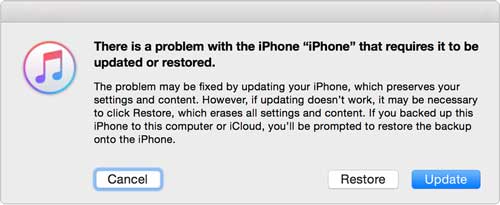
If your iPhone or iPad accidentally enters recovery mode or you no longer need it, you can exit easily. There are a few methods depending on whether you want to do it manually or via a computer.
For most devices, you can exit recovery mode by performing a force restart:
iPhone 8 and Later / iPad with Face ID
iPhone 7 / 7 Plus
iPhone 6s and Earlier / iPad with Home Button
After this, your device should boot normally.
If a force restart doesn't work or your device is unresponsive:
If you want to exit recovery mode without erasing data, always try the "Update" option first.
Sometimes, your iPhone or iPad may get stuck in recovery mode and cannot exit even after multiple force restarts or computer attempts. In these situations, using a professional iOS repair tool is the safest and most efficient solution. iOS System Recovery is designed to fix all kinds of iOS system issues, including devices stuck in recovery mode, white Apple logo, frozen screens, or update failures, without erasing your data.
Key Features of iOS System Recovery:
How to fix iPhone and iPad stuck in recovery mode using iOS System Recovery:
01 Download and install iOS System Recovery on your computer. Open the program and connect your iPhone or iPad via a USB cable. From the main interface, go to "More Tools" > "iOS System Recovery".
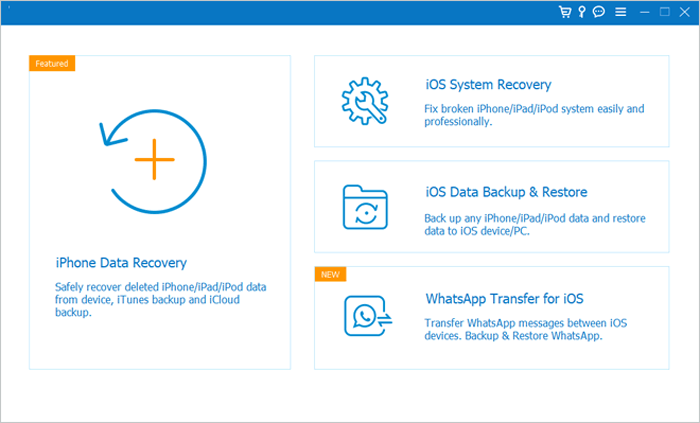
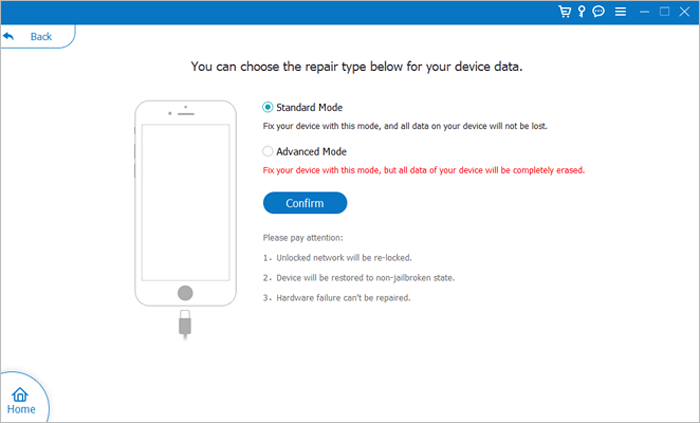
02 Choose "Standard Mode" (to repair the system without data loss) and follow the on-screen instructions to put the device in repair mode if required.
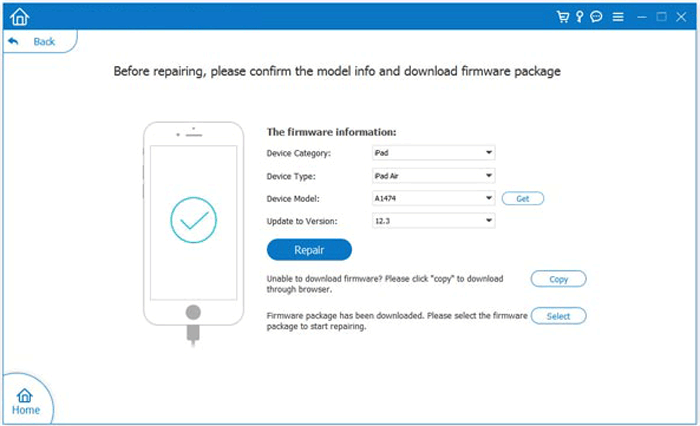
03 The software will detect your device model and prompt you to download the matched firmware. Once downloaded, click "Repair" to fix the stuck device. Your iPhone or iPad will exit recovery mode and return to normal without losing any data.
Here are some frequently asked questions about iPhone and iPad recovery mode. These address common concerns and help you troubleshoot issues more effectively.
Q1: What's the Difference between DFU Mode and Recovery Mode?
Recovery mode does not equal to DFU mode, they are two different modes. Recovery mode only allows to upgrade or restore an iDevice while DFU mode also supports to downgrade the firmware on iOS device.
Besides, when an iDevice is in recovery mode, your iPhone or iPad screen will show you an image status to guide you to connect the device to iTunes with the iTunes logo and a USB cable on screen.
Q2: How long can an iPhone stay in recovery mode?
Your device can remain in recovery mode indefinitely, but it cannot function normally until it exits. For safety, it's best to resolve recovery mode issues as soon as possible to avoid potential system errors.
Q3: Does entering recovery mode erase data?
Does Recovery Mode Delete Everything on iPhone? Well, entering recovery mode itself does not erase data. However, choosing "Restore" in iTunes or Finder will erase all data, while "Update" attempts to fix iOS without deleting anything. Always back up your device before making changes.
Q4: What if iTunes/Finder doesn't detect my iPhone in recovery mode?
Q5: How to fix a recovery mode loop?
A recovery mode loop occurs when your device repeatedly enters recovery mode after restarting. Using iOS System Recovery with Standard Mode usually resolves this issue without data loss.
Q6: Is recovery mode safe for my device?
Yes, recovery mode is a built-in iOS feature intended for troubleshooting. It is safe as long as you follow instructions carefully and avoid unnecessary restores that could erase data.
Recovery mode is a powerful tool for troubleshooting iPhone, iPad, or iPod touch issues, from failed updates to devices stuck on the Apple logo. By understanding how to enter and exit recovery mode safely, you can restore or update your device without unnecessary risk.
For stubborn cases where the device won’t exit recovery mode or gets stuck in a loop, professional tools like iOS System Recovery provide a reliable solution to fix iOS system problems without losing data.
Always remember to back up important files beforehand, and follow the step-by-step methods in this guide to keep your device running smoothly.
Related Articles:
7 Effective Ways to Fix iPhone Stuck in Boot Loop in Minutes
How to Factory Reset iPhone without Passcode in 4 Ways




 Free Download for PC
  Free Download for Mac


