TL;DR:
If you want to mirror your iPhone screen to a Mac, there are several reliable methods depending on your devices and needs.
"Hey, I have a MacBook Air and an iPhone. I'm on an app on my iPhone and using my Mac simultaneously. Is there a way to cast my iPhone screen onto my MacBook? I want to be able to use my iPhone from my Mac."
- Apple Support Community
Whether you're giving a presentation, recording tutorials, streaming mobile games, or simply enjoying videos on a larger display, learning how to mirror iPhone to Mac can significantly improve your viewing experience.
Apple offers several built-in solutions for screen mirroring, while third-party software provides additional features for users who need more flexibility. However, each method has different compatibility requirements and limitations. This guide introduces four proven ways to mirror your iPhone to a Mac. We'll compare their requirements, explain when to use each one, and provide detailed step-by-step instructions.
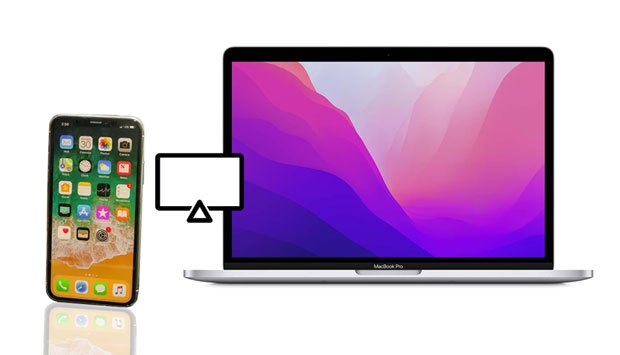
Yes, you can screen mirror your iPhone to a MacBook. This allows you to view your iPhone's screen on a larger display, making it easier to watch videos, share photos, give presentations, record tutorials, or demonstrate apps. Depending on your Apple devices and software versions, the mirroring experience may also include additional interactive features.
To ensure a smooth experience, make sure your iPhone and Mac are compatible and updated to the latest available versions of iOS and macOS. A stable connection, whether wireless or wired, can also improve performance. In the following sections, we'll walk you through several easy ways to mirror your iPhone to your Mac.
If your devices support iPhone Mirroring, this is the most convenient solution. Introduced with iOS 18 and macOS Sequoia, it lets you view and interact with your iPhone directly from your Mac without touching the phone.
Requirements
Steps
Step 1. Unlock both your iPhone and Mac during the initial setup.
Step 2. Open iPhone Mirroring from the Applications folder or Spotlight on your Mac.
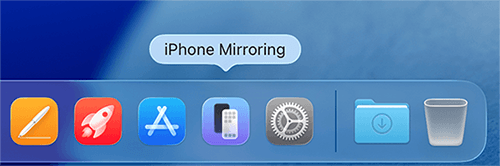
Step 3. Select your iPhone if prompted.
Step 4. Follow the on-screen instructions to complete the pairing.
Step 5. Lock your iPhone, and its screen will appear on your Mac automatically.
Step 6. You can now open apps, swipe, type, and receive iPhone notifications directly from your Mac.
Pros
Cons
AirPlay is another built-in Apple feature that wirelessly displays your iPhone screen on a Mac. Unlike iPhone Mirroring, AirPlay is designed for viewing rather than controlling your device. (How to use AirPlay?)
Requirements
Steps
Step 1. On your Mac, open "System Settings" > "General" > "AirDrop & Handoff".
Step 2. Turn on "AirPlay Receiver".
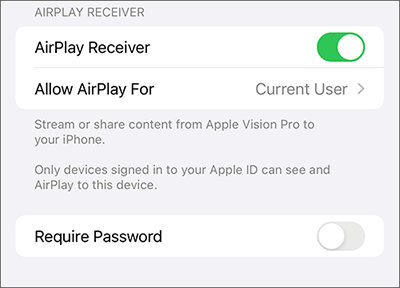
Step 3. Connect both devices to the same Wi-Fi network.
Step 4. Swipe down from the upper-right corner of your iPhone to open Control Center.
Step 5. Tap "Screen Mirroring".
Step 6. Choose your Mac from the available devices.
Step 7. Enter the AirPlay code on your iPhone if prompted.
Your iPhone display will now appear on the Mac.
Pros
Cons
QuickTime Player provides a simple wired solution for mirroring your iPhone. It's especially useful if you need a stable connection for recording tutorials or demonstrations.
Requirements
Steps
Step 1. Connect your iPhone to the Mac using a USB cable.
Step 2. Tap "Trust" on your iPhone if requested.
Step 3. Open QuickTime Player.
Step 4. Select "File" > "New Movie Recording".
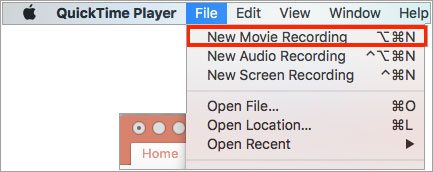
Step 5. Click the arrow beside the Record button.
Step 6. Choose your iPhone under Camera. Your iPhone screen will immediately appear in the QuickTime window.
If you also need to record your iPhone screen, simply click the "Record" button.
Pros
Cons
If you want additional features beyond Apple's built-in tools, Phone Mirror is a practical alternative. It supports both USB and wireless connections and includes useful functions for recording, streaming, screenshots, and displaying your iPhone on a larger screen.
Key Features
How to mirror iPhone to Mac using Phone Mirror?
01Download and install Phone Mirror on your Mac. After the installation is finished, launch the program to access the main interface.
02Choose "iOS" as the device type, then select a suitable connection method, such as USB connection or wireless connection.
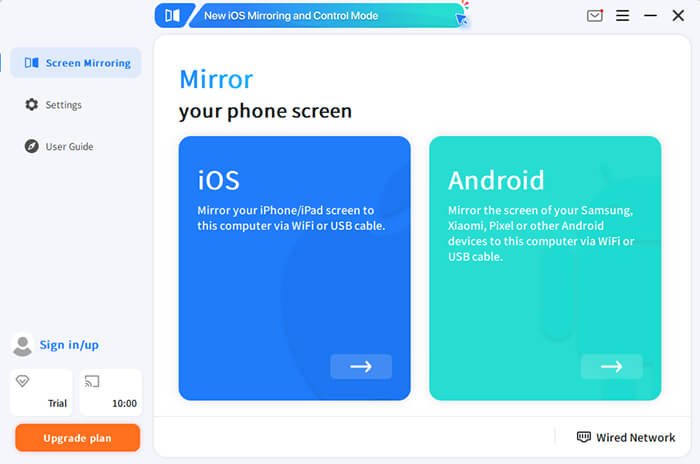
03Connect your iPhone to the Mac and follow the on-screen instructions to complete the setup. If your iPhone displays permission requests, approve them to allow the connection.
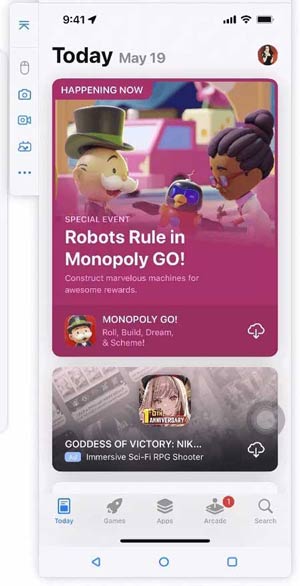
04Once the connection is established, your iPhone screen will appear on your Mac in real time.
1. Why can't I see iPhone mirroring on Mac?
Several reasons may prevent iPhone Mirroring from appearing:
Updating both devices and checking these requirements usually resolves the issue.
2. Can I control my iPhone from my Mac while mirroring?
It depends on the method.
Mirroring your iPhone to a Mac is easier than ever thanks to Apple's built-in features and third-party software.
If both your devices support the latest Apple operating systems, iPhone Mirroring offers the most seamless experience with full device control. AirPlay is ideal for wireless presentations and media playback, while QuickTime Player remains the best option for stable wired mirroring and screen recording. If you need advanced features such as recording, screenshots, or flexible connection options, Phone Mirror is also worth considering.
Choose the method that best matches your devices and workflow, and you'll be able to enjoy your iPhone content on a larger Mac screen in just a few minutes.
Related Articles:
How to Play iOS Games on Mac (Top 4 Ways & Comparison)
How to Remotely Control an iPhone with 3 Effective Methods
Screen Share on Mac with iPad | Useful Tutorial with 5 Approaches
How to Make Screen Mirroring Full Screen in 5 Proven Ways [Android/iPhone]




 Free Download for Mac
  Free Download for PC


