When your iPhone won't connect to Wi-Fi, even simple tasks like browsing the web, updating apps, or backing up data can quickly become frustrating. In this guide, we'll explain why your iPhone won't connect to Wi-Fi and walk you through 12 effective solutions to help you quickly restore normal network connectivity on your iPhone.
Before jumping into the solutions, it's important to understand the possible reasons your iPhone won't connect to Wi-Fi. Identifying the cause can help you choose the right fix and avoid unnecessary steps.
Why is my iPhone refusing to connect to Wi-Fi? Common reasons include:
If your iPhone won't connect to Wi-Fi or the internet, here are 12 effective solutions you can try.
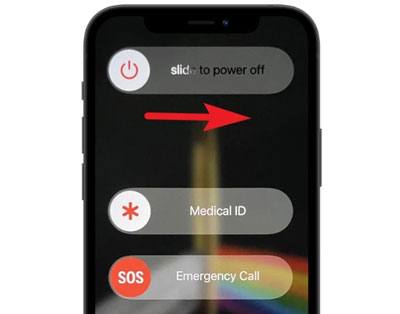
Restarting your iPhone is one of the easiest ways to fix an iPhone not connecting to Wi-Fi. A restart clears out temporary glitches, resets the device's network settings, and helps establish a fresh connection with the Wi-Fi network. If your iPhone won't connect to Wi-Fi or mobile data, a quick restart can often restore its ability to connect to Wi-Fi.
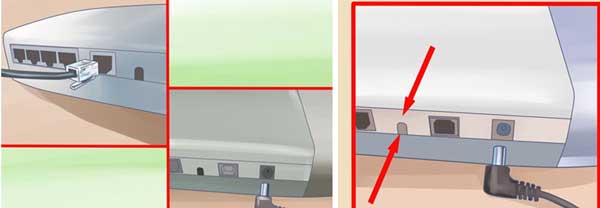
If the router has been running for an extended period, issues like cache buildup or abnormal IP allocation may occur, preventing your iPhone from connecting to the network properly. Therefore, restarting the router is an important step in troubleshooting network problems.
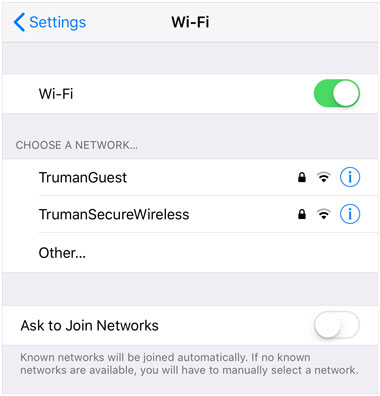
The next method is to turn your Wi-Fi off and on. This helps refresh your connection and can resolve minor software glitches that might be causing the issue. It forces your iPhone to disconnect from the current network and try to reconnect from scratch. It's a simple, quick fix that often solves the iPhone won't connect to Wi-Fi anymore problem.
Airplane Mode disables all wireless communication, including Wi-Fi. If it's enabled accidentally, your iPhone won't be able to connect to any network.
To turn it off, open the "Control Center" and tap the "airplane" icon to disable Airplane mode. Alternatively, you can go to "Settings" and toggle the "Airplane mode" switch off.

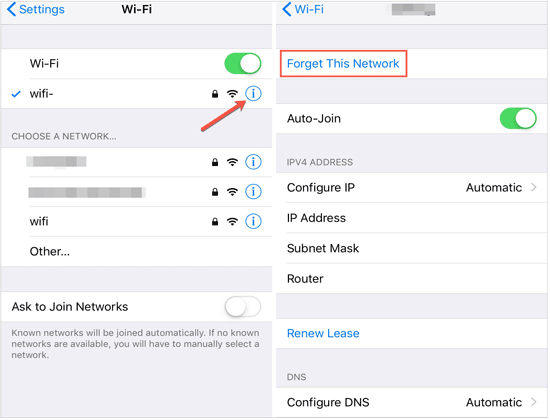
Forgetting a Wi-Fi network and reconnecting can help fix issues caused by corrupted or outdated saved network data. This method prompts your iPhone to treat the connection as a new one, ensuring all network credentials are refreshed. It's an effective way to resolve Wi-Fi connection problems. Here's how to do it:
Step 1. Go to "Settings" and select "Wi-Fi".
Step 2. Tap the "i" icon next to the network and choose "Forget This Network" at the top.
Step 3. Reconnect to the Wi-Fi by entering the password again.
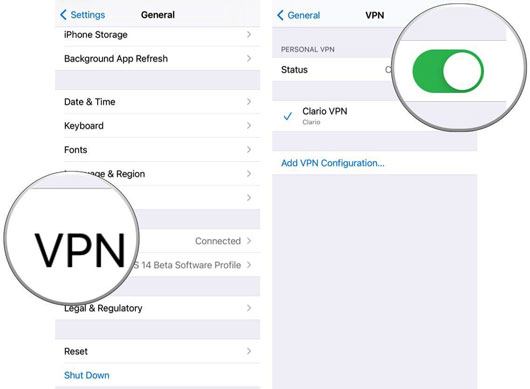
If you have a VPN or proxy set up on your iPhone, try disabling it temporarily to see if it resolves the Wi-Fi connection issue. Open the "Settings" app, tap "General", then select "VPN" to turn off any active connections.
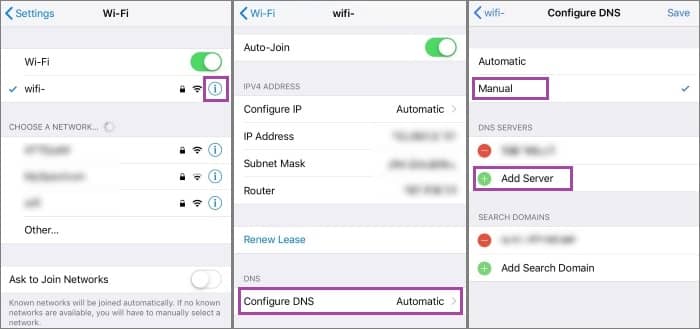
You can also try changing the DNS settings on your iPhone, which may help fix the issue of your iPhone not connecting to Wi-Fi after an update. To switch to Google DNS, follow these steps:
Step 1. Open the "Settings" app, go to "Wi-Fi", and tap the Wi-Fi network you want to connect to.
Step 2. Tap "Configure DNS", then select the "Manual" option.
Step 3. Next, tap "Add Server" and enter Google's DNS address: 8.8.8.8.
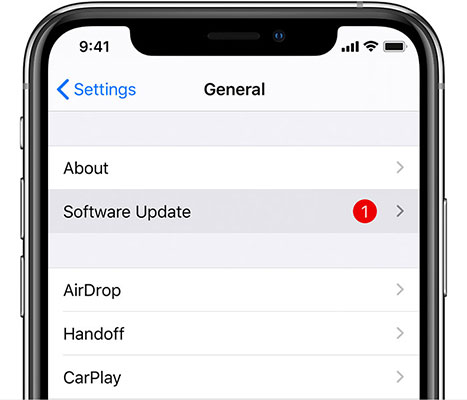
System bugs can also be a potential cause of Wi-Fi connection issues on your iPhone, especially in older versions of iOS. Updating the system is often an effective way to fix these bugs and resolve the problem.
Here are the steps:
Step 1. Open "Settings" > "General" > "Software Update". (iPhone software update failed?)
Step 2. Check if there's an available update.
Step 3. Download and install the latest iOS version.
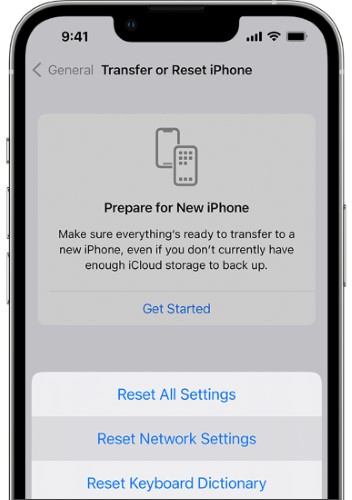
If the problem persists, it's likely due to an issue with the network settings. Resetting the network settings can clear any related errors in one go. To reset your network settings, go to "Settings" > "General" > "Reset" > "Reset Network Settings". Keep in mind that this will erase all your network-related settings, so you'll need to set them up again afterward.
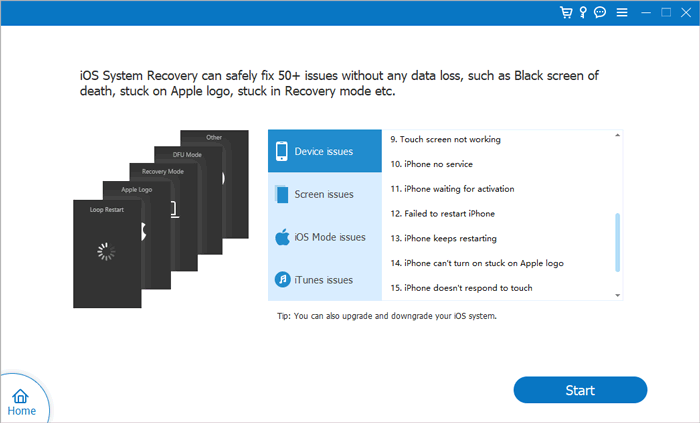
If none of the standard fixes work, the reason your iPhone won't connect to Wi-Fi may be a deeper iOS system error. In this case, a professional iPhone repair tool is the safest option. iOS System Recovery is one such tool. It can fix iPhone not connecting to Wi-Fi, system crashes, update failures, and more without data loss.
The highlights of iOS System Recovery:
Here is how to fix iPhone won't connect to Wi-Fi or mobile data with iOS System Recovery:
01Install the iOS System Recovery software on your computer. After installation, open the program and choose "iOS System Recovery".
02Plug your iPhone into your computer and trust the connection. Click "Start", and follow the on-screen prompts to put your iPhone into recovery mode.
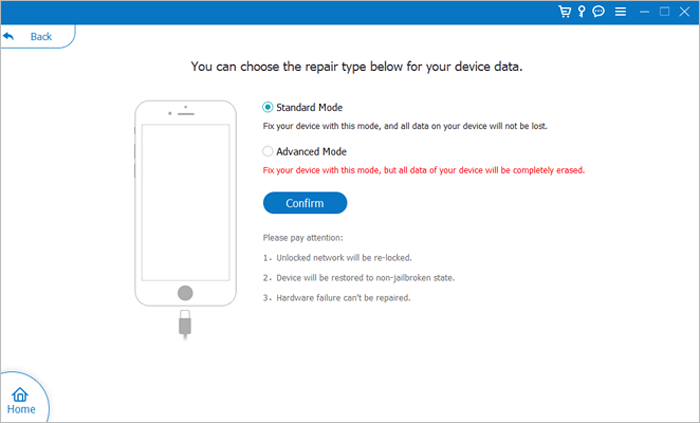
03Choose "Standard Mode" and click "Confirm". The tool will start downloading the necessary iOS firmware for your device.
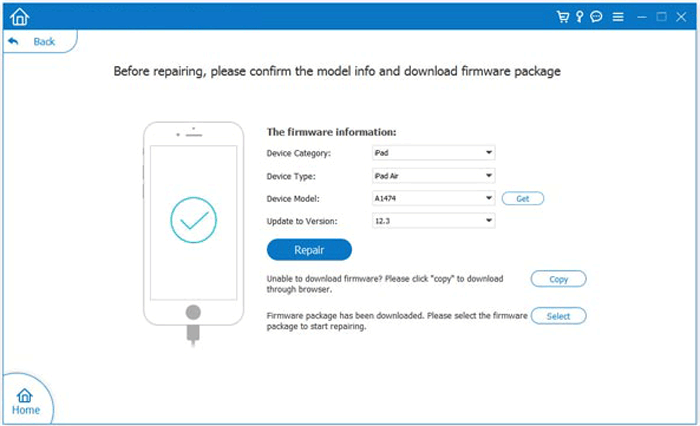
04Once the firmware has been downloaded, click "Repair" to start the process. The tool will automatically fix your device, resolving issues like iPhone not connecting to Wi-Fi.
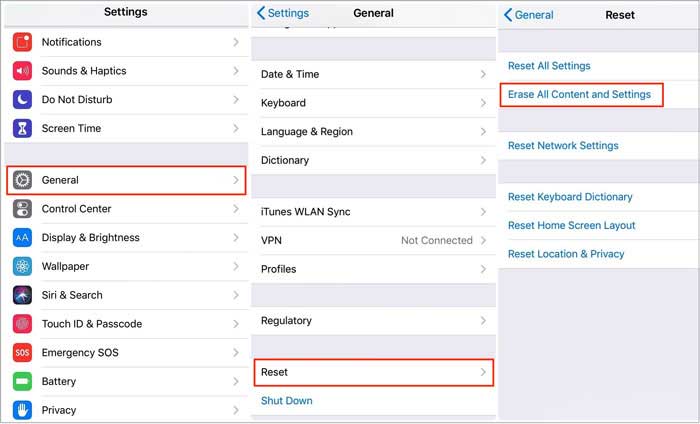
A factory reset is usually an effective last resort solution. It restores the device to its original state by erasing all personal data and settings, helping to resolve issues caused by software conflicts or system malfunctions. However, before performing a factory reset, make sure to back up important data to avoid data loss.
Here are the steps:
Step 1. Back up your iPhone via iCloud or computer.
Step 2. Go to "Settings" > "General" > "Transfer or Reset iPhone".
Step 3. Tap "Erase All Content and Settings". (iPhone won't erase?)
Step 4. Set up the iPhone again and reconnect to Wi-Fi.
If your iPhone won't connect to Wi-Fi even after trying all solutions, the problem may be related to hardware, such as a faulty Wi-Fi antenna or internal component damage. In this situation, contacting Apple Support or visiting an Apple Store is the safest option. Apple technicians can run professional diagnostics to determine whether the issue is hardware-related and advise on repair or replacement if necessary.
When you encounter the issue of iPhone won't connect to Wi-Fi, in most cases, it can be resolved with simple setting adjustments. However, if the problem persists or seems to be caused by a system malfunction, using iOS System Recovery is a safer and more efficient choice. It not only fixes Wi-Fi connection issues but also addresses various iOS system errors, making it a reliable tool to keep on hand for long-term iPhone repairs.
Related Articles:
How to Fix iPhone Won't Back Up to iCloud [Solved in 2026]
How to Fix AirDrop Not Working on iPhone/iPad? - 10 Effective Tips
How to Fix iPhone Cannot Connect to App Store Issue Easily
Is Your iPhone or iPad Unable to Check for Update? [100% Useful Tips]




 Free Download for PC
  Free Download for Mac


