TL;DR:
Transferring an eSIM from an iPhone to an Android phone is now easier than ever in 2026.
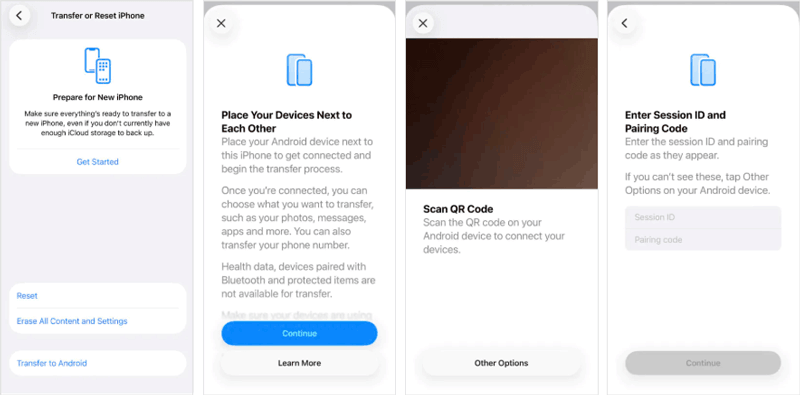
Apple's iOS 26.3 introduced a built-in "Transfer to Android" tool [Settings > General > Transfer or Reset iPhone > Transfer to Android], which is the simplest method if your carrier is supported (USA: AT&T, T-Mobile, Verizon; UK: EE; Germany: DT-DE; France: SFR; Japan: KDDI) and your Android device runs Android 17 or later. The process uses QR code scanning and includes data such as photos, messages, contacts, and Home Screen layout.
If the direct method is not available, you can still transfer your eSIM by contacting your carrier and scanning a new QR code on the Android device. Always back up your iPhone before you start, and keep both phones above 50% battery with a stable Wi-Fi connection.
"Was wondering can a user themselves transfer esim from iPhone to Android device or would a call to 611 be required? Thanks".
eSIM is very convenient to use because it does not require insertion or removal. Its working principle is similar to a SIM card, both storing authentication information from the operator to enable network connection. However, for many users, the question of how to transfer eSIM between different brands of phones remains unfamiliar. This article will show you how to transfer eSIM from an iPhone to an Android phone.
Yes, you can transfer an eSIM from an iPhone to an Android phone. The process depends on three factors:
Your carrier - Most major carriers now support cross-platform eSIM transfers, including AT&T, Verizon, T-Mobile (USA), EE (UK), DT-DE (Germany), SFR (France), and KDDI (Japan).
Your iPhone software - iOS 26.3 or later includes a dedicated "Transfer to Android" tool. If you have an older iOS version, you will need to use your carrier's method.
Your Android device - The Android phone must support eSIM (most modern Samsung Galaxy, Google Pixel, and other flagship models do) and run Android 17 or later for the quickest transfer experience.
Note: eSIM profiles remain under carrier control. Even with the best technology, your carrier has the final say on whether a transfer is allowed. Always check your carrier's eSIM policy before starting.
Before you attempt any eSIM transfer, complete this checklist:
Update your iPhone - Go to Settings > General > Software Update. iOS 26.3 or later is required for the direct transfer method.
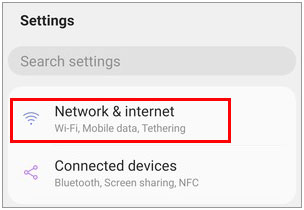
Check that your Android phone supports eSIM - Go to Settings > Network & Internet > SIMs (or Connections > SIM Manager on Samsung). Look for an "Add eSIM" or "Add mobile plan" option.
Connect both devices to a stable Wi-Fi network - Do not rely on mobile data for the transfer.
Keep battery levels above 50% on both phones to avoid interruptions.
Back up your iPhone - Use iCloud or a computer to back up your data in case anything goes wrong.
Sign in to your carrier account (if required) - Some carriers ask you to authorize the transfer through their app or website.
Check that your Android phone is SIM-unlocked - If the phone is locked to another carrier, the eSIM transfer will fail.
If you have confirmed that your carrier supports eSIM transfer, then the next step is to follow the specific instructions.
If your iPhone is running iOS 26.3 or later, this is the simplest way to transfer your eSIM. The feature uses a QR code connection and allows you to move your eSIM, photos, messages, contacts, calendars, call history, and even your Home Screen layout at the same time.
Step 1: On your Android phone (during initial setup or from Settings)
If you are setting up a new Android phone, follow the on-screen prompts until you reach the network connection screen. Select "Transfer SIM from another device" if the option appears.
If your Android phone is already set up, go to Settings > Network & Internet > SIMs (or Connections > SIM Manager on Samsung) and tap "Add eSIM" or "Transfer SIM from another device".
Step 2: On your iPhone, start the transfer
Open Settings > General > Transfer or Reset iPhone > Transfer to Android.
Place the two devices next to each other and ensure both have Wi-Fi and Bluetooth turned on.
On your iPhone, tap Continue. Your iPhone will display a QR code on the screen.
Step 3: Connect the devices
On your Android phone, look for a "Scan QR code" option. Use your Android's camera to scan the QR code shown on your iPhone.
Alternatively, you can go to Settings > Network & Internet > SIMs > Add eSIM > Scan QR code on your Android.
Step 4: Choose what to transfer
On your iPhone, select the data you want to transfer - photos, contacts, calendars, call history, messages, and the eSIM. Tap Continue.
After your data transfer is complete, tap Continue again to move your eSIM.
Step 5: Confirm the eSIM transfer on your iPhone
Double-click the side button on your iPhone when prompted to confirm the eSIM transfer.
Wait for the transfer to complete. Your phone number will be removed from your iPhone and activated on your Android phone within a few minutes.
Supported carriers for this method (as of May 2026): AT&T, FirstNet, T-Mobile, Verizon (USA); KDDI (Japan); DT-DE (Germany); SFR (France); EE (UK).
If your iPhone is running an older version of iOS, or if your carrier does not yet support the direct "Transfer to Android" feature, you can still move your eSIM by contacting your carrier. This is the traditional method and works with any eSIM-compatible Android phone.
There are no direct or third-party tools that can assist us in transferring eSIM from iPhone to Android, so the most reliable approach is to contact your carrier.
Step 1: Remove (or deactivate) the eSIM from your iPhone
Go to Settings > Cellular (or Mobile Service).
Tap on the eSIM plan you want to transfer.
Tap Delete eSIM or Remove Cellular Plan to deactivate it.
Notes: If you prefer to keep the eSIM active on your iPhone until the new one is ready, skip this step. However, most carriers will deactivate the old eSIM automatically when they issue a new QR code.
Step 2: Contact your carrier
Call your carrier's customer support or use their mobile app.
Tell them that you want to transfer your existing eSIM from an iPhone to an Android phone.
The carrier will issue a new eSIM activation QR code. They may email it to you, show it on their website, or send it via SMS.
Step 3: Scan the QR code on your Android phone
On your Android device, go to Settings > Network & Internet > SIMs (or Connections > SIM Manager on Samsung).
Tap Add eSIM or Add mobile plan.
Tap Scan QR code and scan the QR code provided by your carrier.
Follow the on-screen prompts to complete the activation.
Step 4: Test your connection
Turn on Airplane Mode for 10 seconds, then turn it off.
Check the status bar to confirm that your cellular signal has returned.
Not all carriers support eSIM transfer through customer service. Some carriers do not provide a QR code but instead give you an activation code (often called an SM-DP+ address and an activation code). You can enter the eSIM information manually on your Android phone.
Step 1: Obtain the activation details from your carrier
Contact your carrier and request the SM-DP+ address and activation code for your eSIM. They may also provide a confirmation code.
Step 2: Manually enter the details on your Android phone
On your Android device, go to Settings > Network & Internet > SIMs > Add eSIM.
Look for an option that says Enter manually or Need help? - this option is usually at the bottom of the screen.
Enter the SM-DP+ address and activation code exactly as provided.
Tap Continue and follow the prompts to download and activate the eSIM profile.
Step 3: Delete the eSIM from your iPhone (if not already done)
Go to Settings > Cellular > tap the eSIM plan > Delete eSIM. This step ensures the eSIM profile is not active on two devices simultaneously.
Issue 1: "No eSIM transfer option" on iPhone
Your iPhone must be running iOS 26.3 or later. Update via Settings > General > Software Update. If still absent, your carrier may not support direct transfers yet - use Method 2 instead.
Issue 2: QR code not working
Most QR codes are single-use only. Contact your carrier to issue a new QR code.
Issue 3: eSIM activates but no service
Turn on Airplane Mode for 10 seconds, then turn it off. If that does not help, go to Settings > Network & Internet > SIMs and check that the eSIM is selected as the default for mobile data and calls.
Issue 4: eSIM still active on iPhone after transfer
The number should automatically deactivate on the old phone once the transfer is complete. If it remains active, go to Settings > Cellular > Delete eSIM on your iPhone to remove it manually.
Issue 5: Transfer fails with "device not supported"
Ensure your Android phone is eSIM-compatible and SIM-unlocked. Use the *#06# dialer code on your Android - if a 32-digit EID number appears, the device supports eSIM.
Issue 6: Carrier says eSIM cannot be transferred
Some prepaid or promotional plans restrict eSIM transfers. Ask your carrier to convert your plan to a post-paid or standard plan, or request a physical SIM card instead.
While the "Transfer to Android" tool in iOS 26.3 also moves your photos, contacts, messages, and Home Screen layout, you may want a more comprehensive solution - especially if you have a lot of music, or eBooks to transfer.
Coolmuster Mobile Transfer is a one-click computer program that moves Contacts, SMS, photos, videos, music, eBooks (PDF and ePub) from iPhone to Android without overwriting existing data. Thus, you won't lose any data during the transferring process.
It has 4 transfer modes: iOS to Android, Android to Android, iOS to iOS, and Android to iOS. It works with most Android brands including Samsung, Google Pixel, Xiaomi, Oppo, Vivo, and OnePlus, as well as all iPhone models.
Following these steps to transfer data from iPhone to Android by Coolmuster Mobile Transfer:
01Download and install Coolmuster Mobile Transfer on your Windows PC or Mac.
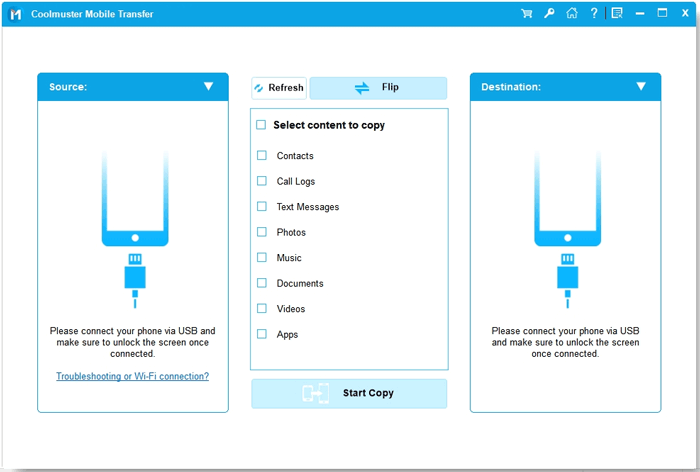
02Connect both your iPhone and Android phone to the computer using USB cables. Ensure the iPhone is set as the Source; if not, hit "Flip" to change the phone positions.
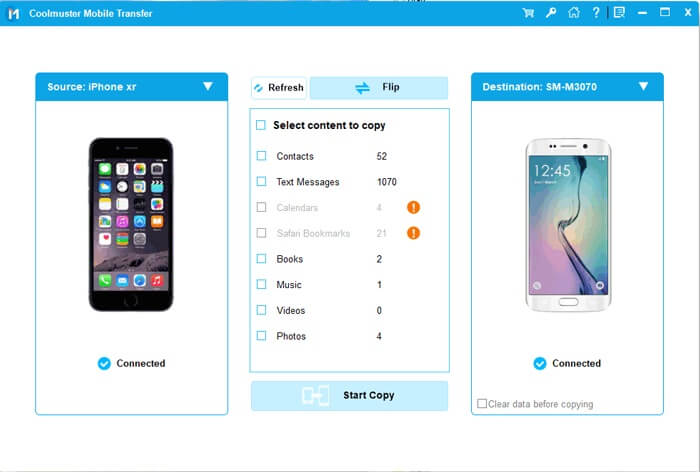
03Tick the data types you want to transfer from iPhone to Android, and then click "Start Copy" to start the transfer.
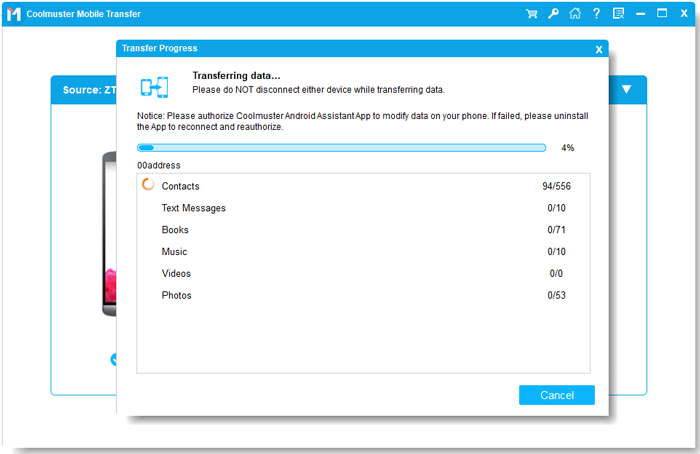
The software will automatically detect both devices and handle the transfer without requiring an internet connection.
Here's the video guide (about 2 minutes long):
Q1: Is there a direct eSIM transfer app that moves my eSIM profile from iPhone to Android automatically?
No. eSIM profiles are not ordinary data files - they are securely managed by your mobile carrier. You cannot copy an eSIM like a photo. However, Apple's "Transfer to Android" feature works directly between the two phones without needing a separate app. Always start the transfer from your iPhone's Settings.
Q2: What if my Android phone doesn't support eSIM?
If your new Android phone is not eSIM-compatible, you cannot use an eSIM on it. Contact your mobile carrier and ask them to send you a physical SIM card. Most carriers will convert your eSIM plan to a physical SIM free of charge.
Q3: Can I use the same eSIM QR code from iPhone setup on Android?
Usually not. Most eSIM QR codes are generated for one-time use on a specific device. Contact your carrier and request a new QR code specifically for your Android phone.
Q4: Will my WhatsApp or other messaging apps continue working after the eSIM transfer?
Yes. Transferring your eSIM moves only your cellular service - it does not delete any apps or their data. Your WhatsApp, WeChat, Telegram, and other messaging apps will remain installed. However, you may need to verify your phone number again on those apps after the transfer is complete.
Q5: How long does an eSIM transfer take?
A direct transfer (Method 1) usually takes 2-5 minutes. Carrier-assisted transfers (Method 2 or 3) can take anywhere from 5 minutes to 24 hours, depending on your carrier's process. Some carriers process eSIM requests instantly, while others require manual approval.
Q6: Can I keep my eSIM active on both my iPhone and Android at the same time?
No. An eSIM profile can only be active on one device at a time. When you complete the transfer, your phone number will be deactivated on your iPhone and activated on your Android.
Q7: What happens if I lose service during the transfer?
If the transfer is interrupted (for example, because of a low battery or lost Wi-Fi connection), your eSIM may become inactive on both phones. Contact your carrier immediately - they can issue a new QR code or reactivate your service remotely.
Q8: Does eSIM transfer work with prepaid plans?
It depends on the carrier. Some prepaid plans allow eSIM transfers, while others restrict them to post-paid accounts. Check your carrier's eSIM policy before you begin.
Q9: Will transferring an eSIM to Android affect my iCloud data or Apple ID?
No. Transferring your eSIM only affects your cellular service. Your iCloud photos, iMessage history, Apple ID, and other Apple-specific data will remain on your iPhone unless you choose to delete them.
Transferring an eSIM from an iPhone to an Android smartphone may be more complex than swapping over a physical SIM card. However, using the strategies given in this article, you may quickly do the task.
First, make sure that your device supports eSIM.
Second, confirm that your eSIM is transferable.
Finally, complete the procedures outlined in this article.
If you wish to transfer data from your iPhone to an Android, consider using Coolmuster Mobile Transfer. It allows you to seamlessly move data between devices with a single click.
Related Articles:
How to Transfer Data from iPhone to Samsung? [5 Proven Ways]
[Solved] How to Transfer Files from iPhone to Android via Bluetooth?
Seamless Transition: How to Transfer Messages from iPhone to Android






 Free Download for PC
  Free Download for Mac


