TL;DR: Need to compress file size without losing too much quality? This guide covers 5 easy ways to compress a file on Windows, Mac, Android, and iPhone. Learn how to create ZIP files for free, use YouCompress to compress files online, and reduce video or audio file size with Video Converter Ultimate. Follow the simple steps to save storage space and share files faster!
Do you often get upset about the large size of your files? Whether you need to save storage space, send email attachments, or upload to social media, large files always bring various troubles. Don't worry, this article will teach you how to compress file sizes. Whether you want to compress images, videos, or documents, there are the simplest and most effective methods here to help you easily solve the problem of large files. Keep reading, and let's learn how to make file size smaller together!

File compression is the process of reducing the storage space occupied by a file or the amount of data that needs to be transferred using specific algorithms. It is generally divided into two types: lossless compression and lossy compression.
The main benefits of file compression include:
- Reducing the amount of storage space a file occupies.
- Making it easier to share files via email, instant messaging apps, or cloud platforms.
- Combining multiple files into a single archive for easier transfer and management.
- Reducing the amount of data required for uploads and downloads in certain situations.
Keep in mind that the compression ratio depends on the file type, original data, and compression algorithm used. Some files can be significantly reduced in size, while others may show little to no change.
If you want to compress a file without downloading additional software, start with the built-in compression features on your computer. Both Windows and macOS can create ZIP archives, making them useful for compressing documents, folders, and multiple files for sharing.
Windows lets you compress files and folders into ZIP archives directly from File Explorer. This method is free and works well for documents, presentations, spreadsheets, and collections of files.
Follow these steps to compress a file on Windows:
Step 1. Open File Explorer and locate the file or folder you want to compress.
Step 2. Select one or more files. To compress multiple items, hold down "Ctrl" while selecting them.
Step 3. Right-click the selection. On Windows 11, choose "Compress to ZIP file". Depending on your Windows version and context menu, you may find the option under Compress to ZIP file or "Send to" > "Compressed (zipped) folder".
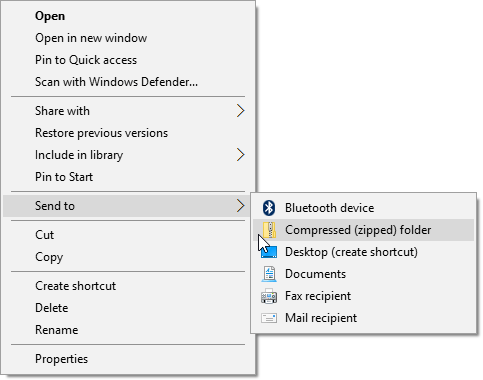
Step 5. Enter a name for the new ZIP file and press "Enter" if prompted.
Windows will create a ZIP archive in the same location as the original files. You can then upload or share the archive without sending each file separately.
Mac users can also use the built-in Archive Utility to compress files or folders into ZIP format without installing any additional apps. Here's how to make the file size smaller on Mac:
Step 1. Open Finder and navigate to the file or folder you want to compress.
Step 2. Select the item. You can also select multiple files by holding "Command" while clicking them.
Step 3. Right-click or Control-click the selection.
Step 4. Choose "Compress" followed by the file or item count, if shown.
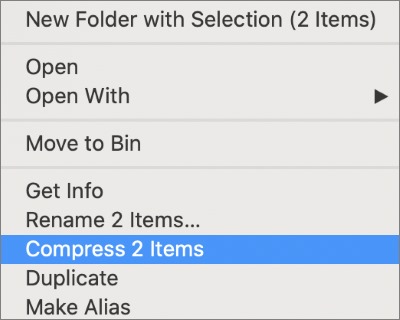
Step 5. Wait for macOS to create the ZIP archive in the same folder.
For a single file, the result will usually be named after the original file with a .zip extension. If you select multiple items, macOS may create an archive named Archive.zip.
You can share the ZIP file directly or upload it to a cloud storage service. Recipients can usually extract it by double-clicking the archive.
If ZIP compression doesn't reduce your media files enough, a dedicated video and audio compressor is a better option. Video Converter Ultimate provides media conversion and compression features that let you adjust output settings to reduce file size.
It is particularly useful when you need to compress a video file for email, messaging apps, websites, or cloud uploads, or compress audio files before sharing them.
The highlights of Video Converter Ultimate:
If you have a large MP4, MOV, AVI, or other supported video, you can use the software's video compression feature to reduce its size. To compress a video file, follow the steps below:
01Open the main interface and select "Video Compressor" under the "Video" tab.

02Import the video you want to compress and adjust the output settings, such as file size, file name, format, resolution, and bitrate.
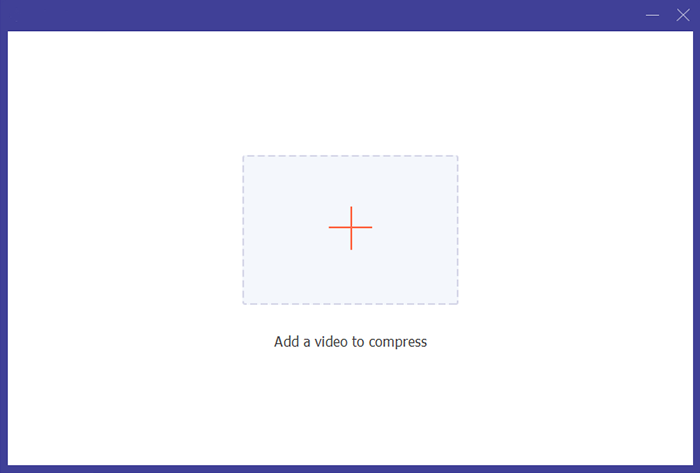
03Choose a destination folder for the compressed video, then click "Compress" to begin.
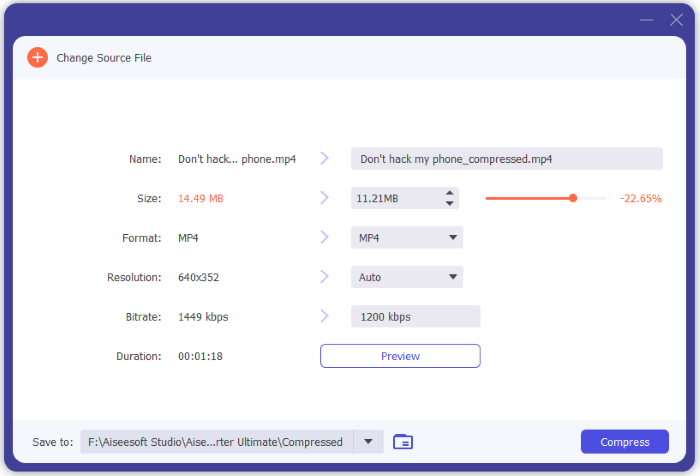
Large audio recordings, music files, and voice-over tracks can also take up considerable storage space. Video Converter Ultimate provides audio conversion and compression options that can help you make supported audio files smaller.
Here is how to make audio files smaller using Video Converter Ultimate:
01Download and install Video Converter Ultimate on your computer. Launch the program, open the "Home" tab, and select "Audio Compressor" under the "Audio" section.
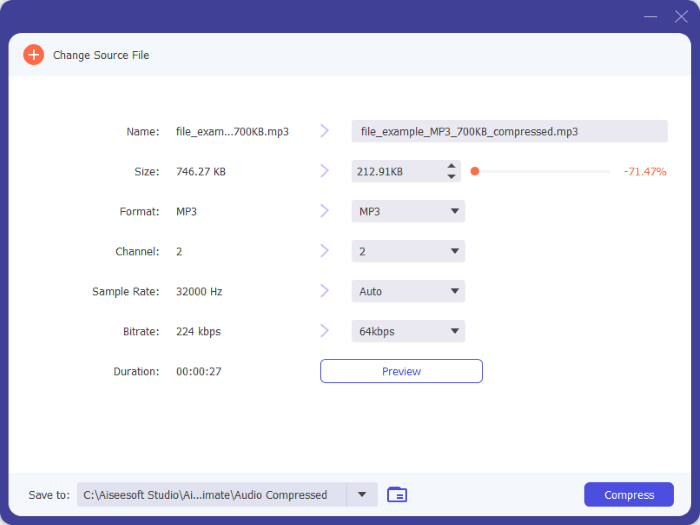
02Import the audio file you want to compress and adjust the compression level using the slider. You can also fine-tune the output format, file name, channel, sample rate, and bitrate to suit your needs.
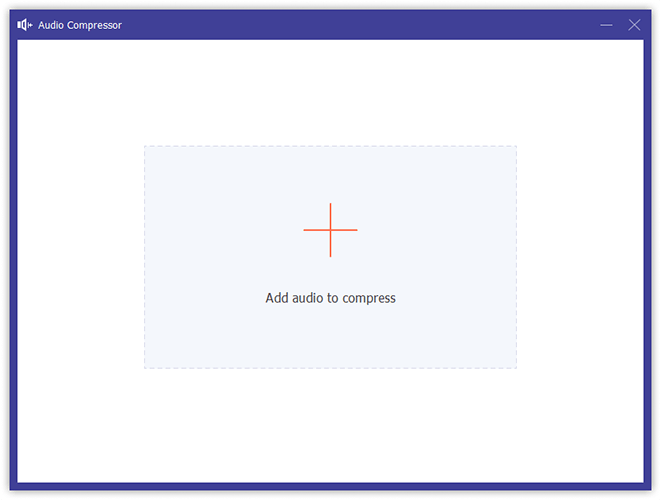
03Choose a destination folder for the compressed file, then click "Compress" to start the process and save a smaller audio file with your preferred settings.
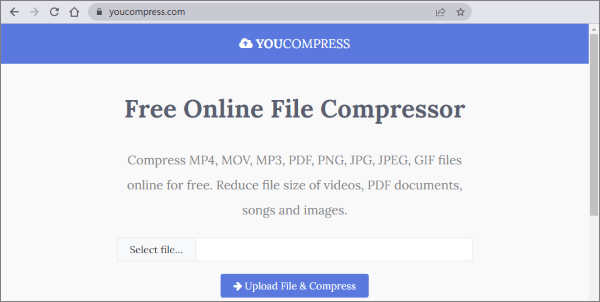
If you don't want to install desktop software, an online file compressor is another option. YouCompress offers browser-based compression tools for supported file types, allowing you to upload a file, adjust available settings, and download the result.
This approach is useful when you need to compress a file online for free and don't want to configure software on your computer. However, free usage limits, maximum file sizes, and available settings can vary.
Here is how to compress a file online for free using YouCompress:
Step 1. Open the official FreeConvert website. Click the "Select file" button to choose the file from your computer, and upload it.
Step 2. Start the compression process if prompted, then wait for YouCompress to finish processing your upload. Processing time depends on the file size and your internet connection.
Step 3. Once compression is complete, click the download link to save the smaller file to your computer.
If you need to compress files directly on your phone, you can use a file manager app or a third-party compression tool. The exact steps depend on your phone's operating system and the formats supported by the app.
Android's file management options vary by phone manufacturer and operating system version. Some devices include archive creation in their built-in file manager, while others may require a third-party app.
Here's how to compress files on Android if your file manager supports ZIP creation:
Step 1. Open your File Manager app, then move all the files you want to compress into a single file/folder.
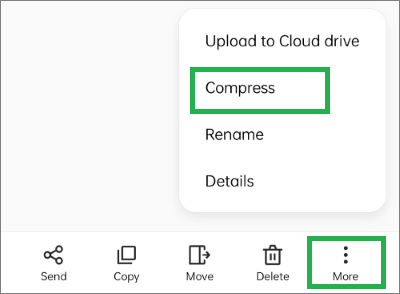
Step 2. Click on the "menu" button (typically three dots in the app's right-hand corner).
Step 3. Choose all the items you want to zip, and at the bottom, select "Compress". Save the compressed files, which will appear in a separate folder.
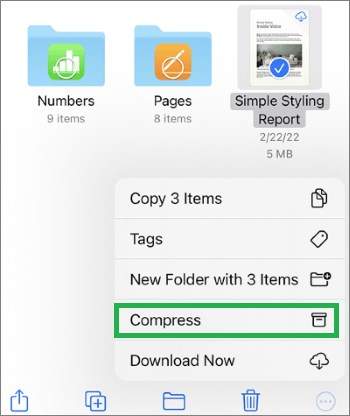
The iPhone's Files app supports creating ZIP archives from selected files and folders. This is a convenient way to compress documents before attaching them to emails or uploading them to cloud storage.
Follow these steps to compress files on an iPhone:
Step 1. Open the Files app.
Step 2. Navigate to the file or folder you want to compress.
Step 3. Touch and hold the item to open its context menu.
Step 4. Tap "Compress".
Step 5. Wait for the ZIP archive to appear in the same location.
If photos and videos are taking up too much space, adjusting how they are captured or stored can be more effective than creating ZIP archives.
The best way to compress a file depends on its format and your goal. Windows, Mac, Android, and iPhone provide convenient ZIP options for packaging documents and folders, while FreeConvert is useful when you want to compress supported files online for free.
For large video and audio files, however, a dedicated media compression tool is often more effective than ZIP compression. Video Converter Ultimate is worth considering if you need to reduce video or audio file size while adjusting output settings to balance file size and quality. Always check the compressed result before deleting the original, especially when working with important recordings or high-quality media.
Related Articles:
How to Compress PDF Online [Online PDF Size Reducer Review]
Top 7 MP4 Compressors: Reduce Video Size Without Losing Quality
Top 5 File Compressor Solutions: Pros, Cons & How to Use
A Comprehensive Guide to Compress MP3 on Computer/Mobile/Online




 Free Download for PC
 Free Download for Mac


