TL;DR:
Want to find or change the iTunes backup location? This guide will show you how to locate, view, and manage iPhone backup files on Windows and Mac, as well as explore an easier way to back up your iPhone/iPad without iTunes.
Backing up an iPhone, iPad, or iPod with iTunes is a reliable way to keep your important data safe. However, when you need to restore a backup, free up computer storage, or move backup files to another drive, finding the iTunes backup location can be confusing. In this guide, we will show you where iTunes stores backup files on Windows and Mac, how to view and manage them, and how to change the backup location when needed.
When you back up an iPhone or iPad using iTunes (or Finder on macOS Catalina and later), the backup files are automatically saved in the MobileSync folder on your computer. However, the exact iTunes backup location varies depending on your operating system. Below are the default backup paths for Windows and Mac.
On Windows computers, iTunes stores iPhone and iPad backups in one of the following locations:
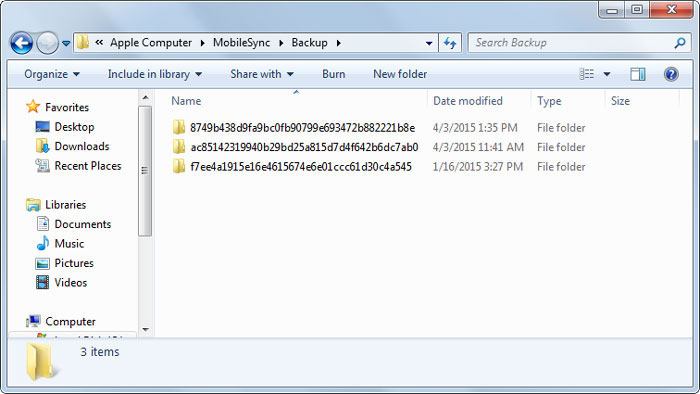
To quickly find the backup folder on Windows, open File Explorer, copy the corresponding path above, replace "Your username" with your Windows account name, and press "Enter". If the AppData folder is hidden, enable hidden items in File Explorer settings first.
On Mac computers, iPhone and iPad backups are stored in the following location:
~/Library/Application Support/MobileSync/Backup/
You can also manually open this folder by following these steps:
Note that iTunes was replaced by Finder on macOS Catalina (10.15) and later. Although you no longer use iTunes to create backups, Finder stores iPhone backup files in the same MobileSync folder by default.
If you want to know what iTunes backs up, you can't miss this article.
What Does iTunes Backup Include? [A Comprehensive Guide]Now that you know where your iPhone backups are stored, you may want to check or access these backup files on your computer. You can either manually open the backup folder using the default path or use iTunes/Finder to locate a specific backup more easily.
If you want to access your iPhone backup files on a Windows PC, follow these steps:
Step 1. Press the "Windows + R" keys on your keyboard to open the Run window.
Step 2. Enter "%appdata%" and click "OK".
Step 3. Navigate to: "Apple Computer" > "MobileSync" > "Backup"
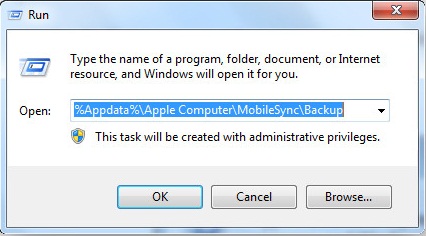
Then, you can view all iPhone backup folders stored on your computer.
On Mac, you can find iPhone backup files through Finder by following these steps:
Step 1. Open Finder on your Mac.
Step 2. Click "Go" > "Go to Folder" from the top menu bar.
Step 3. Enter the following path and click "Go": ~/Library/Application Support/MobileSync/Backup/
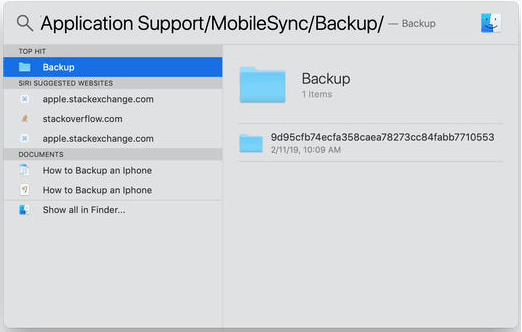
You will be directed to the folder containing your iPhone backup files.
If you have multiple iPhone backups on your computer, you can use iTunes or Finder to check detailed backup information and locate a specific backup.
On macOS Catalina 10.15 and later:
On Windows or macOS Mojave 10.14 and earlier:
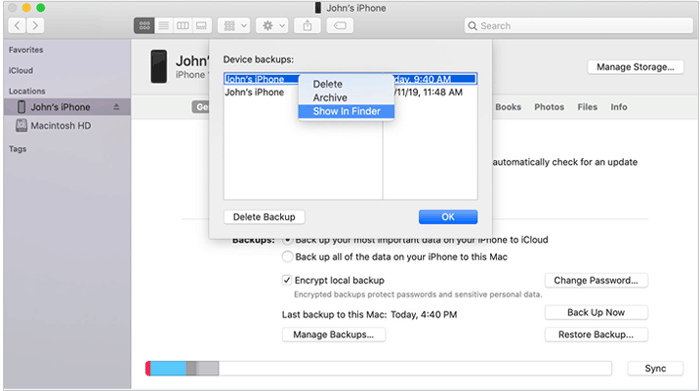
Now, you can quickly find and manage your iPhone backup files stored on your computer.
Note: Are you curious about iTunes backups and iCloud backups? What’s the difference between them? Click here to learn more about them.
After finding your iPhone backup files, you may need to manage them for different reasons. For example, old backups can take up a lot of storage space, or you may want to move backups to another drive to save room on your computer. In this part, we will show you how to delete, move, and restore iPhone backups easily.
If you have created multiple iPhone backups over time, some older backups may no longer be useful but still occupy a large amount of storage space. You can remove unwanted backups directly through iTunes or Finder.
On Windows or macOS Mojave and earlier:
On macOS Catalina and later:
After deleting old backups, you can free up storage space on your computer and keep your backup folder organized.
The default iTunes backup location is stored on your computer's system drive, which may take up a large amount of storage space over time. If you have limited disk space or want to manage your iPhone backups more efficiently, you can move the backup folder to another location, such as an external drive or another partition.
Since iTunes and Finder do not provide a built-in option to change the backup location, you need to move the existing Backup folder and create a symbolic link to redirect new backups to the new location.
Change iTunes Backup Location on Windows 11/10/8/7
Step 1: Close iTunes and find the original backup folder.
The default iTunes backup locations are:
C:\Users\[YourUsername]\AppData\Roaming\Apple Computer\MobileSync\Backup
or:
C:\Users\[YourUsername]\Apple\MobileSync\Backup
Step 2: Copy or move the entire "Backup" folder to your preferred location, such as:
D:\iTunesBackup
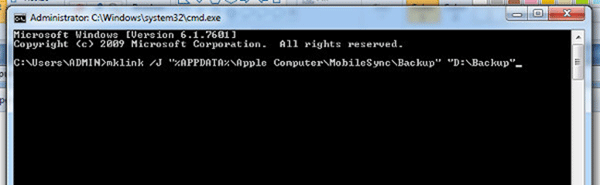
Step 3: Open Command Prompt as administrator. Search for "Command Prompt", right-click it, and select "Run as administrator".
Step 4: Enter the following command to create a symbolic link:
mklink /J "C:\Users\[YourUsername]\AppData\Roaming\Apple Computer\MobileSync\Backup" "D:\iTunesBackup"
Once completed, Windows will redirect the original backup folder to the new location.
Step 5: Open iTunes and create a new iPhone backup to verify that the backup files are saved in the new folder.
Change iTunes Backup Location on Mac
Step 1: Move the existing "Backup" folder from the default location:
~/Library/Application Support/MobileSync/Backup
to another location, such as:
/Volumes/ExternalDrive/iTunesBackup
Step 2: Open "Terminal" on your Mac. You can find it through "Applications" > "Utilities" > "Terminal".
Step 3: Enter the following command to create a symbolic link:
ln -s /Volumes/ExternalDrive/iTunesBackup ~/Library/Application\ Support/MobileSync/Backup
If a "Backup" folder already exists in the original location, remove it or rename it before creating the symbolic link.
Step 3: Connect your iPhone and create a new backup through Finder (macOS Catalina and later) or iTunes (macOS Mojave and earlier) to check whether the new backup location works properly.
Note: Make sure the new storage location is always connected and available. Otherwise, iTunes or Finder may fail to create new backups.
If you need to recover your iPhone data after a device reset, upgrade, or replacement, you can restore your device using an existing iTunes backup.
On Windows or macOS Mojave and earlier:
On macOS Catalina and later:
Keep in mind that restoring an iTunes backup will replace the current data on your iPhone with the data stored in the backup. Therefore, make sure you have saved any important new files before starting the restore process.
We've just covered how to view the iPhone iTunes backup location on Windows/Mac and how to change it. If you find iTunes backup management too complicated or are restricted by the default storage path, you might want to try a more flexible backup tool - Coolmuster iOS Assistant. It allows you to customize the iPhone backup location on your computer and backs up and restores your iPhone without iCloud or iTunes.
Key features of Coolmuster iOS Assistant:
Click the download button to download this tool on your computer and follow the step-by-step guide below to use iOS Assistant to back up your iOS devices to the computer.
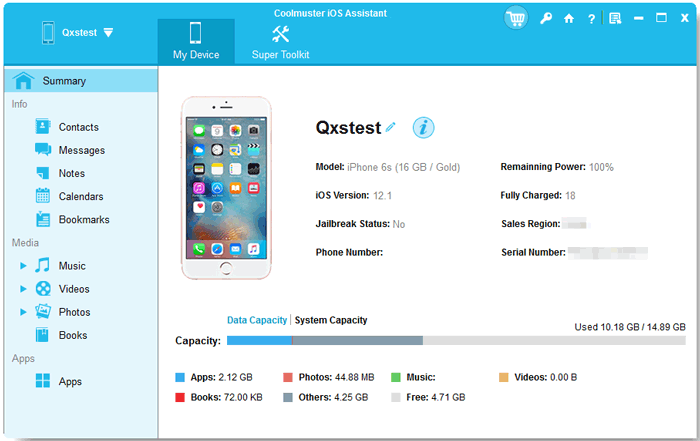
01Launch iOS Assistant on your computer. Connect your iPhone to the computer using a USB cable, tap "Trust" when the "Trust This Computer?" prompt appears on your iPhone, and click "Continue" as instructed. Once connected successfully, you'll see your iPhone's main information displayed on your computer.
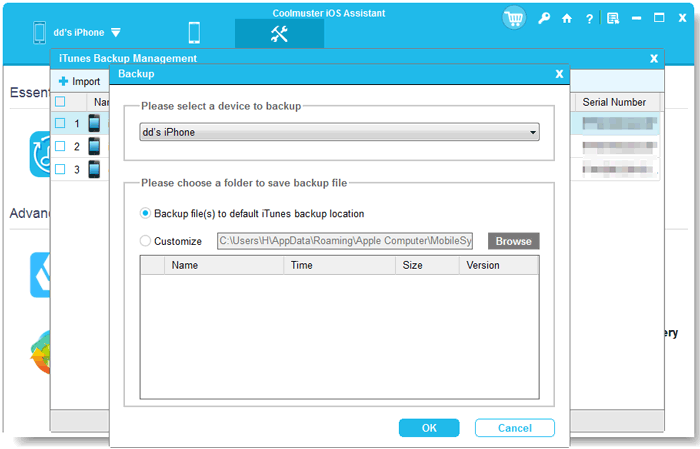
02To back up the entire iPhone, go to "Super Toolkit" > "iTunes Backup & Restore" > "Backup". Select your device from the drop-down menu, tap "Browse" to customize a different backup location on your computer, and then click "OK" to start the backup process. After backing up, you will find the backups in your customized location.
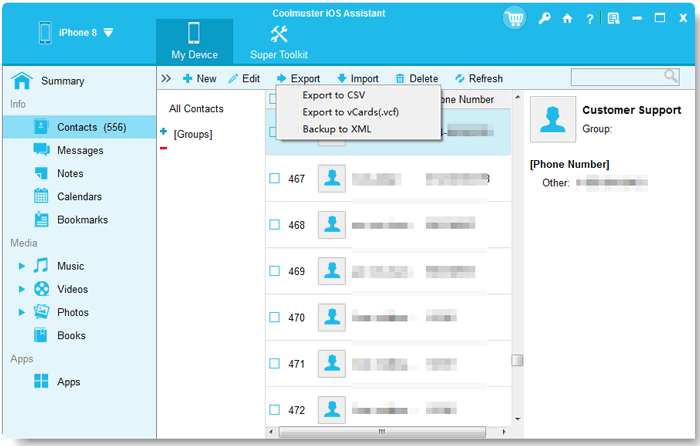
03If you want to back up specific data from your iPhone to your computer, once the software detects your device, select a file type from the left panel. Then, preview and choose the data you want in the right panel. Finally, click the "Export" button to transfer the selected files from your iPhone to your PC or Mac.
Video Tutorial:
Q1. Can I Open and Read iTunes Backup Files Directly?
No. iTunes backup files are not saved in a normal readable format. Apple stores the data in a special structure with encrypted file names, so you cannot simply open a backup folder and view photos, messages, or contacts directly. To access specific data from an iTunes backup, you need to restore the backup to an iPhone or use a professional backup management tool.
Q2. How Much Storage Space Does an iPhone Backup Need?
The size of an iPhone backup depends on the amount of data stored on your device, including app data, messages, settings, and other files. If your iPhone contains a large number of photos, videos, or apps, the backup file can take up several gigabytes of space on your computer.
Q3. Does Deleting an iTunes Backup Delete Data from My iPhone?
No. Deleting an iTunes backup only removes the backup copy stored on your computer. It does not affect the data currently saved on your iPhone. However, make sure you do not delete the only backup containing important information before creating a new one.
Q4. Why Can't I Find My iPhone Backup Folder?
There are several possible reasons why the backup folder is missing:
Make sure you are looking in the correct MobileSync folder and that your iPhone has been backed up successfully before.
Q5. Are iTunes Backups Encrypted?
Yes, iTunes allows you to create encrypted backups that protect sensitive information with a password. Encrypted backups can include additional data, such as saved passwords, Wi-Fi settings, and Health data, which are not included in standard backups.
Q6. Can I Transfer an iTunes Backup to Another Computer?
Yes, you can transfer an iTunes backup to another computer by copying the entire backup folder to the corresponding MobileSync directory on the new computer. After that, iTunes or Finder should recognize the backup when you connect the same iPhone.
If you need to change the iTunes backup location, you can start by finding the default backup folder and then follow the steps above to move it to another location. However, using command-line methods can be complicated, especially for users who are not familiar with technical operations.
For a simpler way to manage iPhone backups, you can try Coolmuster iOS Assistant. It allows you to back up your iPhone/iPad data to a location you choose without dealing with complex commands, making the entire backup process faster and more convenient.
If you have any questions or problems while managing your iPhone backups, feel free to share them in the comments below.
Related Articles:
How to Fix iPhone Backup Not Enough Space on Computer Issue (Proven Tips)
How to Resolve iTunes Backup Session Failed Issue? - 6 Solutions
How to View My iTunes Backup Files with or without Restoring Data? (Solved)
How to Delete iPhone Backup to Free Up Space? (iTunes & iCloud)




 Free Download for PC
  Free Download for Mac


