"My Face ID worked last night on my iPhone 11 Pro Max. Then I did the iOS update to 16.6.1. Now Face ID does not work. When I clicked on the help me it told me my camera no longer supported Face ID, and I would have to take it to an Apple Store to get it fixed!! I don't think so!! Has anyone else had this, and how did you fix it?"
- from Apple Community
Face ID is one of the most convenient features on your iPhone, allowing you to securely unlock your device, make payments, and access sensitive information with just a glance. However, many iPhone users encounter issues with iPhone Face ID not working. This article will explain why Face ID is not working on iPhone and provide step-by-step instructions on how to fix it.
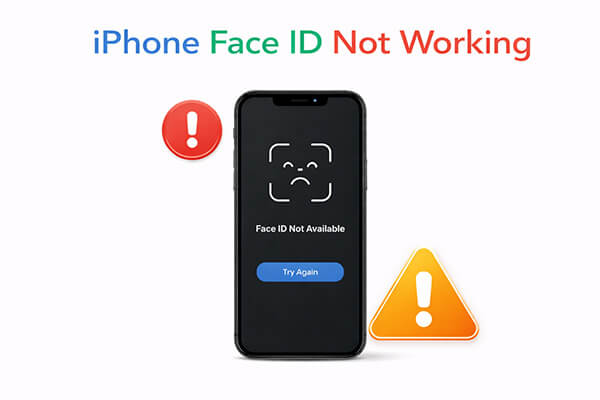
If you're wondering, "Why is my Face ID suddenly not working on my iPhone?" several factors could be at play. Some of the most common reasons why Face ID isn't working include:
Now that you know some of the reasons iPhone 17 Face ID is not working, let's go over the most effective solutions.
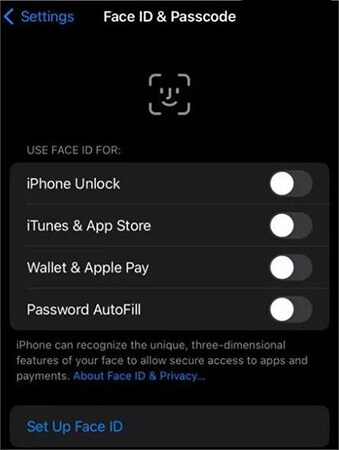
One of the first things you should check is whether Face ID is properly configured. You may have accidentally disabled Face ID, which is why it isn't working. Here are the steps:
Step 1. Go to "Settings" on your iPhone.
Step 2. Scroll down and tap "Face ID & Passcode".
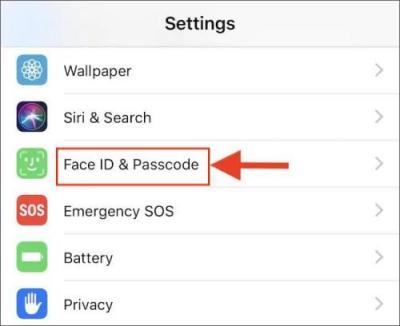
Step 3. Enter your passcode to verify your identity.
Step 4. Make sure Face ID is enabled for unlocking your iPhone, Apple Pay, and other features.
The TrueDepth camera is located on the front of your iPhone or iPad. If it is blocked by dirt, a screen protector, or a case, Face ID will not work properly. Make sure to check the camera regularly and keep it clean. To do this, follow the steps below:
Step 1. Turn off your device and check the front camera area to ensure there is no dirt or obstruction.
Step 2. If you are using a case, make sure it is not covering the camera area.
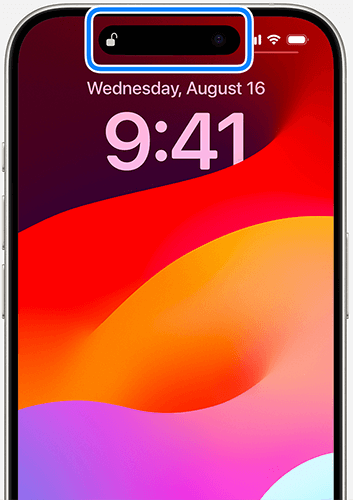
Since Face ID works by detecting and identifying face patterns, it requires the face to be visible to work perfectly. When the Face ID is not working properly, check if anything is covering the most important parts of your face, like the nose, mouth, and eyes, which need to be scanned by the camera. By default, Face ID will not work if your face is covered with sunglasses or a face mask.
The Face ID will only work on your iPhone if you hold it in a portrait position. On an iPad, it will operate in landscape and portrait. So, depending on your device, ensure you hold it in the correct position. Ultimately, it is crucial to check the alignment before using the Face ID.
Face ID might not work properly on an iPhone in dark conditions or when the lighting is dull. The scanner can't read facial features accurately in these conditions, where there's no proper light. To resolve this, move to where there is proper lightning.
Check that the TrueDepth camera is in a range where it can correctly detect your facial features. Usually, the distance between your face and the TrueDepth camera should be 10-20 inches, which is about arm's length. It should be close to the face, like when answering a call on FaceTime or taking a selfie. This way, the camera will capture your facial features fully.
Is iPhone Face ID still not working after the update? It could be that your appearance changed, which led to recognition failure. You should create a new alternative appearance. It may help fix the issue at hand. To give it a shot, follow these steps:
Step 1. Head to "Settings" and tap "Face ID & Passcode". Enter the password of your iPhone to continue.
Step 2. Now, click on the "Set Up an Alternative Appearance" option.
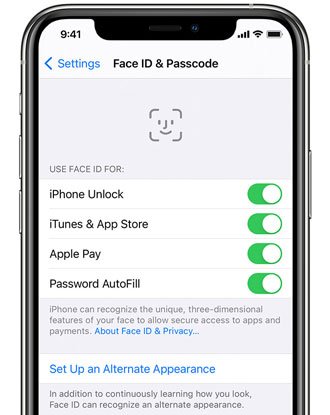
Step 3. Follow the onscreen instructions to come up with a new appearance.
If none of the above methods work, you can try resetting Face ID and setting up your facial data again. Here is how to fix Face ID not working on iPhone:
Step 1. Open "Settings", go to "Face ID & Passcode", and tap "Reset Face ID".
Step 2. Tap "Set Up Face ID" to register your face again.
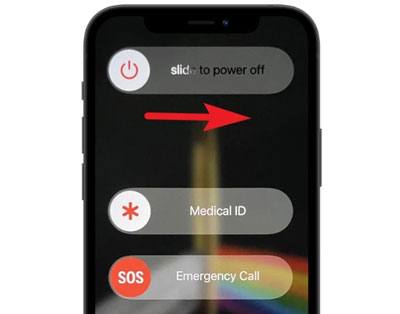
Temporary system glitches can cause Face ID to stop working properly. In such cases, a simple restart can resolve the issue. To restart the iPhone, follow these steps:
Step 1. Press and hold the "Side" button and either "Volume" button until the power-off slider appears.
Step 2. Drag the slider to turn off your iPhone.
Step 3. After the device turns off, press and hold the "Side" button again until the Apple logo appears.
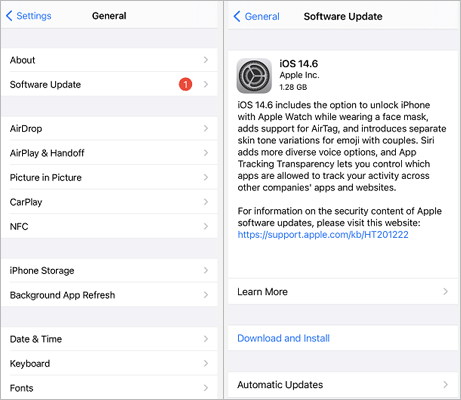
The "Apple Face ID not working on iPhone" issue may also be caused by system bugs or software incompatibility. Updating your device to the latest version of iOS may resolve these problems.
Here is how to update your iPhone:
Step 1. Launch the "Settings" application and head to the "General" page.
Step 2. Click "Software Update" and wait for the device to check if it's updated to the latest version.
Step 3. If there is an update, click on "Download and Install". (iPhone stuck on software update?)
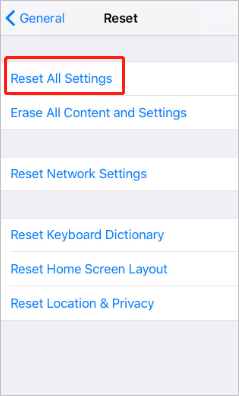
If Face ID still doesn't work after trying the above solutions, you may need to reset all settings on your device. This will reset system settings like Wi-Fi and Bluetooth without deleting your personal data. Follow these steps to reset iPhone settings:
Step 1. Click on the "Settings" app to open it and look for "General". Click on it.
Step 2. On the General menu, click the "Transfer or Reset iPhone" option.
Step 3. Tap "Reset" and "Reset All Settings".
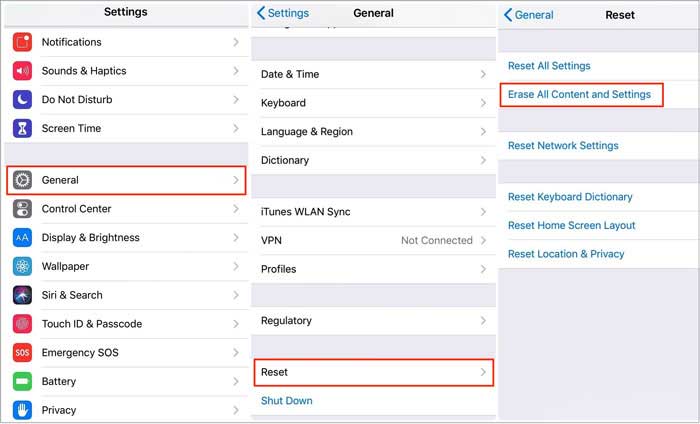
The last resort is to perform a factory reset, but keep in mind that this will erase all data. Be sure to back up your iPhone beforehand to avoid losing important files. After that, you can do it with these steps:
Step 1. Head to iPhone "Settings" > "General" > "Reset" option.
Step 2. Click on "Erase All Content and Settings". Confirm this process. (iPhone won't erase?)
If you have tried all the above methods and Face ID still isn't working properly, the issue may be hardware-related. At this point, you should contact Apple Support or visit an Apple Store for professional assistance.
If you've tried multiple methods and still can't fix the Face ID issue, iOS System Recovery is a powerful tool that can repair various iOS system problems, including iPhone Face ID not working. It supports both iPhone and iPad and is easy to use without any technical knowledge. With iOS System Recovery, users can fix system issues without losing data, making it an ideal solution for resolving iOS problems.
Key features of iOS System Recovery:
Here is how to fix Face ID not working on iPhone 17 without data loss:
01Run the iOS System Recovery app on a computer. Now click on "More Tools" > "iOS System Recovery".
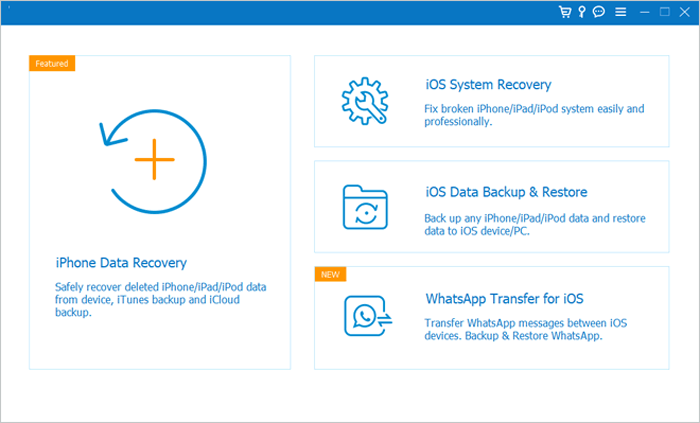
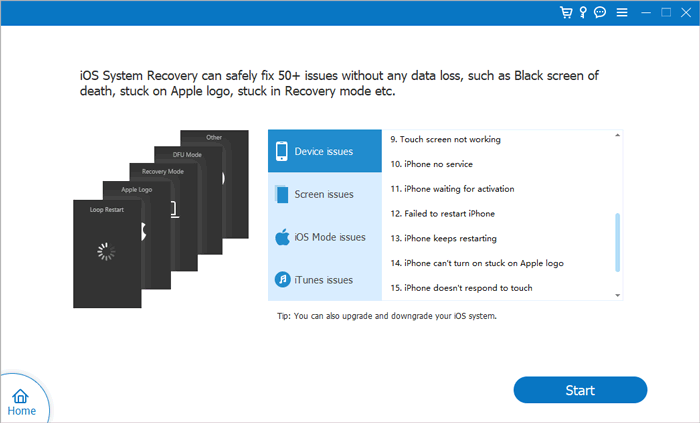
02Proceed to click on the "Start" button at the bottom.
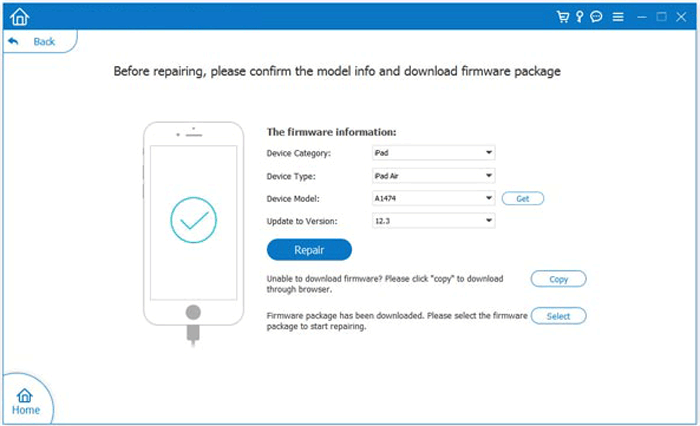
03Click the "Repair" button and download the firmware on your iOS device. After downloading the firmware, the software will repair the iOS device to normal.
Face ID is a very useful feature, but if it suddenly stops working, it can cause some inconvenience. With the various methods provided in this article, you can troubleshoot and resolve the issue step by step. If the problem still persists, it is recommended to use iOS System Recovery to fix system issues and restore Face ID functionality without data loss.
Related Articles:
6 Proven Fixes for Your Passcode is Required to Enable Face ID
[100% Success] How to Fix iPhone Auto Lock Not Working on iPhone/iPad?
[Solved] How to Fix iPhone 17 Quick Start Not Working in 2026?
How to Unlock iPhone Without Swiping Up? [Comprehensive Guide]




 Free Download for PC
  Free Download for Mac


