Since the launch of iOS 26, users can't wait to update their devices. However, they may also encounter unexpected issues after the update. For instance, iPhones may get stuck in Recovery Mode just after updating the device to iOS 26. This can be frustrating, especially if you are in dire need of using your phone.
If you are experiencing the iPhone stuck in Recovery Mode after iOS 26/18 update issue, don't fret. Read this article to find out how to fix the iPhone Recovery Mode loop problem.
After upgrading to iOS 26, your phone can get stuck in Recovery Mode for a number of reasons. Below are the most common reasons:
Now that you have an idea of what could be causing the iPhone stuck in Recovery Mode after the iOS 26 update problem, it is time to solve it, and the next section outlines possible ways to do that.
If your iPhone stays in recovery mode after the update, don't worry too much. The methods outlined below can help you gradually resolve the issue.
Force restarting is the simplest method to resolve many system glitches. If it's just a temporary system issue, restarting the iPhone will usually help it exit recovery mode. Here are the steps to force restart an iPhone:
For iPhone 8 or later:
Keep holding the button until the Apple logo appears.
For iPhone 7 / 7 Plus:
For iPhone 6s or earlier:
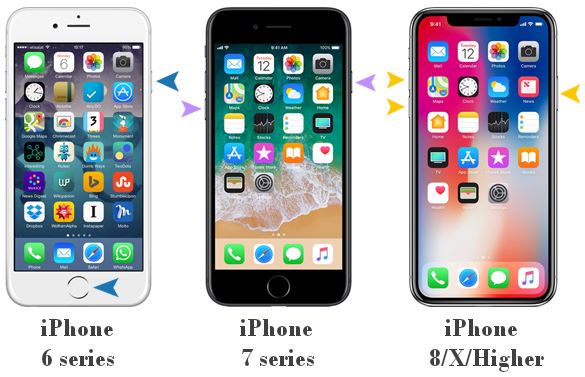
If your iPhone still remains in recovery mode, move on to the next solution.
If a force restart doesn't work, you can try reinstalling or updating the system via a computer. Because of the nature of software, Apple may not always provide the option to reinstall the exact iOS 18/26 version you were using previously.
Here is how to do it:
Step 1. Connect the iPhone to the computer using a USB cable.
Step 2. Open iTunes (on Windows or older macOS) or Finder (on macOS Catalina and later).
Step 3. Once the device is in recovery mode, a prompt will appear. Click "Update" and wait for the system to download and install.
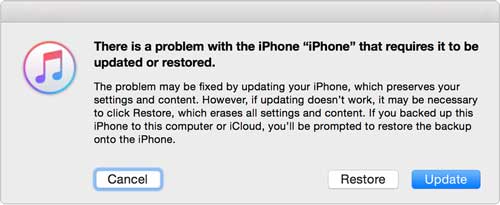
If the update fails, you can choose to restore the device. However, be aware that this method may erase the device's data. Therefore, make sure you have backed up your iPhone before starting the restore process.
Here are the steps:
Step 1. Connect your iPhone to your computer with a USB cable.
Step 2. Open iTunes or Finder.
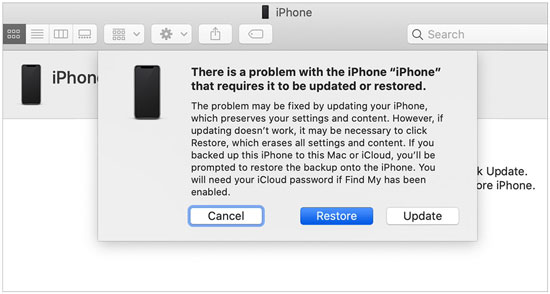
Step 3. Once your device is detected, you'll see a message indicating that your iPhone is in recovery mode and needs to be restored.
Step 4. Click "Restore" to download the latest official iOS version and restore your device.
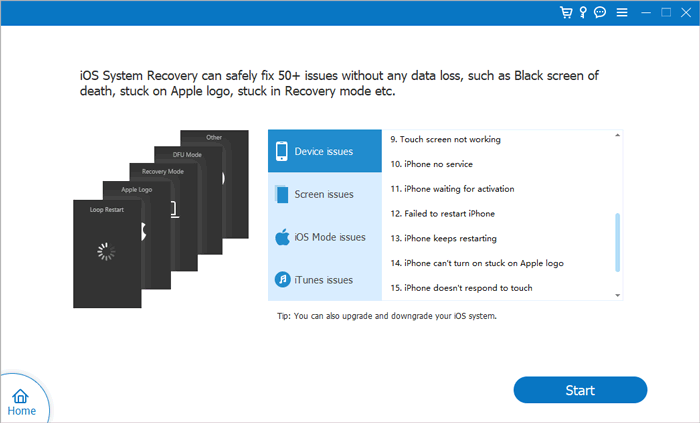
If you don't want to risk data loss by restoring the device, you can use a professional iOS system repair tool. For example, iOS System Recovery can fix a variety of iOS system issues, such as an iPhone stuck in recovery mode, an iPhone stuck on the Apple logo, an iPhone boot loop, and iPhone update failures. Additionally, when using Standard Mode, it typically won't erase your device's data, making it a safer solution for many users.
Key features of iOS System Recovery:
Here is how to fix an iPhone stuck in recovery mode after iOS 26 update without data loss:
01After downloading the software, install it and launch it. Connect the iPhone via USB and select "iOS System Recovery" from the primary interface.
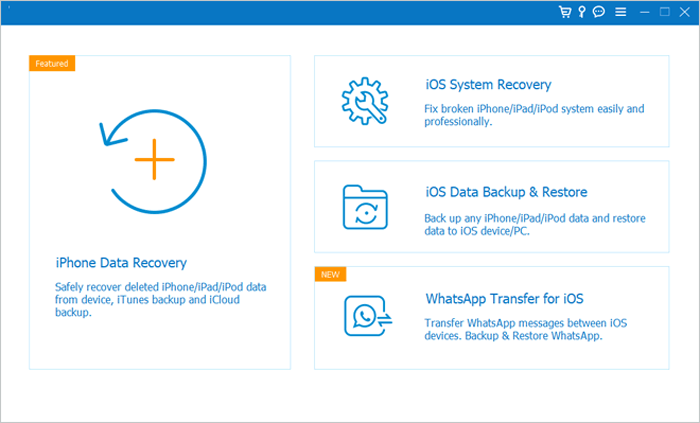
02iOS System Recovery will detect your iPhone stuck in recovery mode issue automatically. Once detected, click "Start" to continue.
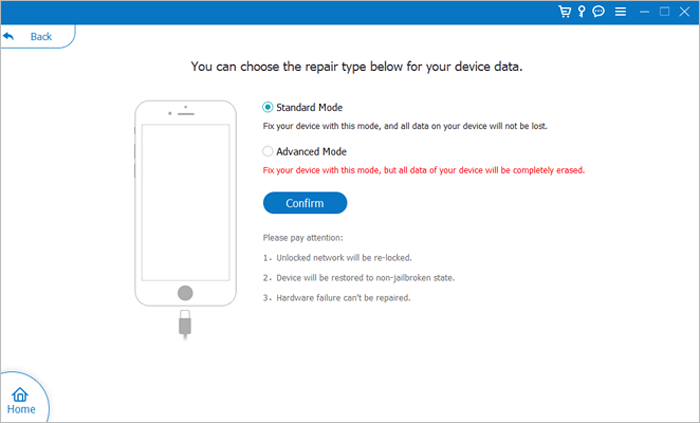
03Verify your device details and choose "Standard Mode" since it doesn't erase data from your device. Once done, tap "Confirm".
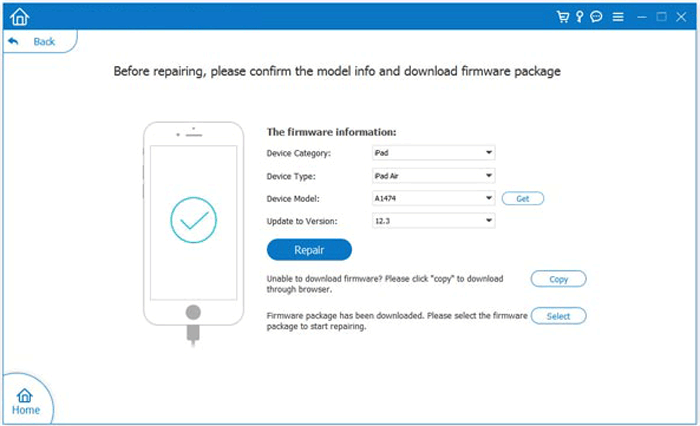
04Click the "Repair" button to download the firmware package and start to fix the iPhone stuck in recovery mode. After the firmware downloads successfully, the software will fix your device automatically. Your iPhone will now get out of Recovery Mode.
If you've tried all methods and the iPhone is still stuck in recovery mode, it's likely that the issue goes beyond the software level, such as a motherboard, battery, or other hardware malfunction. In this case, the safest option is to contact Apple Support or visit an Apple Store for inspection.
Q1. Will I lose my data if my iPhone is in recovery mode?
Being in recovery mode alone does not erase your data. However, the steps you take to exit recovery mode may. If you use a computer and select the "Update" option, your data will remain intact. If you choose "Restore", the device will be reset to factory settings, resulting in data loss.
Q2. Why does my iPhone keep returning to the recovery screen?
This is commonly known as a "boot loop". It usually happens when the internal storage is full, preventing the operating system from loading, or due to a hardware issue with the charging port or battery. If a software restore doesn't resolve the loop, the problem is likely related to a physical component that may need to be replaced.
Q3. What's the difference between Recovery Mode and DFU Mode?
Recovery Mode uses the "iBoot" bootloader to attempt software repair. DFU (Device Firmware Update) mode, on the other hand, is a more advanced state that bypasses the bootloader entirely, enabling you to reinstall the operating system during a near-total software failure. In DFU mode, the screen remains completely black.
iPhone stuck in Recovery Mode loop may sound daunting, but it can still be fixed. The solutions listed in this article have been tried and tested and found to be effective in solving an iPhone stuck in Recovery Mode after the iOS 26 update. However, the most effective solution to this problem is iOS System Recovery. It's the safest and quickest way to get out of the recovery loop on an iPhone without data loss.
Related Articles:
How to Fix iPhone Bricked After Update iOS 26: Complete Guide
[Solved] How to Fix iPhone Won't Turn on After iOS 26 Update?
How to Fix iPhone Stuck on Update Requested? (iOS 26 Supported)
[Newest] How to Fix iPhone Keeps Restarting After iOS 26 Update?




 Free Download for PC
  Free Download for Mac


