TL;DR: Want to compress video for the web without sacrificing quality? This guide covers 3 effective methods to reduce video size, including Video Converter Ultimate, HandBrake, and online tools like FreeConvert. Optimize videos for faster loading, smoother playback, and better website performance with simple steps.
Videos are absolutely more engaging than text. If you run a website, videos will definitely enhance its attractiveness. However, videos with long loading times can lead to a poor user experience. The solution to this problem is simple - compress the video. Today, let's talk about how to compress video for the web. With a few simple steps, you can make your videos both clear and compact, loading quickly and allowing users to enjoy a smooth viewing experience. Come and learn about it now!
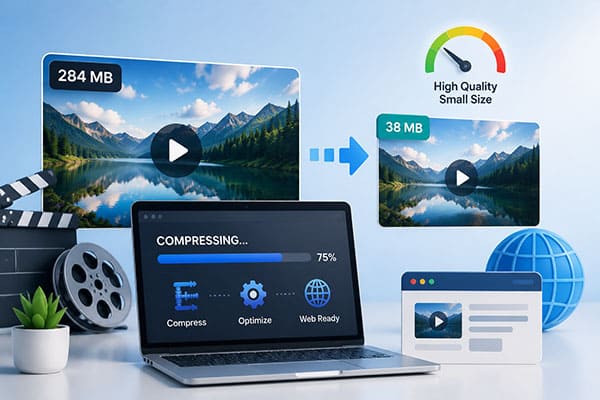
Web videos are different from locally played videos because they need to consider loading speed, compatibility, and user experience. If the video file is too large, it may cause the following problems:
Large video files take longer to load, which can reduce page opening speed and may cause visitors to leave the website before the content appears.
Hosting large numbers of high-quality videos requires more storage space and consumes more bandwidth resources.
Page loading speed is an important ranking factor for search engines. Oversized video files can reduce website performance and affect search rankings.
Mobile users often watch videos through cellular networks. Large video files are more likely to cause buffering, lagging, and playback interruptions.
Compressed videos are easier to upload to websites, emails, social media platforms, and other online services.
Therefore, compressing videos before publishing them on the web is an essential step to improve website performance, enhance user experience, and optimize online delivery.
Below are three simple and effective methods to compress video for a webpage.
Video Converter Ultimate is a comprehensive and practical video compression tool used by millions of users worldwide to convert, edit, and compress audio and video files. It can reduce file size while maintaining high video quality by adjusting parameters such as video size, resolution, bitrate, and format. The software supports a wide range of popular formats, including MP4, MOV, AVI, MKV, and WMV, making it an ideal choice for users who need to process multiple web videos efficiently.
Key features of Video Converter Ultimate:
Here is how to compress video for a website without losing quality:
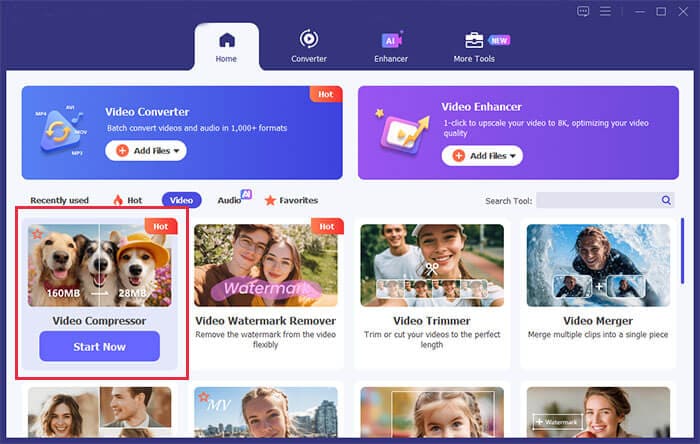
01Open the program and choose "Video Compressor" from the "Video" section on the main interface to start compressing your video for web use.
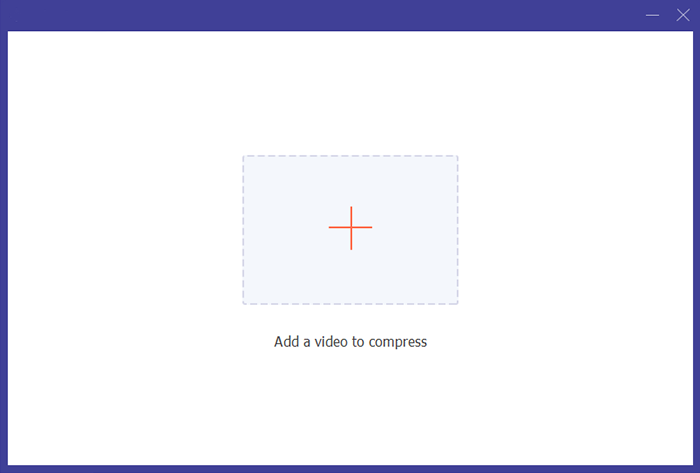
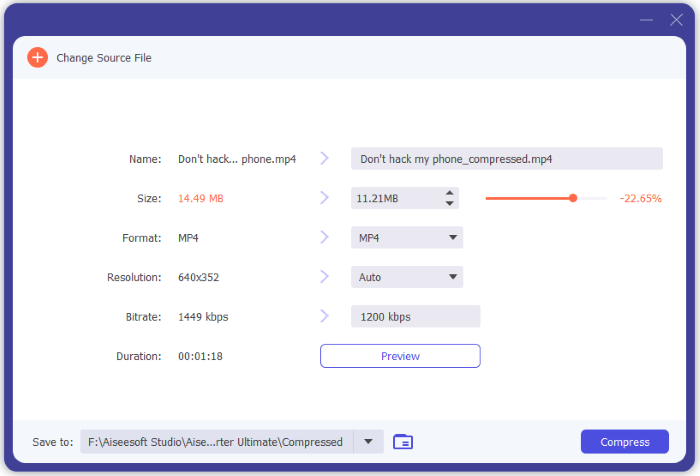
02Import the video you want to optimize for webpage upload, then customize the compression settings, including file size, output format, resolution, and bitrate, to balance video quality and loading speed.
03Select a destination folder for the compressed video and click "Compress" to start the process. After compression is complete, the web-friendly video file will be saved to your selected location and ready for online publishing.
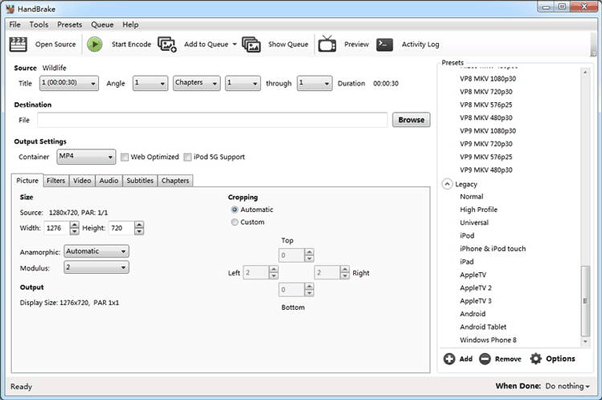
HandBrake is a free and open-source video compression tool that supports Windows, Mac, and Linux systems. It helps users reduce video file sizes by adjusting parameters such as encoder, video quality, resolution, and bitrate, making it an excellent choice for technical users who want to optimize videos for the web.
When compressing videos with HandBrake, users can choose H.264 or H.265 encoding formats to achieve better compression efficiency while maintaining good video quality.
Here is how to compress video for the web for free with HandBrake:
Step 1. Download and open HandBrake, then import the video you want to compress.
Step 2. Select a web-friendly video preset in the "Preset" option, such as "Fast 720p30".
Step 3. Choose "MP4" as the output format in the Format section.
Step 4. Select the "H.264" encoder in the "Video" tab.
Step 5. Adjust the "Quality" slider to reduce the video file size.
Step 6. Click "Start Encode" to begin compressing the video.
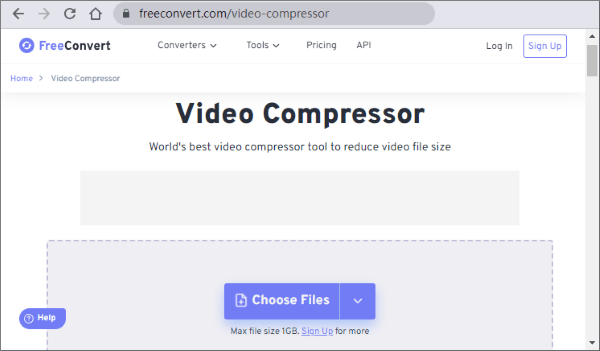
If you only need to compress video for a webpage occasionally, an online video compressor is a convenient option. Online tools allow users to reduce video file sizes directly from a browser without installing additional software. FreeConvert is an example of an online video compression service that helps users quickly shrink video files. It supports multiple video formats and provides a simple workflow for beginners.
However, online compression tools usually depend on internet speed and may have file size limitations, making them more suitable for smaller videos.
Here is how to compress video for a website online via FreeConvert:
Step 1. Open the FreeConvert video compressor webpage.
Step 2. Click the "Choose Files" button and upload your video file.
Step 3. Select compression settings, such as video quality, output format, or target file size.
Step 4. Click the "Compress Now" button to start processing the video.
Step 5. Wait until compression is complete, then download the optimized video file.
For videos that need to be uploaded to websites, blogs, e-commerce pages, or online courses, compressing video for the web is an important step to improve loading speed and user experience. By reducing video file size, you can shorten webpage loading times while maintaining smooth playback quality.
If you want higher-quality and more stable video compression results, Video Converter Ultimate is a recommended choice. It provides a simple and intuitive operation process while allowing users to adjust video size, resolution, bitrate, and format to quickly optimize videos for web publishing needs. Whether you need to compress a single video or process multiple files in batches, it can help you efficiently complete web video optimization.
Related Articles:
[9 Effective Ways] How to Compress a Video for Email with Ease?
How to Compress Video for Instagram? [Computer & Online & Mobile Phone]
How to Compress Video for YouTube Upload [Offline & Online Tools]
How to Compress Video with VLC in 6 Different Ways & Best Alternative




 Free Download for PC
  Free Download for Mac


