TL;DR:
Want to quickly find where your iPhone backups are stored? This guide will show you how to locate and manage iPhone backups in different ways:
Where are iPhone backups stored? Creating regular backups is an important way to protect your data from accidental deletion, device loss, or unexpected issues. However, many users may not know where their iPhone backup files are saved or how to access them on a Windows PC or Mac. In this guide, we will show you the exact locations of iTunes, Finder, and iCloud backups, so you can quickly find and manage your iPhone backups whenever needed.

Where do I find my iPhone backup on a Windows PC? The answer depends on whether you use iTunes or iCloud to back up your iPhone. iTunes backups are stored locally on your computer, while iCloud backups are stored securely on Apple's servers and can only be accessed through your iPhone or iCloud settings.
iTunes allows you to back up your iPhone to a Windows computer and store your backup files locally. These iTunes backups contain important data and settings from your iPhone, including app data, messages, photos, and device preferences. If you need to restore your iPhone or manage your backup files, knowing the iTunes backup location is important.
On Windows 10 and Windows 11, iTunes usually stores iPhone backups in one of the following locations:
The exact backup location depends on your Windows version and how iTunes was installed. Replace [Username] with your Windows account name to access the folder.
How to Find iTunes Backup Location on Windows PC:
Step 1. Click the Search icon next to the Start menu, or open File Explorer.
Step 2. This will open the AppData folder where iTunes commonly stores backups. If you cannot find the backup folder, enter: %USERPROFILE%, and press Enter.
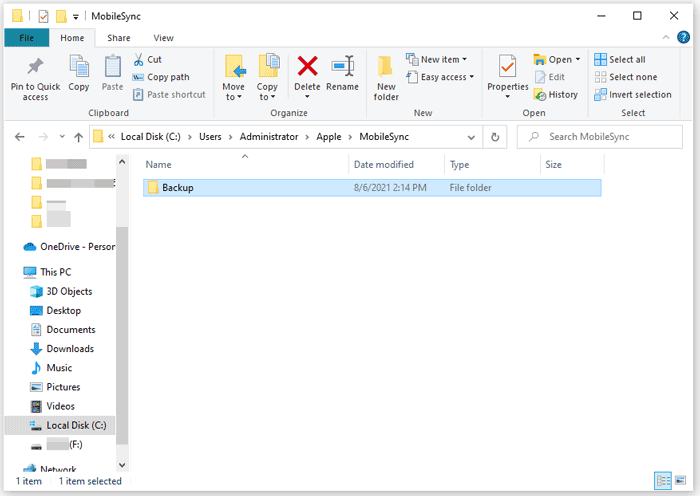
Step 3: Open the following folders: "Apple Computer > MobileSync > Backup", or , "Apple > MobileSync > Backup".
Step 4. After opening the Backup folder, you can view the iPhone backup files stored on your Windows PC.
Unlike iTunes backups, iCloud backups are not stored on your Windows computer. Instead, your iPhone backup data is uploaded to Apple's cloud servers and associated with your Apple ID. Therefore, you cannot find iCloud backup files in a Windows folder or access them directly through File Explorer.
If you want to check where your iPhone iCloud backup is stored or view backup details, you need to do it from your iPhone settings.
How to Check iCloud Backup Details on iPhone:
Step 1. Launch the "Settings" app and tap your name at the top of the screen.
Step 2. Go to iCloud Backup settings by tapping "iCloud" > "iCloud Backup".
Step 3. You can see details such as the latest backup time, backup size, and available backup options.
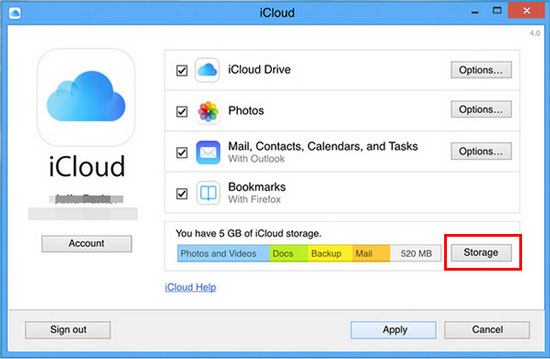
If you want to access iCloud data on a Windows PC, you can use iCloud for Windows or visit iCloud.com. However, these methods only allow you to access synced iCloud content, such as photos, files, contacts, and other supported data. They do not let you browse or extract the complete iPhone backup file.
After learning where iPhone backups are stored on Windows, you may wonder where iPhone backups are saved on a Mac. The location depends on whether you use Finder, iTunes, or iCloud to back up your iPhone.
For local backups created with Finder or iTunes, the backup files are stored on your Mac's internal drive. However, iCloud backups are stored on Apple's servers and cannot be found as regular files on your Mac.
Since macOS Catalina (10.15), Apple has replaced iTunes with Finder for managing iPhone backups. If you back up your iPhone to Mac using Finder, the backup files are saved locally on your Mac.
The default Finder iPhone backup location on Mac is: ~/Library/Application Support/MobileSync/Backup/
How to Find iPhone Backup Location Using Finder on Mac:
Step 1. Use a USB cable to connect your iPhone to your Mac and open Finder.
Step 2. Click your iPhone under Locations in the Finder sidebar.
Step 3. Click the "General" tab and select "Manage Backups".
Step 4. Right-click the desired backup and choose "Show in Finder" to open its storage location.
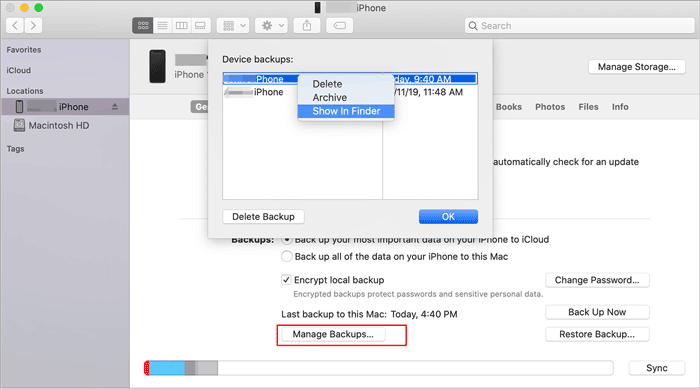
You can also manually access the backup folder by opening Finder, pressing Command + Shift + G, and entering: ~/Library/Application Support/MobileSync/Backup/
Before macOS Catalina, iTunes was Apple's default tool for backing up and managing iPhones on Mac. If you created an iPhone backup using iTunes, the backup files are stored in the same location as Finder backups.
The default iTunes backup location on Mac is: ~/Library/Application Support/MobileSync/Backup/
How to Find iTunes Backup Location on Mac:
Step 1. The first thing is to ensure that you install the iTunes application on your Mac computer and have backed up your iPhone data via iTunes on this computer.
Step 2. On your Mac computer, sign into your iTunes account that you use to back up your data.
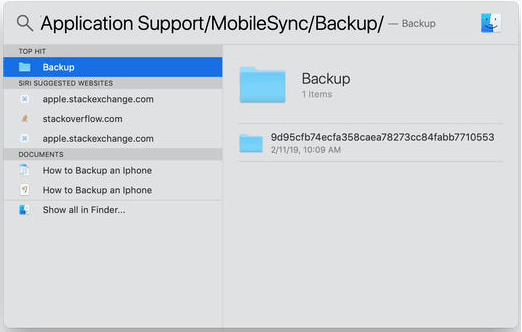
Step 3. To achieve that, click on the magnifier on the menu bar and type this: "~/Library/Application Support/MobileSync/Backup/". After that, select the backup folder.
If you wish to locate a specific iTunes backup, open iTunes, click on iTunes in the menu bar, go to "Preferences", choose "Devices", and control-click on the desired backup. Then, select "Show in Finder" to reveal its location.
Unlike Finder and iTunes backups, iCloud backups are not stored on your Mac. Instead, they are saved securely on Apple's servers and linked to your Apple ID. This means you cannot find iCloud backup files through Finder or a local folder on your Mac.
How to Check iCloud Backup Details on Mac:
Step 1. The first thing to do is to open the iCloud application on your Mac computer. Next, log in with your Apple ID.
Step 2. On your Mac computer, click on the "Apple menu" > "System Preference" > "iCloud" > "Manage Storage" > "Backups" , and finally, click on the backup folder to check available iCloud backups, backup size, and device information.
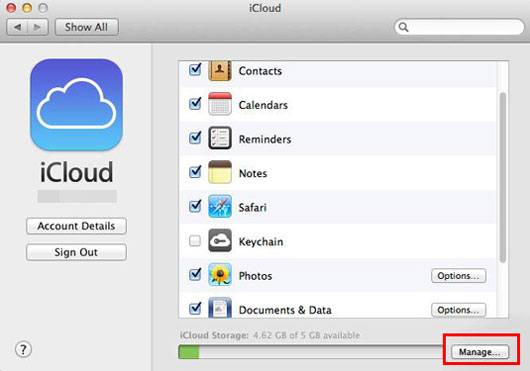
If you need to access iCloud-synced files on your Mac, you can use iCloud Drive or other iCloud services. However, the complete iPhone backup file cannot be browsed or extracted directly from your Mac.
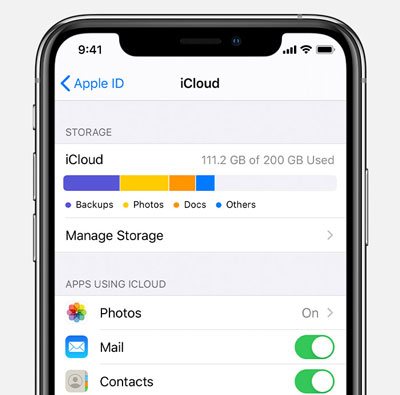
After learning where iPhone backups are stored on computers, you may also want to check your iCloud backups directly on your iPhone. Although you cannot browse the complete backup files on your device, you can view backup details, check the latest backup time, and manage your iCloud storage.
Follow the steps below to check your iCloud backup on your iPhone:
Step 1. Go to "Settings" on your iPhone.
Step 2. Tap on your Apple ID at the top of the screen.
Step 3. Select "iCloud" > "iCloud Backup" to Check your backup information..
Step 4. To manage your iCloud storage, go to: "Settings > [Your Name] > iCloud > Manage Account Storage".
If you want more control over your iPhone backups, Coolmuster iOS Assistant provides a simple way to back up iPhone data to a Windows PC or Mac without using iTunes or iCloud. It allows you to selectively transfer and back up contacts, messages, photos, notes, call history, and other iOS data. Unlike iCloud backups, the files are saved locally on your computer, and you can choose the backup location for easier access and management.
Key Features of iOS Assistant:
Download Coolmuster iOS Assistant below.
Here is how to use Coolmuster iOS Assistant to back up your iPhone to your Windows or Mac computer:
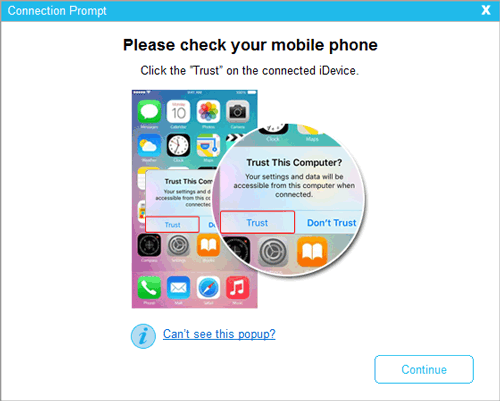
01Launch the program on your computer and connect your iPhone to the computer via a data cable. Typically, the software will automatically recognize your connected device, prompting a pop-up window on your computer. Select the "Trust" option on your device and proceed by clicking the "Continue" option.
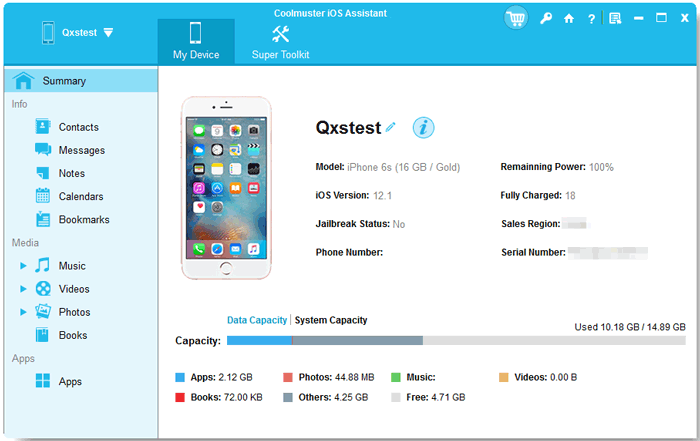
02After this software detects your device, the main interface will be displayed as shown below. At this point, you can observe that various file folders are organized on the main interface.
03Click the "Super Toolkit" tab. After that, hit the "iTunes Backup & Restore" > "Backup" option on the interface. Then, choose your device and click the "Browse" icon to select a location to save the backup files. Next, tap "OK" to back up your data.
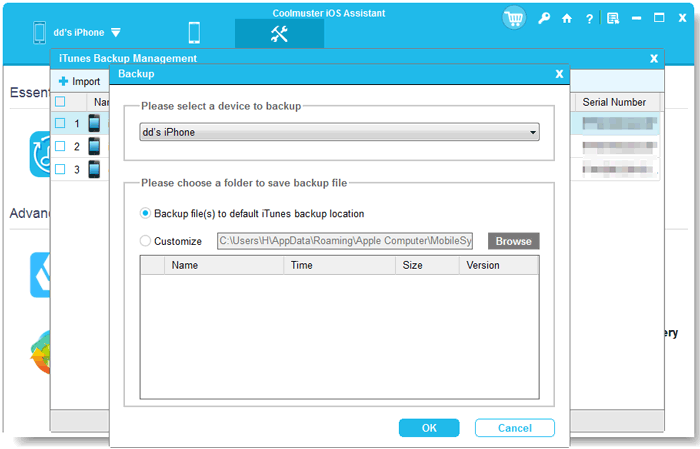
By the way, if you don't choose a folder, it will save your files to the iTunes default location on your computer.
Video Tutorial:
Q1. Can I change the iPhone backup location on Windows or Mac?
By default, iTunes and Finder save iPhone backups in a fixed folder. However, you can change the backup location by creating a new backup directory or using third-party backup tools.
Q2. Why can't I find my iPhone backup folder on my computer?
You may not find the backup folder if no iPhone backup has been created, the folder is hidden, or you are checking the wrong user account. Make sure your iPhone has been backed up on this computer before searching.
Q3. How do I know if my iPhone backup was successful?
You can check the latest backup date in Finder, iTunes, or iCloud Backup settings to confirm whether your iPhone backup was completed successfully.
Q4. Are iPhone backup files readable on a computer?
Most iPhone backup files created by iTunes or Finder are stored in a protected format and cannot be opened directly. You need backup management software to view or extract specific data.
Q5. How much storage space does an iPhone backup need on a computer?
The required storage depends on the amount of data stored on your iPhone. A backup usually needs enough free space to store your selected device data.
Now you know where iPhone backups are stored on Windows, Mac, and iCloud. While iTunes and Finder save local backups in specific folders, iCloud backups are stored online and cannot be accessed directly as files.
If you want an easier way to back up and manage your iPhone data, Coolmuster iOS Assistant allows you to back up iPhone files to your computer with one click or selectively transfer specific data. You can also choose a preferred backup location, making it easier to find and manage your iPhone backups whenever needed.
Related Articles:
How to View iPhone Backup on PC or Mac? 4 Ways You Can Try
What Does iTunes Backup Include? Useful Tricks [Backup Guide]
How to Check Last Backup on iPhone in 3 Different Ways?
How to Fix iPhone Backup Not Enough Space on Computer Issue (Proven Tips)







 Free Download for PC
  Free Download for Mac


