TL;DR:
Running out of iPhone storage can be frustrating, but there are several effective ways to create more available space without upgrading your device. In this article, we will explain how to get more storage on your iPhone through the following methods:
How much storage space does your iPhone have? When your iPhone storage is almost full, you may wonder whether you can increase its storage capacity or how to get more available space without replacing your device. Although iPhones do not support upgrading internal storage, there are several effective ways to free up space, use cloud storage, manage files more efficiently, and expand storage options with external devices.
In this article, we will walk you through practical methods to get more storage on your iPhone and help you keep your important data safe and accessible.
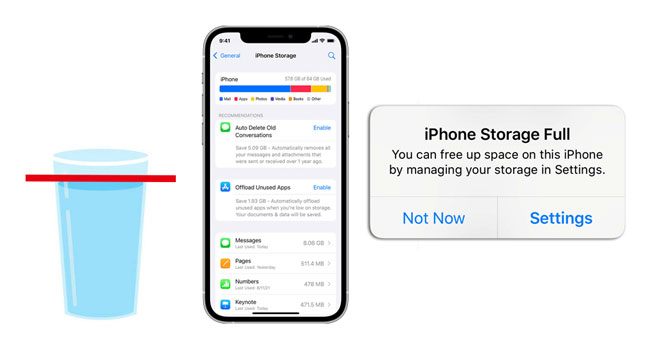
Unlike some Android phones, iPhones do not support SD cards, and their internal storage cannot be upgraded after purchase. This means you cannot physically increase your iPhone's built-in storage capacity unless you switch to a new iPhone with a larger storage option.
However, this does not mean you are stuck when your iPhone storage is full. You can still get more available space by freeing up unnecessary files, using cloud storage services, transferring data to a computer, or managing your iPhone storage more efficiently without losing important content.
If your iPhone storage is full, you can either clean up unnecessary data, move files elsewhere, or optimize storage settings. In this section, we will introduce practical ways to free up space on your iPhone without paying for additional storage.
Before deleting anything, you should first check what is taking up your iPhone storage.
Solution 1: Delete or Offload Unused Apps
Too many apps on your iPhone will run out of the storage space fast. If you have some apps on your iPhone that you rarely use, please uninstall them. That will free up the space immediately.
Offload the Unused App:
You can remove the app but keep the app data on your iPhone by offloading the app. Furthermore, when you reinstall it, you can use the app without losing data. However, it cannot release many storage because app data may be large in size.
Step 1. Open the "Settings" app on your iPhone.
Step 2. Tap on "General" and then select "iPhone Storage".
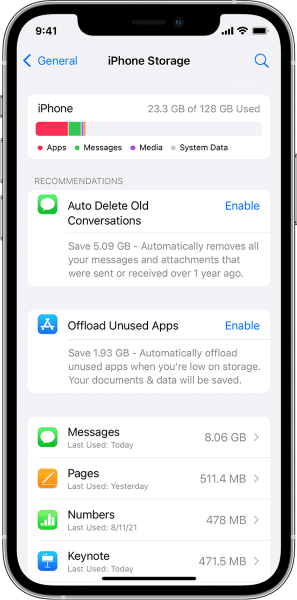
Step 3. You'll see a list of apps sorted by the amount of space they occupy. Scroll through the list to identify apps you no longer need.
Step 4. Tap on the app you want to offload, then select "Offload App".
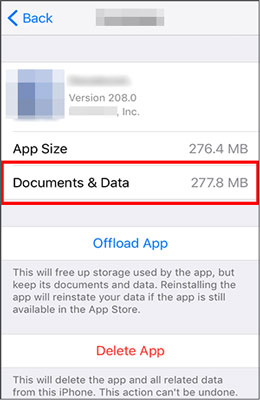
You can also tap on the option to "Enable", located next to the recommendation to "Offload Unused Apps" on the "iPhone Storage" page to enable the feature to automatically offload unused applications.
Delete the Unused App:
To get more storage on your iPhone, you can delete the apps directly, which will remove the app and app data simultaneously. When you need the app, you can re-download it from App Store.
Step 1. Find the application you want to delete on the home screen.
Step 2. Press and hold the application icon until a menu appears.
Step 3. Select the option to delete the application.
Step 4. Click on "Delete App" to confirm the deletion.
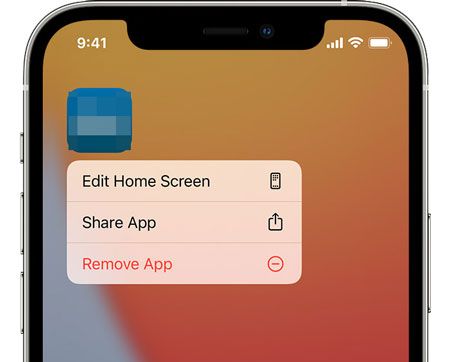
You can also go to "Settings" > "General" > "iPhone Storage", select the app you want to delete, and then tap on the "Delete App" option.
Don't want to lose your apps on your iPhone? You can learn how to free up space on iPhone/iPad without deleting apps.
Solution 2: Clear Browser Cache and App Data
Cache data may take up many space on your iPhone. These data can enhance the performance of apps and system, so they will be stored on your cell phone.
Clear Browser Cache:
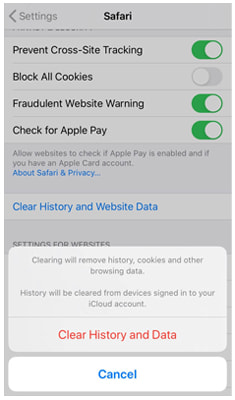
If you frequently use Safari for internet browsing, you may find that the browser's cache occupies a significant amount of space. You can clear the browser's cache by following these steps:
Step 1. Open the "Settings" app on your iPhone.
Step 2. Scroll down and select the "Safari" category.
Step 3. Scroll down again and choose the "Clear History and Website Data" option.
Step 4. Select "Clear History and Data" to confirm.
Clear Apps Cache:
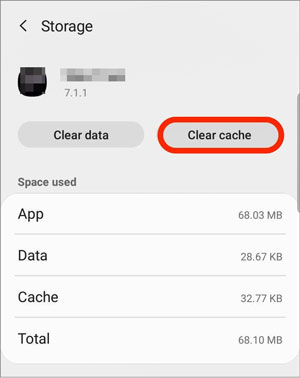
Step 1. Open the target application.
Step 2. Navigate to the settings of the application.
Step 3. Find the option to clear the cache.
Solution 3: Remove Unnecessary Photos, Videos, and Other Media Files
Media files are another giant for occupying iPhone storage space, including your e-books, videos, songs, ringtones, pictures, etc. Please find out what kind of files take the most storage by checking your iPhone storage in Settings. Then manage the files by deletion and backup.
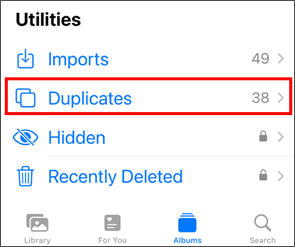
Step 1. To start, open the "Photos" app on your iPhone.
Step 2. Select the "Albums" tab at the bottom.
Step 3. Scroll down and choose "Utilities" in the "Media Types" section. Then, select "Duplicates".
Step 4. Browse through the list of duplicates found, and click "Merge" next to each pair of photos you want to combine into a single image.
You can also back up your photos to iCloud and delete them from your iPhone. In this way, you will not lose your data and get more storage.
Solution 4. Delete Old Messages and Attachments
Please don't look down upon of the chat history on your iPhone. If you have a long time not to clear your data on WhatsApp, iMessage, Snapchat, Facebook, etc. They may be a mountain on your device.
Manually Delete Messages:
Step 1. Open the "Messages" app on your iPhone.
Step 2. Manually browse through your messages and identify the old or unimportant ones you want to delete.
Step 3. Swipe left on the message you want to delete.
Step 4. Tap on the "Delete" button that appears next to the message.
Automatically Delete Messages:
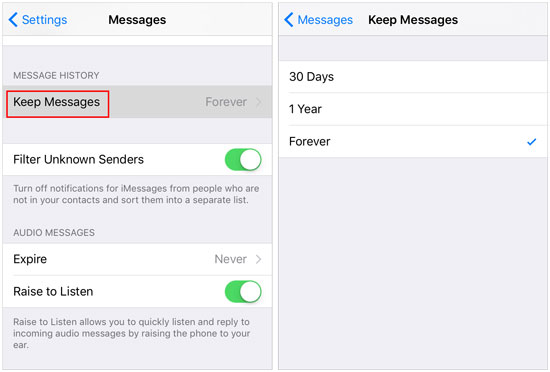
Step 1. Go to the "Settings" app on your iPhone.
Step 2. Scroll down and tap on "Messages".
Step 3. Tap on "Keep Messages".
Step 4. Select the duration for which you want to keep messages, such as 30 days or 1 year.
Step 5. Messages older than the selected duration will be automatically deleted to free up space.
Solution 5. Enable iPhone Storage Optimization Features
In addition to manually deleting files, you can use iPhone's built-in storage optimization features to free up space automatically.
Enable Offload Unused Apps:
This feature removes apps you rarely use while keeping their documents and data. When you reinstall the app, your data will be restored.
Step 1. Open "Settings" on your iPhone.
Step 2. Tap "App Store" and turn on "Offload Unused Apps".
You can also enable it from Settings > General > iPhone Storage.
Turn on Optimize iPhone Storage:
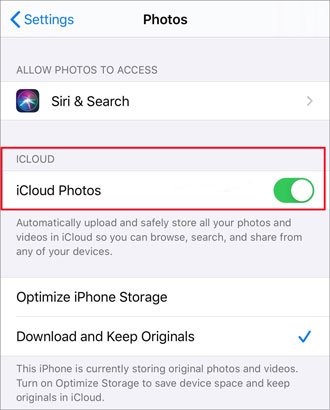
If you use iCloud Photos, enabling "Optimize iPhone Storage" can save space by keeping smaller versions of photos on your iPhone while storing original files in iCloud.
Step 1. Go to "Settings" > [your name] > "iCloud" > "Photos".
Step 2. Enable "Sync this iPhone" and select "Optimize iPhone Storage".
These features can help you reduce storage usage and keep your iPhone storage under control.
Using cloud storage services like iCloud, Google Drive, and Dropbox is another effective way to reduce iPhone storage usage. You can store photos, videos, and other files online, then access them anytime without keeping everything on your device.
Optimize Photo Storage with iCloud Photos:
If your iPhone contains many photos and videos, you can enable Optimize iPhone Storage to save space. Your original full-resolution photos and videos will be stored in iCloud, while smaller, space-saving versions remain on your iPhone.
Step 1. Open the "Settings" app, tap on your Apple ID, then click on "iCloud".
Step 2. Tap "Photos" and turn on "Sync this iPhone".
Step 3. Select the option "Optimize iPhone Storage", and wait for your photos and videos to upload to iCloud.
Sync Important Data with Cloud Services:
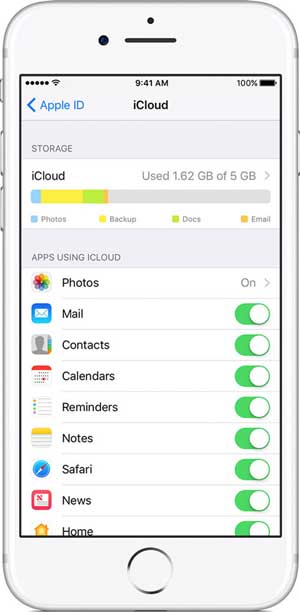
You can also use iCloud or other cloud services to store and sync important data, such as contacts, notes, documents, and files. This helps keep your data accessible while reducing the need to store everything locally.
For example:
By moving large files and using cloud services wisely, you can free up iPhone storage while keeping your important data available.
If your iPhone storage is still insufficient, using an external storage device is another option. Although external devices cannot upgrade your iPhone's built-in storage, they can provide extra space for storing photos, videos, documents, and other files.
You can use a compatible flash drive, external SSD, or wireless storage device to transfer and access files without keeping everything on your iPhone. For wired devices, make sure the storage device matches your iPhone's connector, such as Lightning or USB-C, or use a suitable adapter.
Wireless storage devices are also available if you prefer a cable-free solution. They allow you to access files through a dedicated app or Wi-Fi connection, making them convenient for storing large amounts of data while keeping your iPhone storage free.
However, external storage is mainly used for file storage and transfer. It cannot store iOS system files or increase the internal capacity of your iPhone.
Besides freeing up storage when your iPhone is full, developing good storage management habits can help prevent storage problems in the future. By regularly checking your storage usage and removing unnecessary data, you can keep your iPhone running smoothly.
Here are some useful tips to manage your iPhone storage more efficiently:
1. Delete Unnecessary Downloads
Downloaded files from apps like Safari, Netflix, Spotify, and Podcasts can take up a lot of space over time. Regularly check and remove offline content that you no longer need.
2. Clear Old and Unused Files
Review your photos, videos, documents, and other files regularly. Delete unnecessary items and remember to empty the Recently Deleted album to permanently free up storage.
3. Remove Unused Apps
Even if you do not use some apps frequently, they may still occupy a large amount of storage. Uninstall apps you no longer need or enable Offload Unused Apps to save space.
4. Monitor iPhone Storage Usage Regularly
Go to "Settings" > "General" > "iPhone Storage" to check which apps and files consume the most space. The storage recommendations provided by iPhone can also help you quickly optimize your device.
By managing your iPhone storage regularly, you can avoid sudden storage shortages and make better use of the available space on your device.
Transferring your iPhone data to your computer is also a good idea for freeing up storage on iPhone. Coolmuster iOS Assistant allows you to easily transfer or manage your data between your computer and your iPhone, including contacts, messages, music, videos, photos, and more. You have two options: one-click backup of all content or selectively transferring specific files to your computer.
Key features of Coolmuster iOS Assistant:
Download this software on your iPhone and follow the steps below to transfer your files to your computer.
How do you get more storage on your iPhone via iOS Assistant?
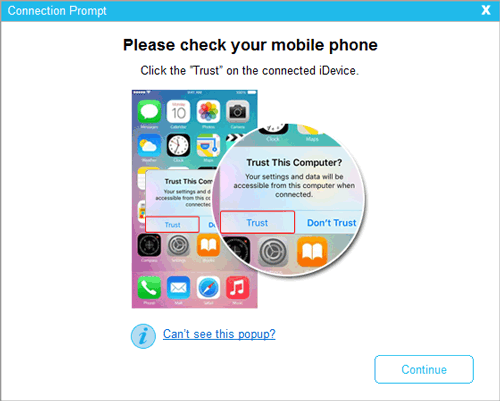
01First, open the software, then connect your device to the computer using a USB cable, and click on the "Trust" option on your device when prompted.
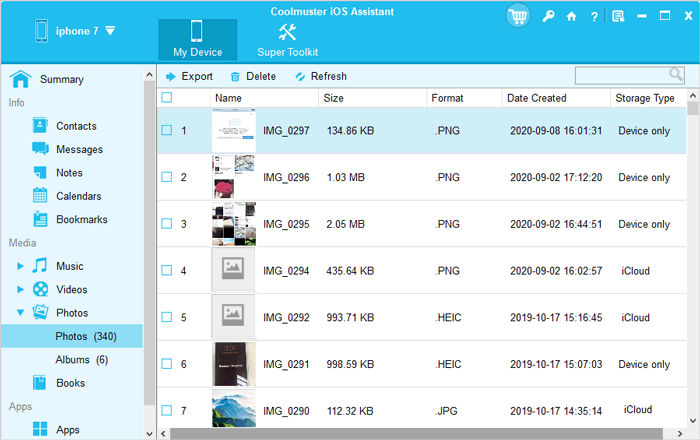
02Once your device is detected by the software, you will see the main interface, as shown in the screenshot below. Now, you can start managing your files.
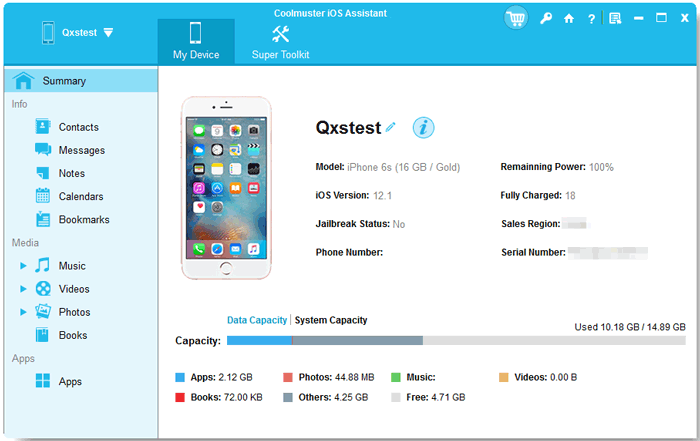
03Select the file types you want to transfer to your computer, preview them, and then click "Export" to start the transfer process.
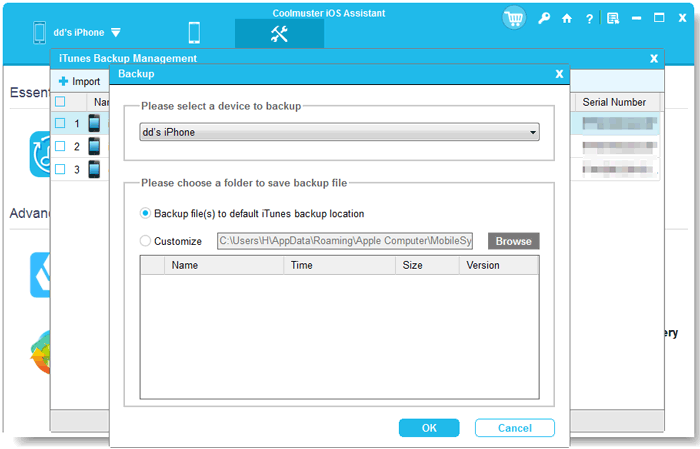
If you want to back up your entire iPhone, go to "Super Toolkit" > "Backup & Restore" > "Backup". Then, select the device you want to back up from the drop-down menu, click on the "Browse" option to choose the location where you want to save the new backup file, and then click the "OK" button to start backing up iOS data.
Video Guide:
Q1. Can I add more storage to my iPhone?
No. Unlike some Android phones, iPhones do not support SD cards, and their internal storage cannot be upgraded after purchase. However, you can get more available space by freeing up unnecessary files, using cloud storage, transferring data to a computer, or using external storage devices.
Q2. How can I get more storage on my iPhone for free?
You can free up iPhone storage without paying by deleting unused apps, removing unnecessary photos and videos, clearing old messages, managing downloads, and optimizing storage settings. You can also transfer large files to a computer to create more space.
Q3. Why is my iPhone storage full even with iCloud?
iCloud storage and iPhone storage are different. iCloud provides online storage for syncing and backing up data, but it does not automatically increase your iPhone's internal storage. To save device space, you need to enable features like Optimize iPhone Storage or move files from your iPhone to another location.
Q4. Does deleting photos free up storage on iPhone?
Yes. Deleting photos and videos can free up iPhone storage, especially if you remove large files. However, remember to empty the Recently Deleted album, as deleted photos remain there for a period of time and may still occupy storage.
Q5. What takes up the most storage on an iPhone?
Photos, videos, apps, messages with large attachments, downloaded media, and app data usually take up the most iPhone storage. You can check the storage usage by going to "Settings" > "General" > "iPhone Storage" and reviewing which categories consume the most space.
By following the methods above, you can effectively get more storage space on your iPhone and avoid storage full issues. You can remove unnecessary files, optimize iPhone settings, store data in the cloud, or transfer large files to external storage devices. If you want to free up space without losing important data, using a professional iPhone data management tool like Coolmuster iOS Assistant can help you transfer photos, videos, and other files to your computer while preserving the original quality.
Related Articles:
How to Delete Documents and Data on iPhone [Verified Tips]
From Frustration to Solution: Fixing iPhone Storage Not Loading Issues
iPhone Internal Storage DCIM Folder Is Empty on Windows 10/11? Fix It Here
iPhone Backup Failed But I Have Enough Storage - Solutions Inside!







 Free Download for PC
  Free Download for Mac


